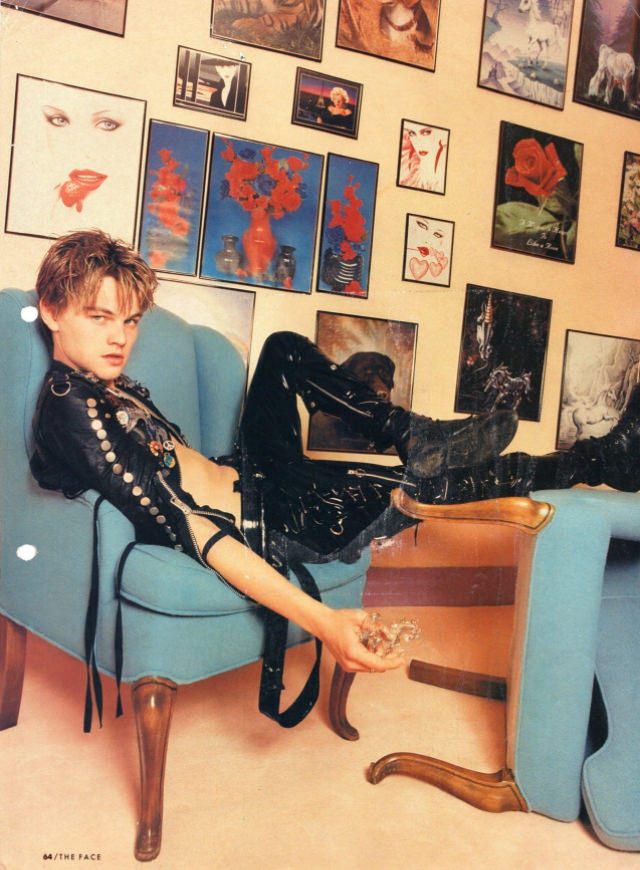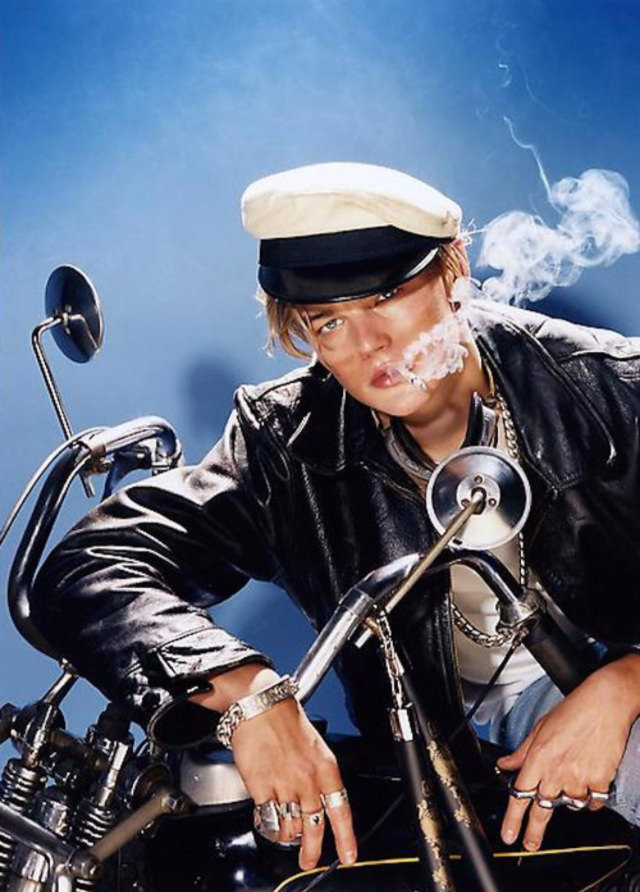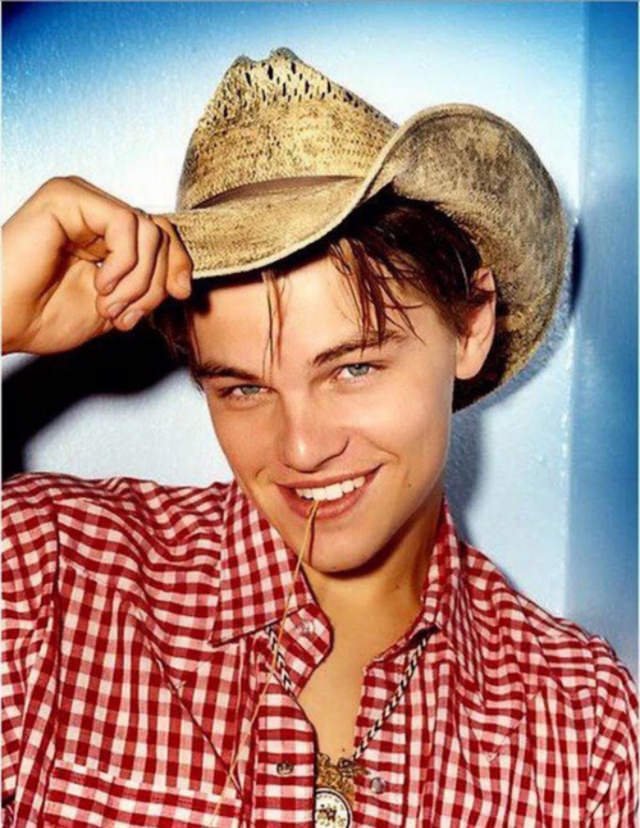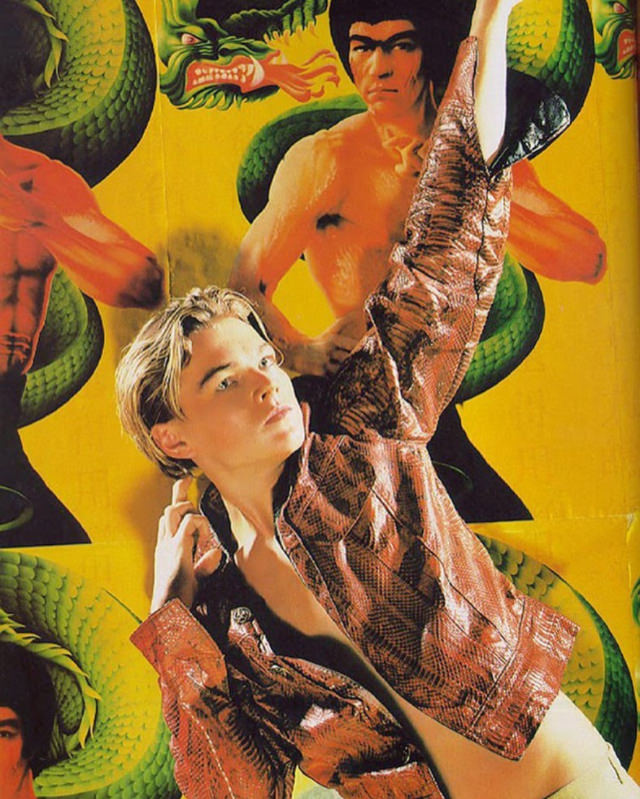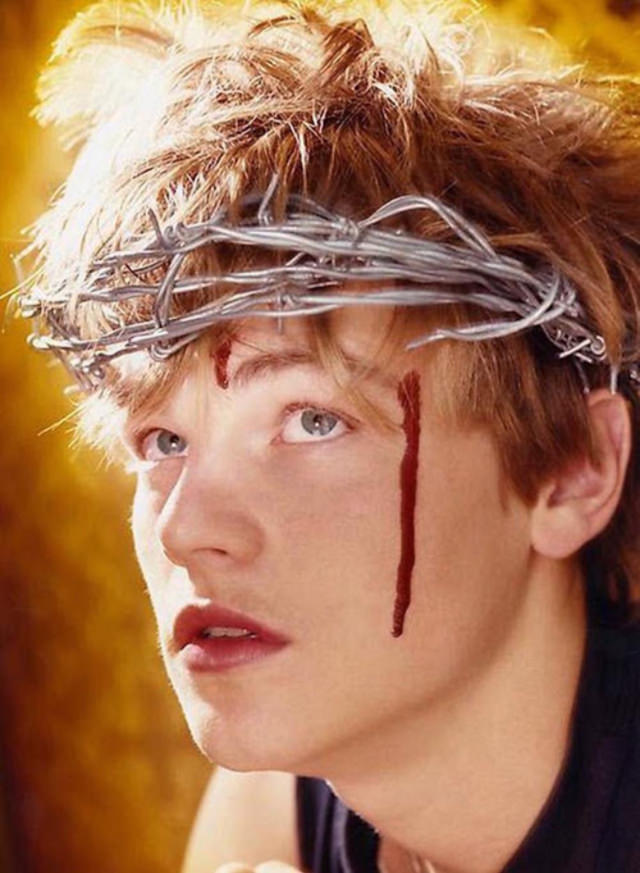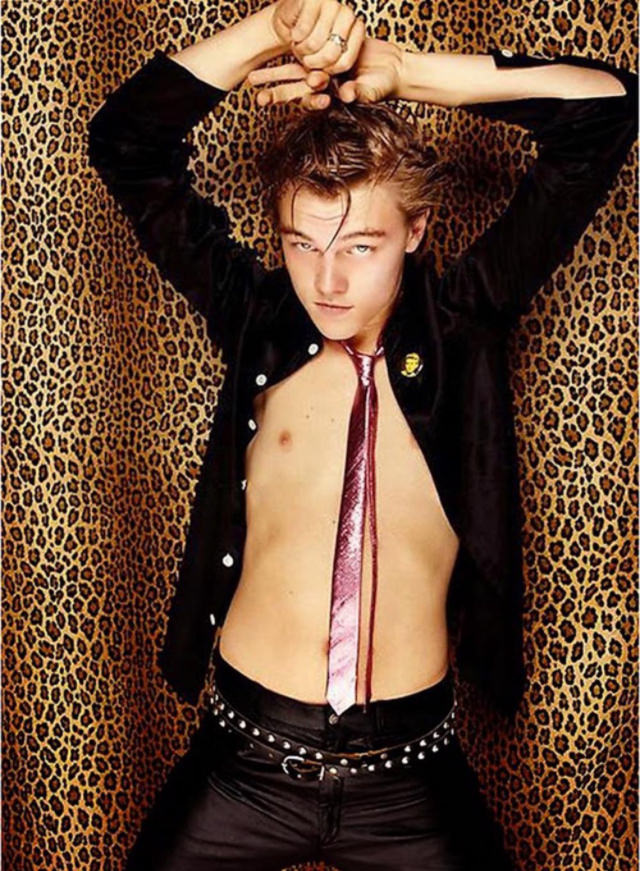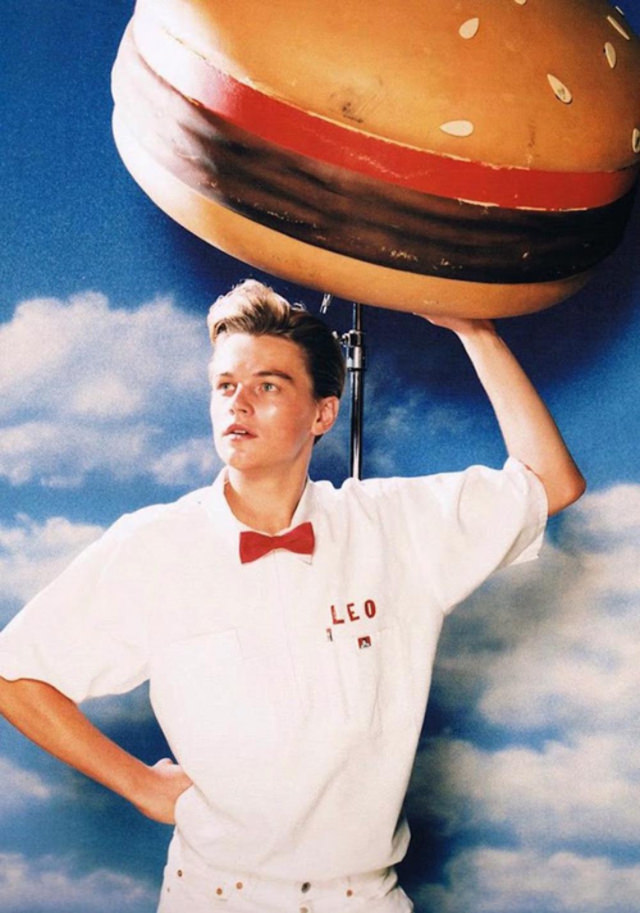

In 1995, Leonardo DiCaprio stood at a turning point in his career. He was widely recognized for What’s Eating Gilbert Grape and The Basketball Diaries, yet he had not reached global superstardom. Around this time, photographer David LaChapelle created a series of striking portraits that showed DiCaprio in a way audiences had not seen before.
Two Rising Figures in the 1990s
David LaChapelle was already known for his bold and surreal style. His work rejected realism and leaned into bright colors, odd props, and exaggerated scenes. He treated celebrity photography as visual storytelling rather than documentation.
Leonardo DiCaprio matched that approach well. At twenty years old, he carried a mix of youth, intensity, and openness to experimentation. He had not yet developed a fixed public image, which gave LaChapelle freedom to push boundaries.
The Concept Behind the Shoot
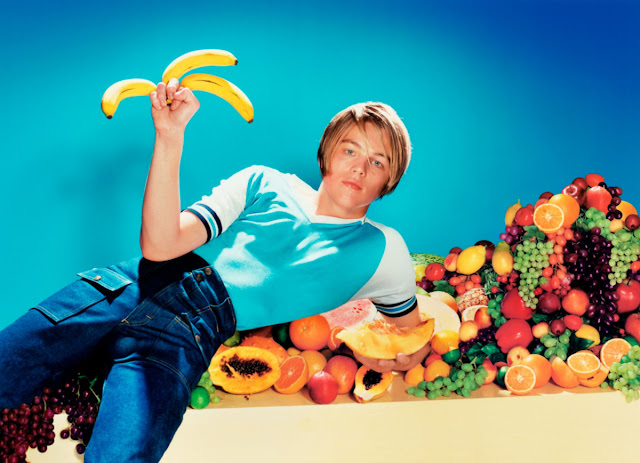
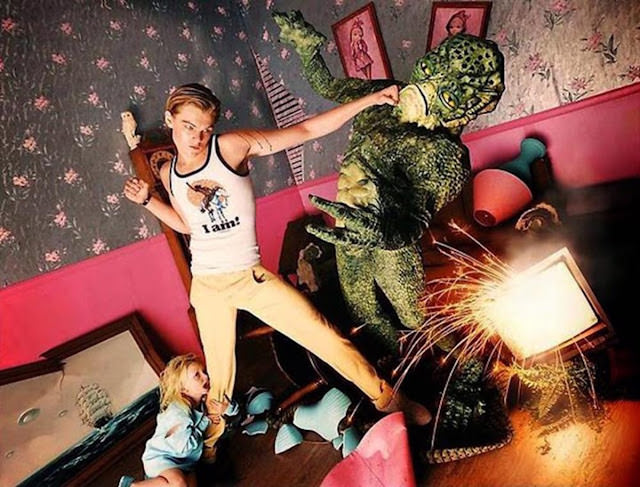
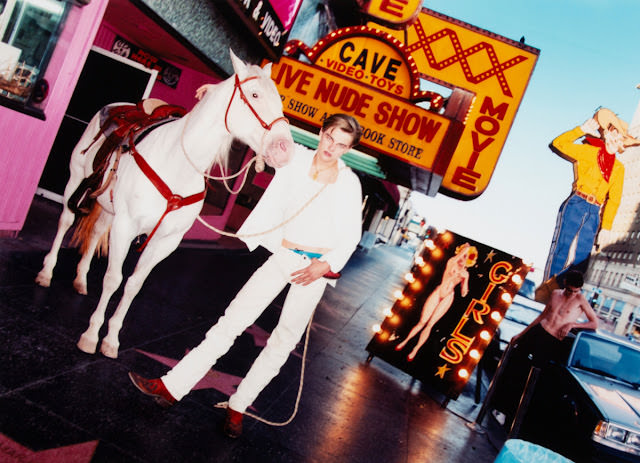
The 1995 photo session rejected standard Hollywood portrait rules. There were no clean backdrops or polished poses. Instead, LaChapelle placed DiCaprio in strange, almost cartoon-like settings.
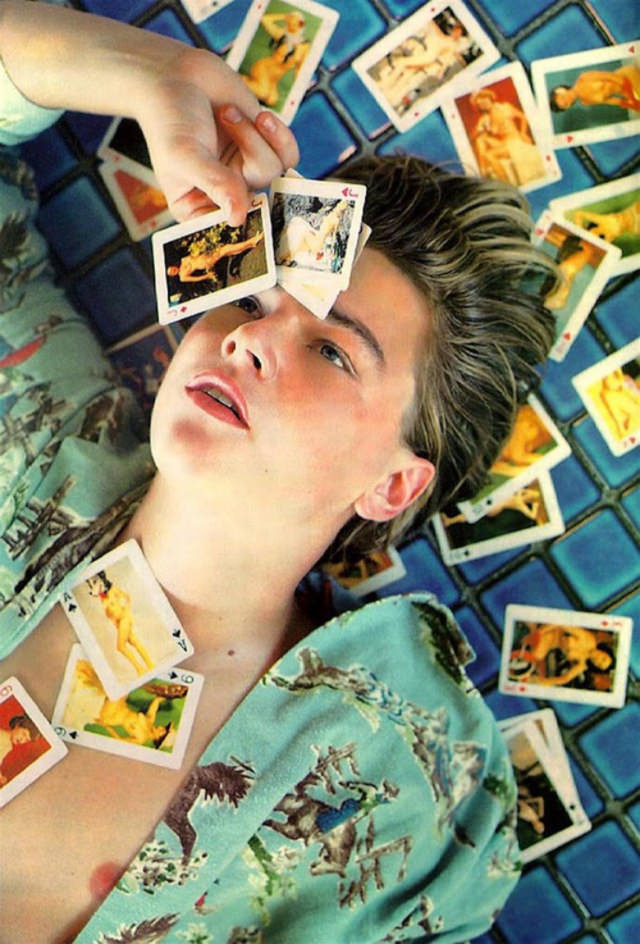
Some images show him surrounded by clutter, artificial colors, or oversized objects. Others present him with exaggerated expressions or awkward body language. The goal was disruption, not flattery.
LaChapelle treated DiCaprio less like a movie star and more like a character inside a constructed world. This approach stripped away glamour and replaced it with controlled chaos.
Read more
Visual Style and Presentation
The photographs use harsh lighting and saturated colors. Shadows are sharp. Skin tones appear unnatural. These choices make the images feel uncomfortable and deliberate.
Costuming plays a key role. DiCaprio appears in casual, sometimes mismatched clothing that clashes with traditional celebrity fashion. The outfits emphasize youth and restlessness rather than polish.
Props and backgrounds dominate many frames. They compete with the subject for attention, which breaks the usual rule of keeping focus on the face. LaChapelle used this tension to challenge how celebrity images function.
DiCaprio’s On-Camera Presence
DiCaprio did not resist the absurdity of the shoot. His expressions range from detached to playful to confrontational. He appears fully engaged in the constructed scenes.
His youth is central to the images. He looks thin, raw, and emotionally exposed. The photographs capture a moment before fame created distance between the actor and the viewer.
Rather than projecting confidence, DiCaprio often looks uncertain or overstimulated. This emotional openness aligns with the characters he played during that period.
Breaking the Celebrity Image Formula
In the mid-1990s, most celebrity photos aimed to build appeal and control perception. These images did the opposite. They introduced confusion and tension.
LaChapelle’s portraits refused to explain DiCaprio or define him. They presented him as unstable, energetic, and unfinished. That refusal made the images stand out in magazines and archives.
The shoot also reflected a broader shift in 1990s culture. Media began embracing irony, excess, and visual overload. These photographs fit squarely within that moment.