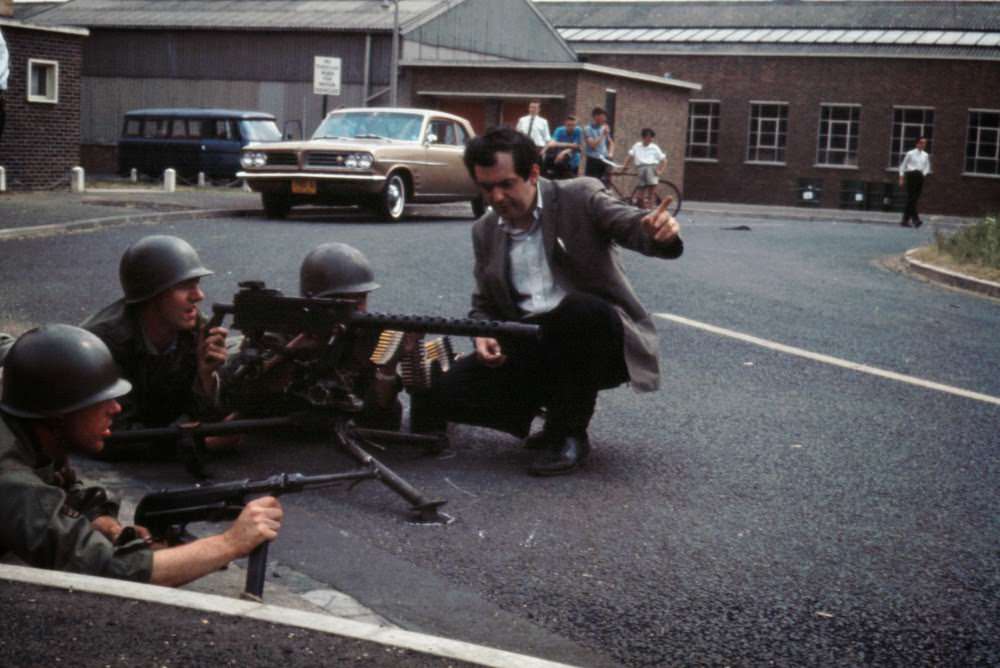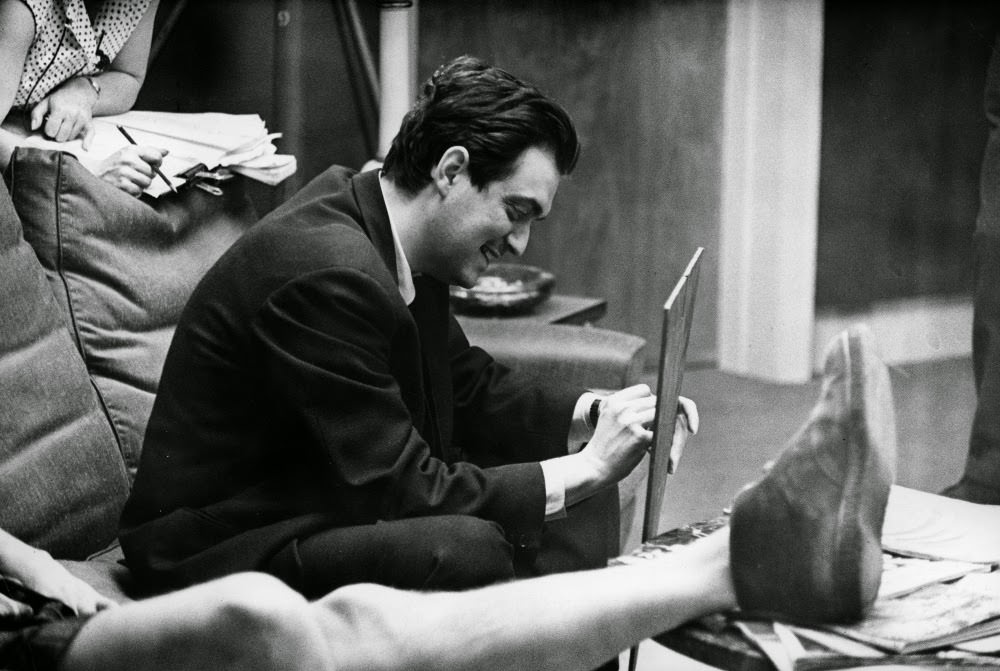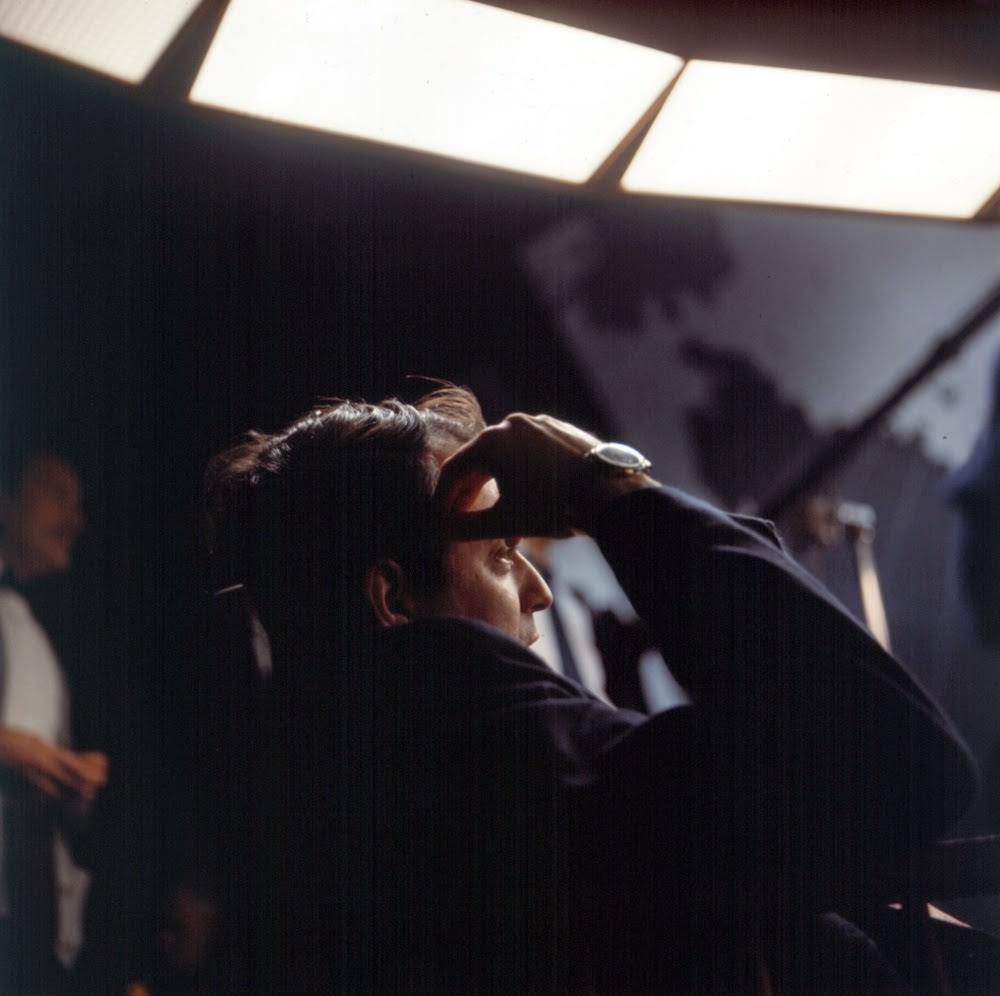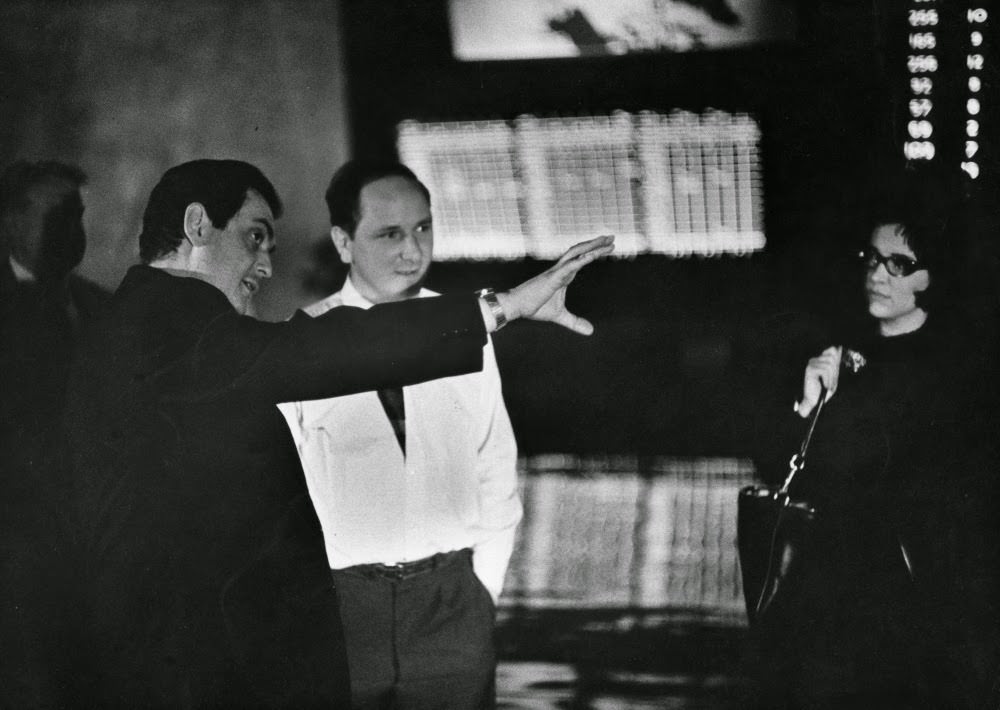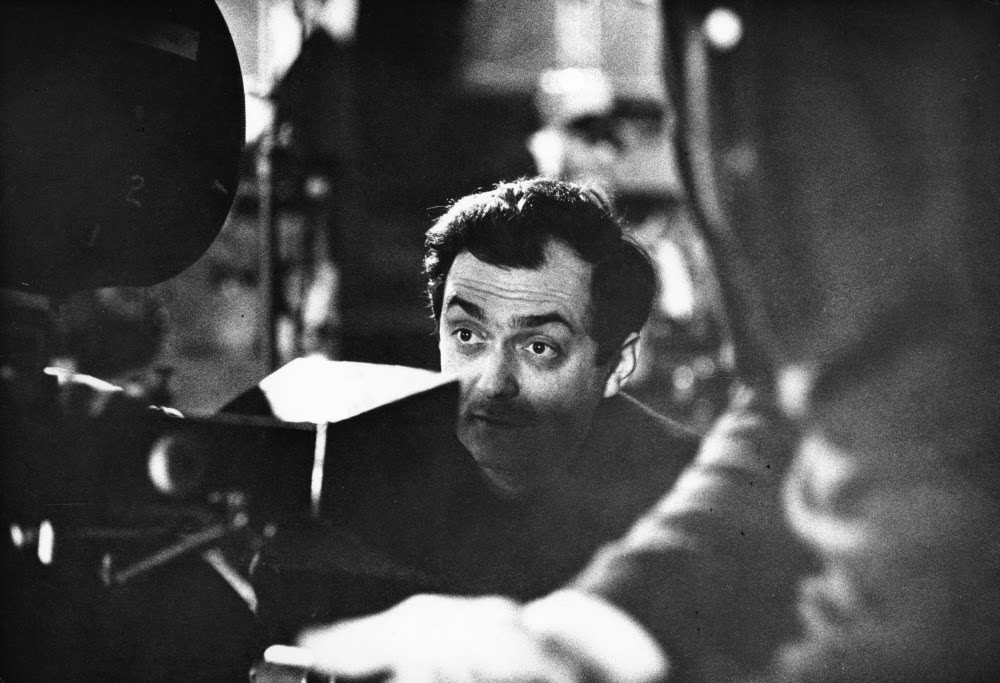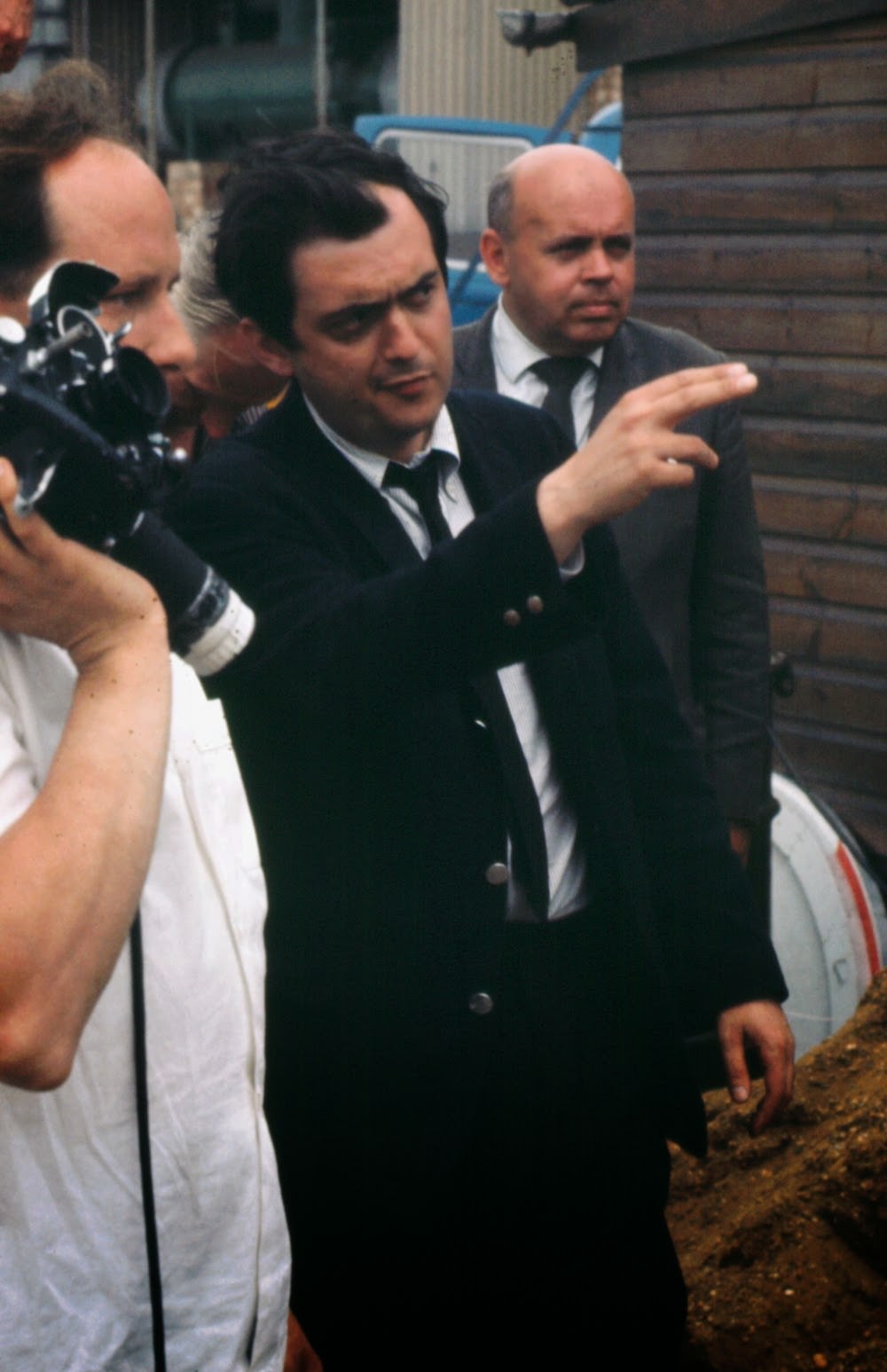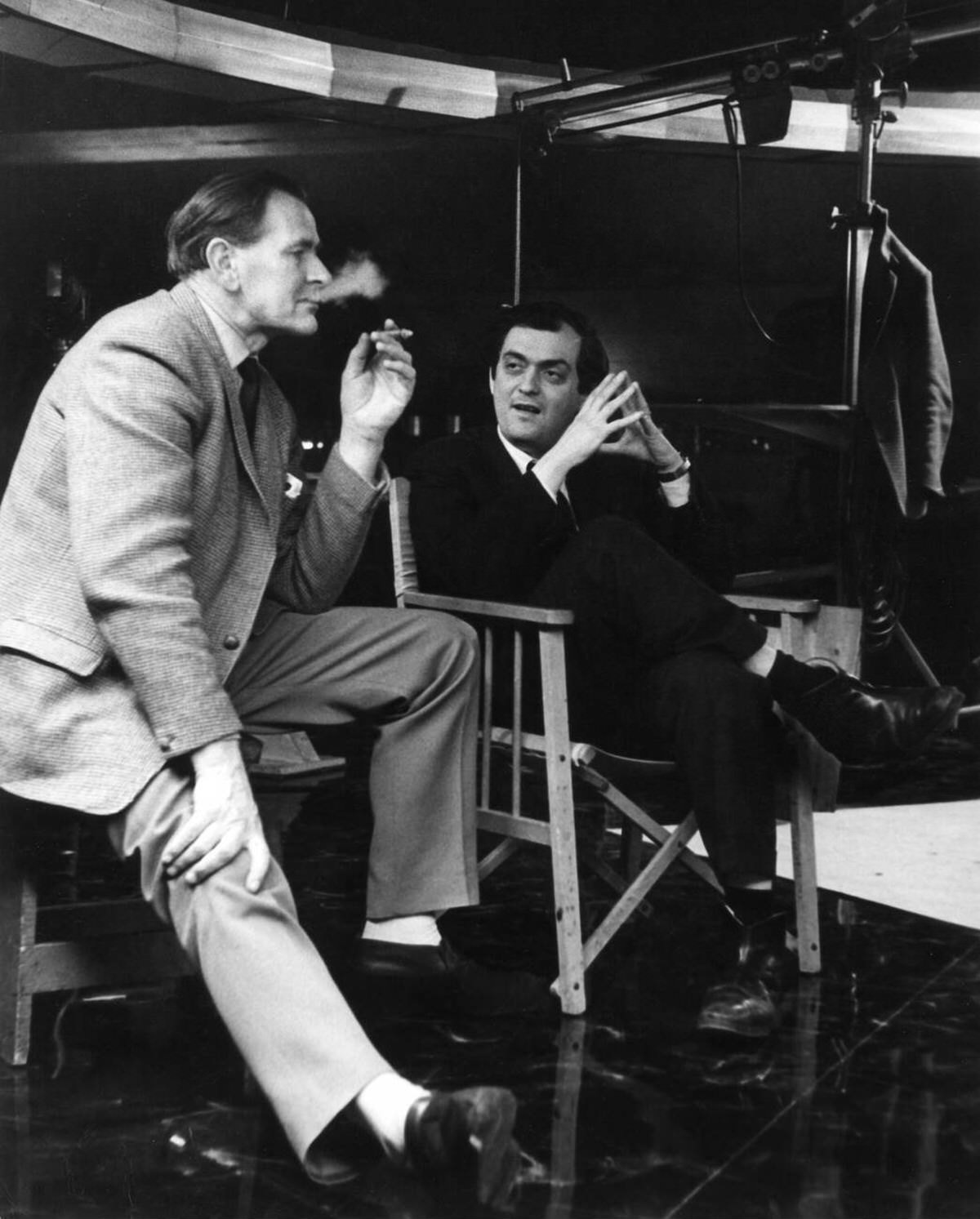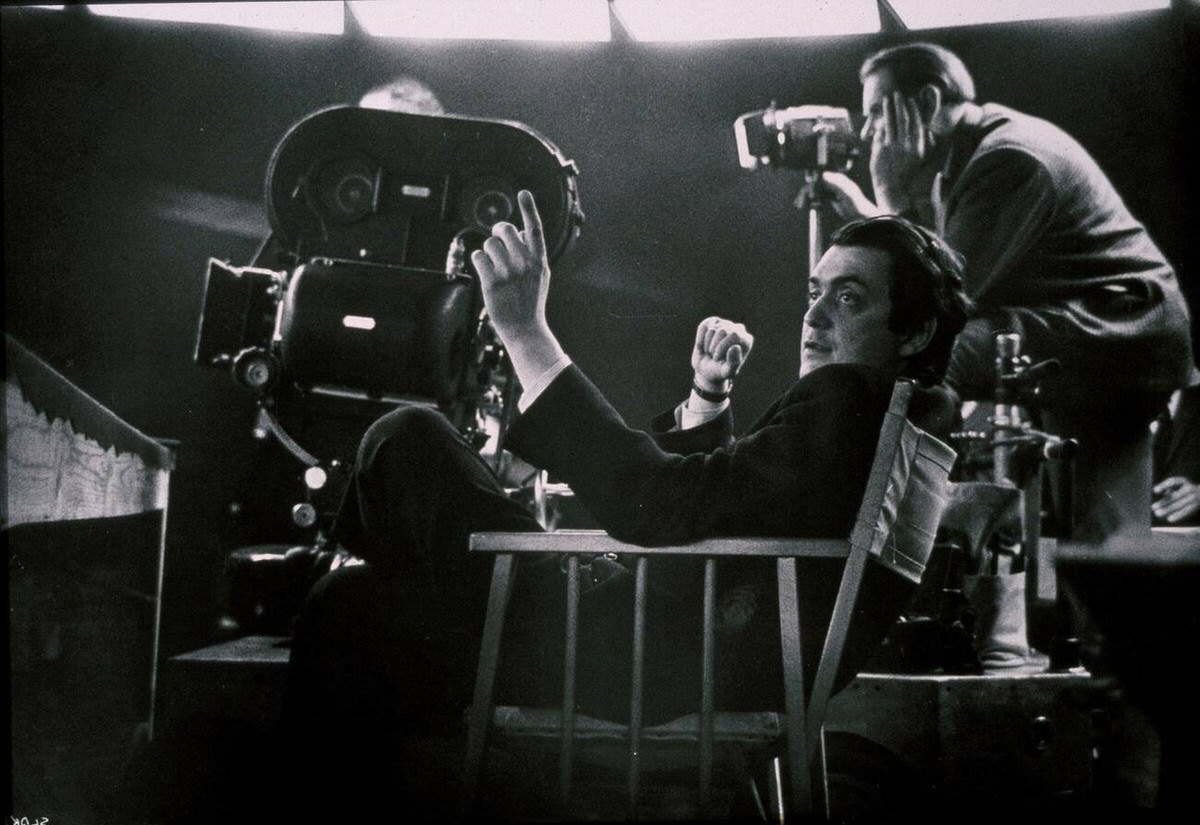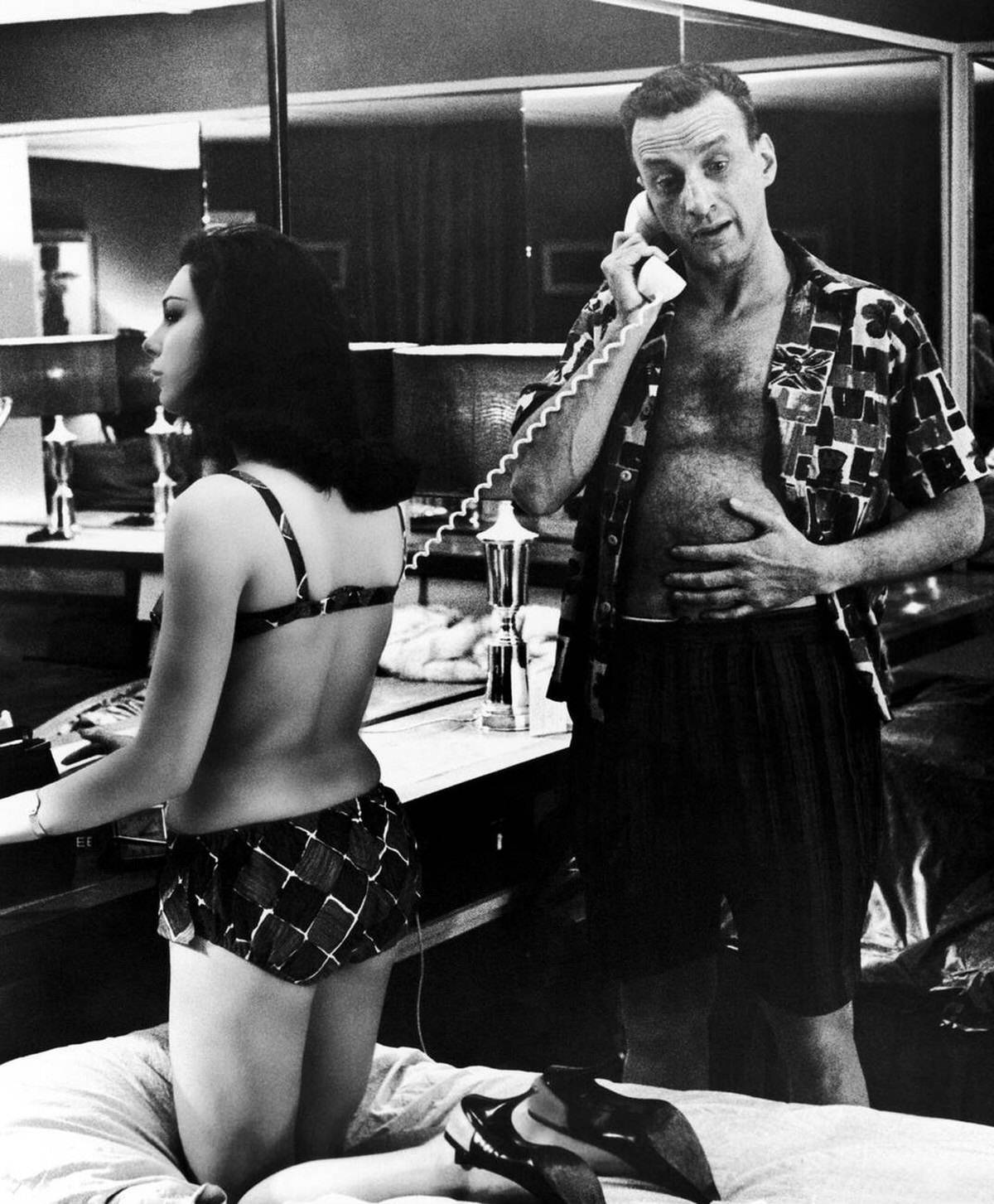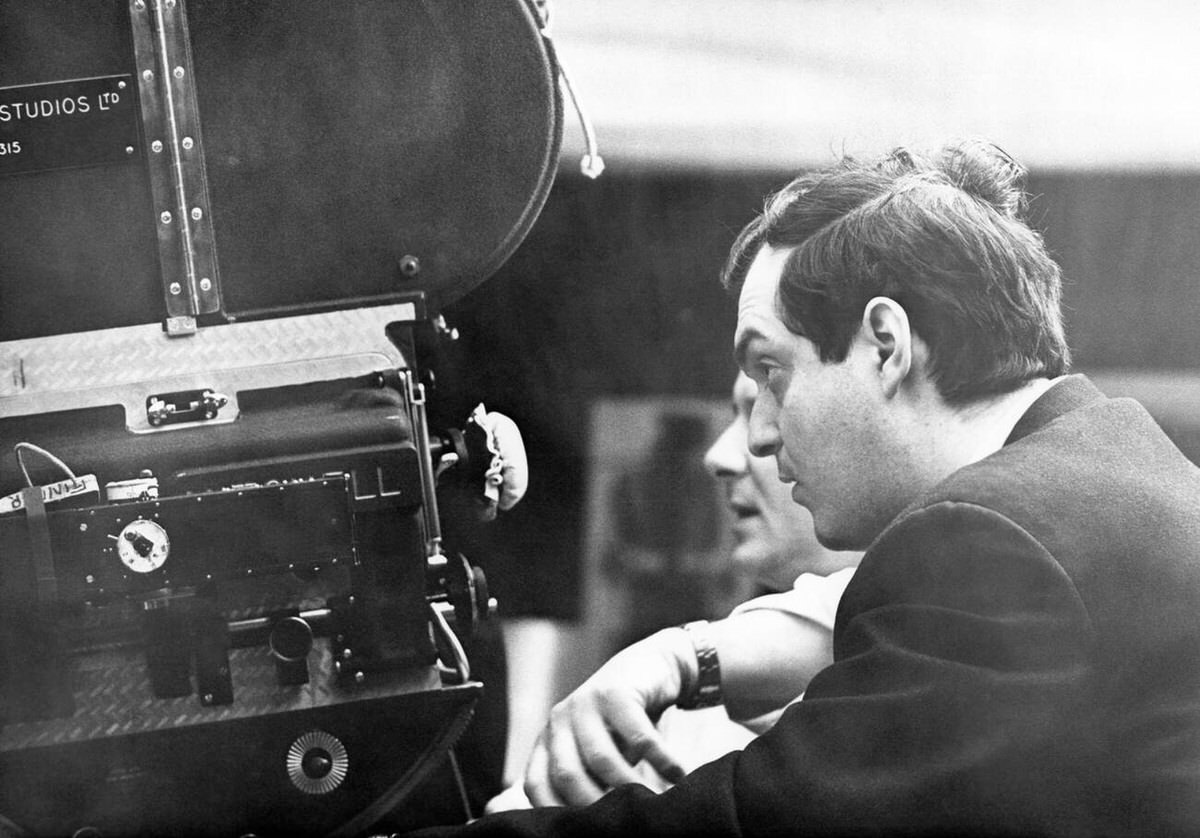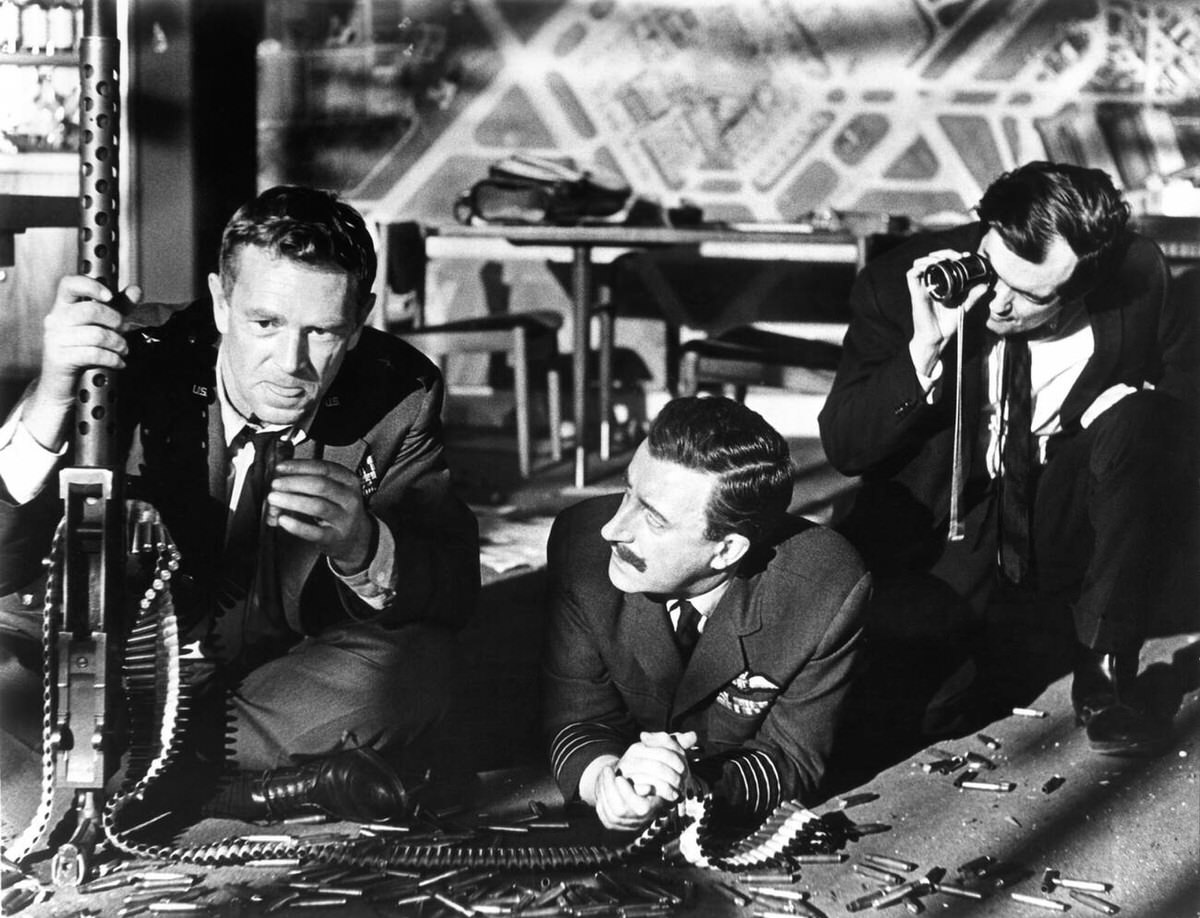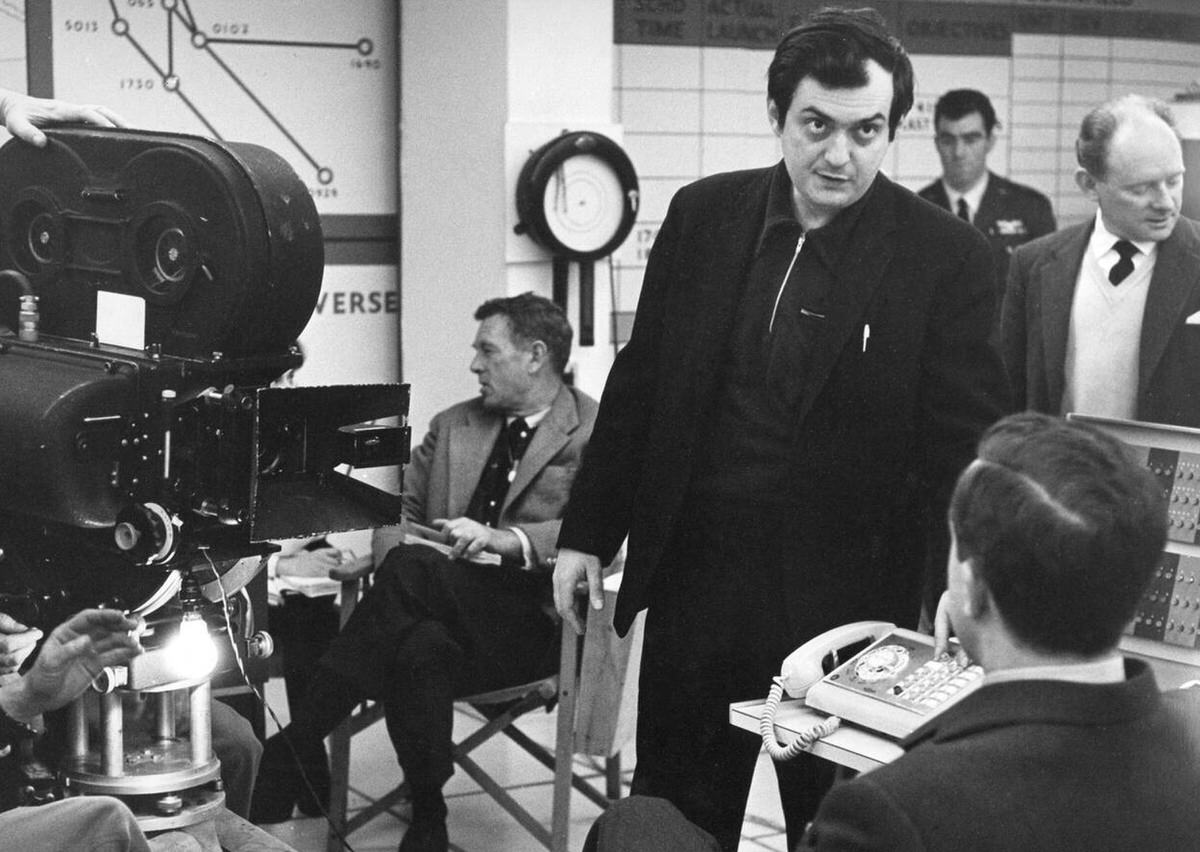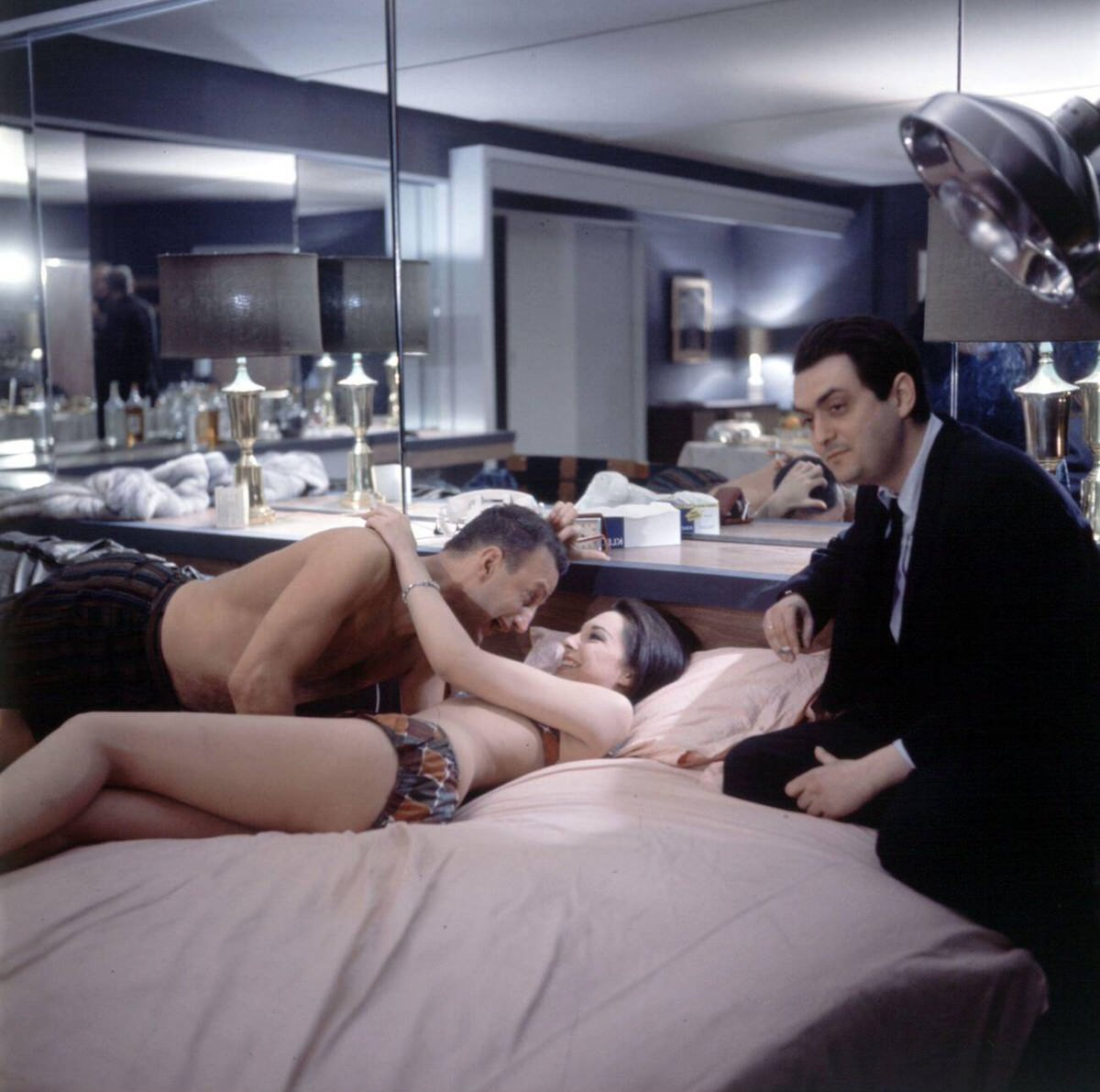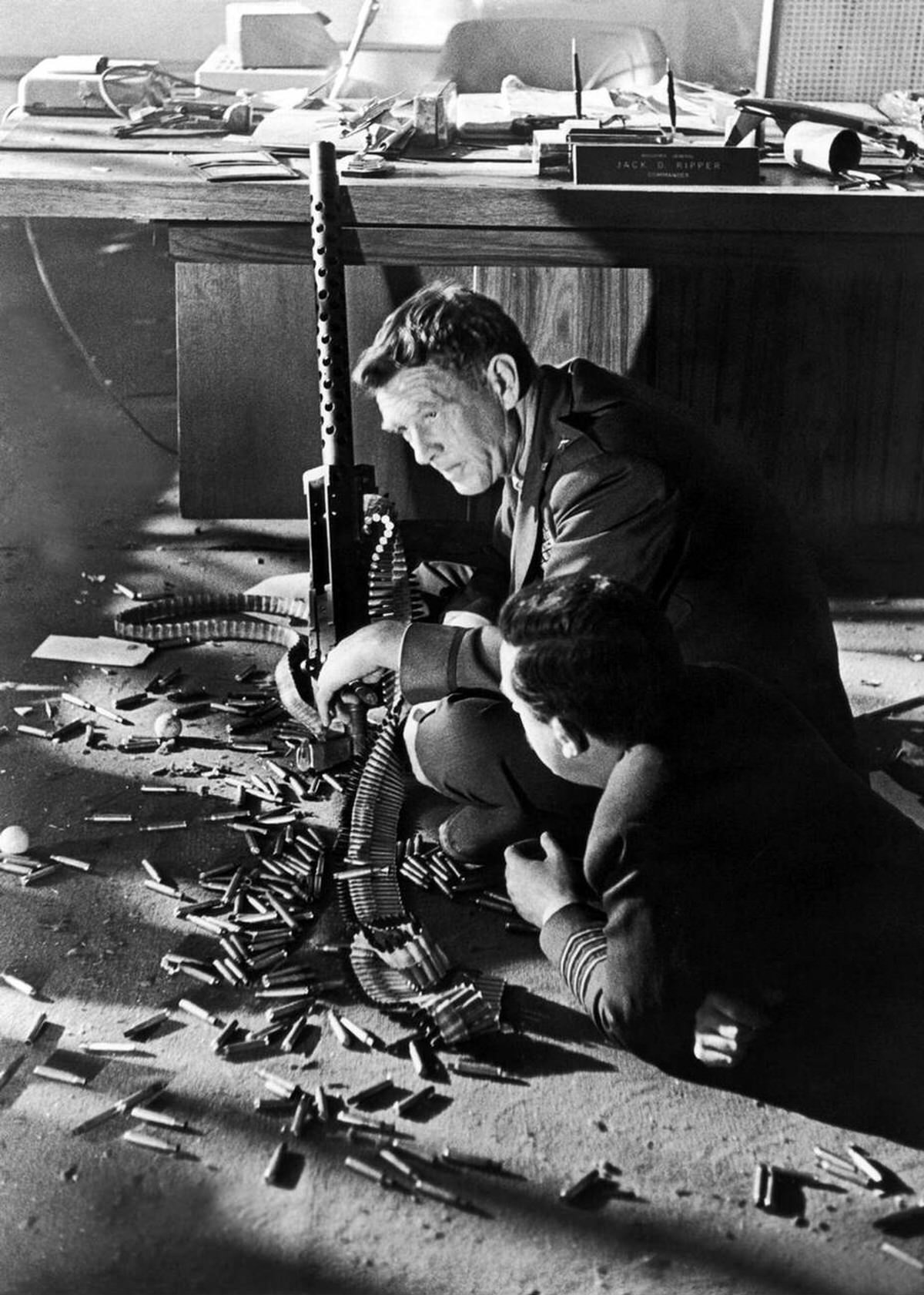

Stanley Kubrick started developing Dr. Strangelove as a serious thriller. He bought the rights to Peter George’s novel Red Alert, a straight dramatic story about an accidental nuclear war, and began writing a serious screenplay. But the more Kubrick worked on the material, the more absurd it seemed to him. The premise — that one unhinged general could trigger the end of the world — was too dark to play straight. He shifted the entire project to dark comedy, a decision that changed everything about how the film was made.
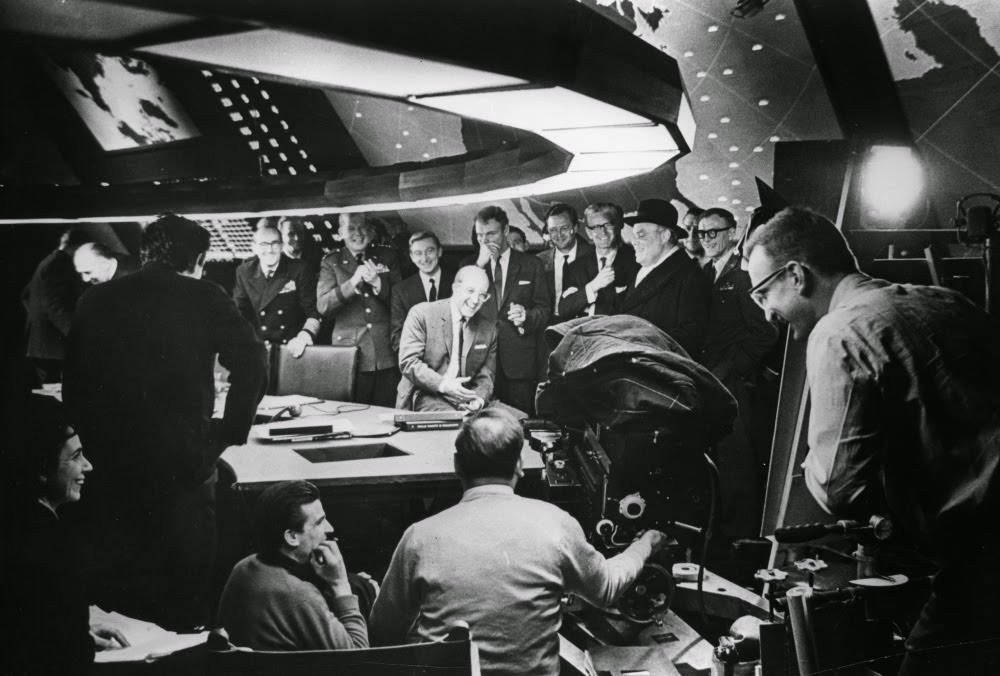
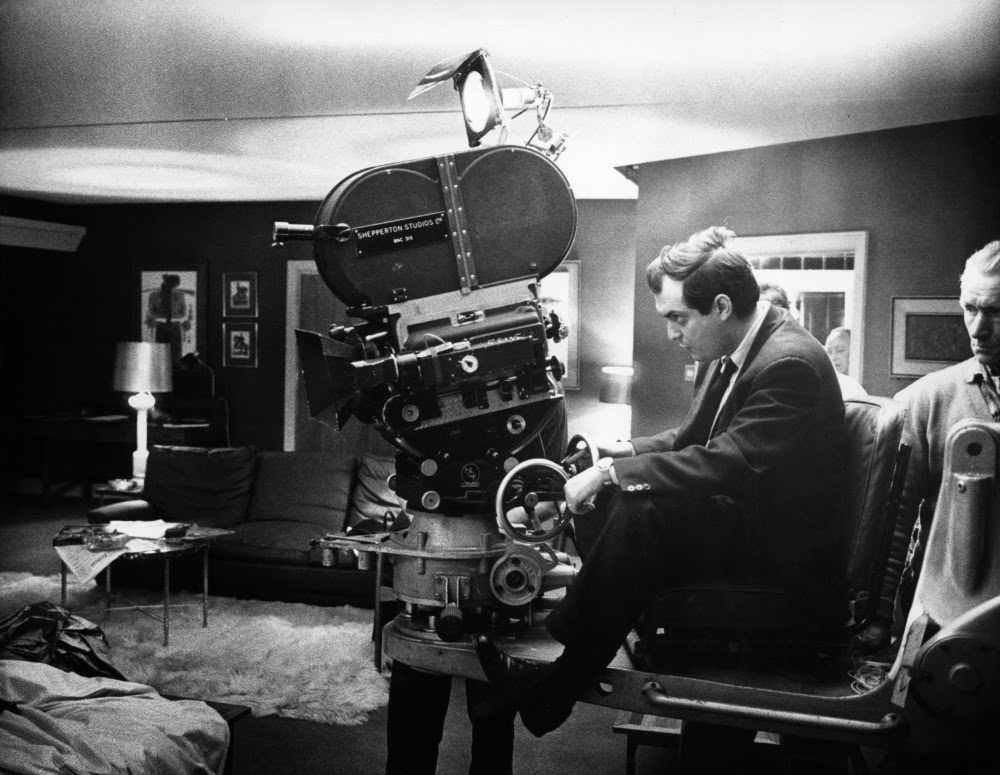
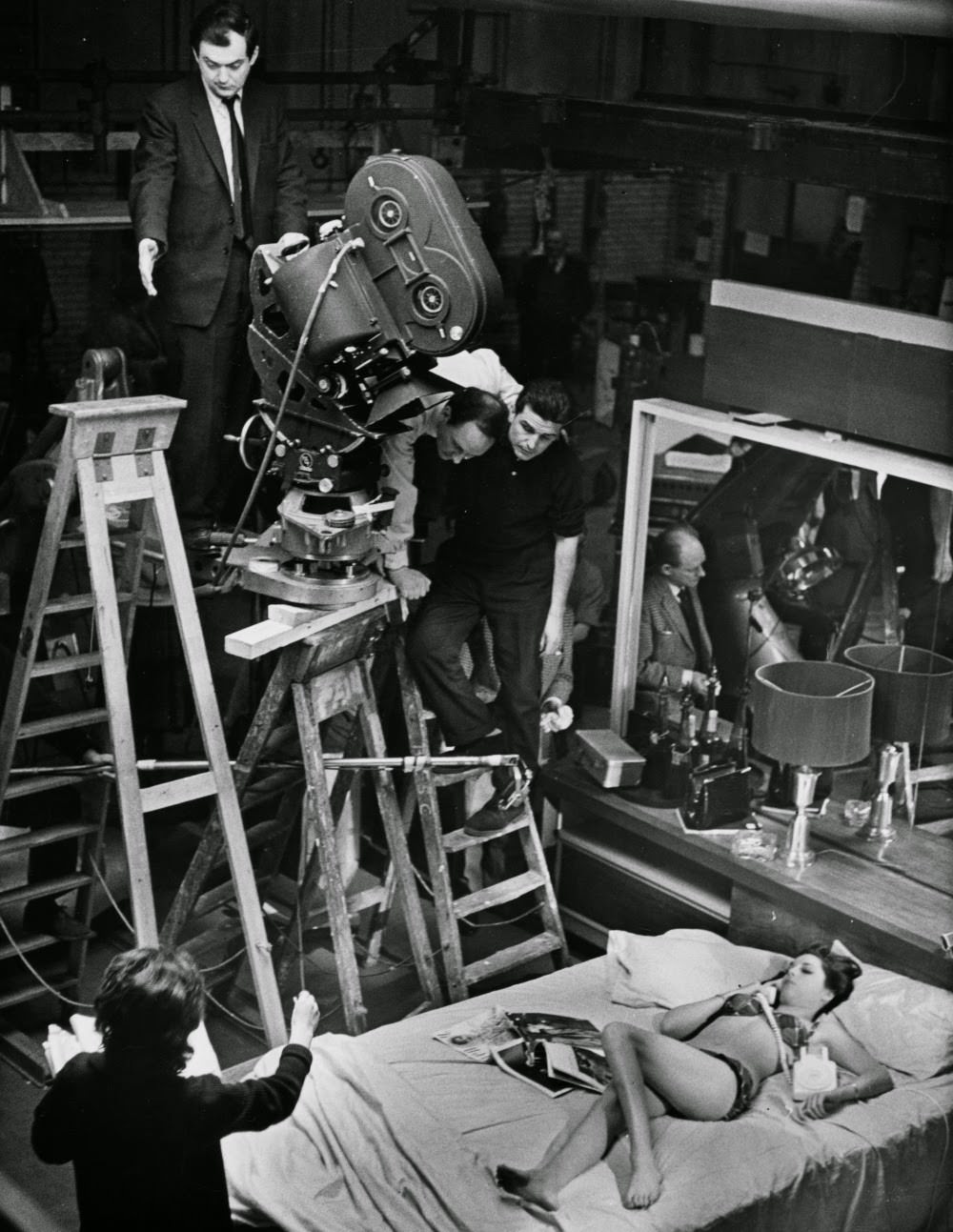
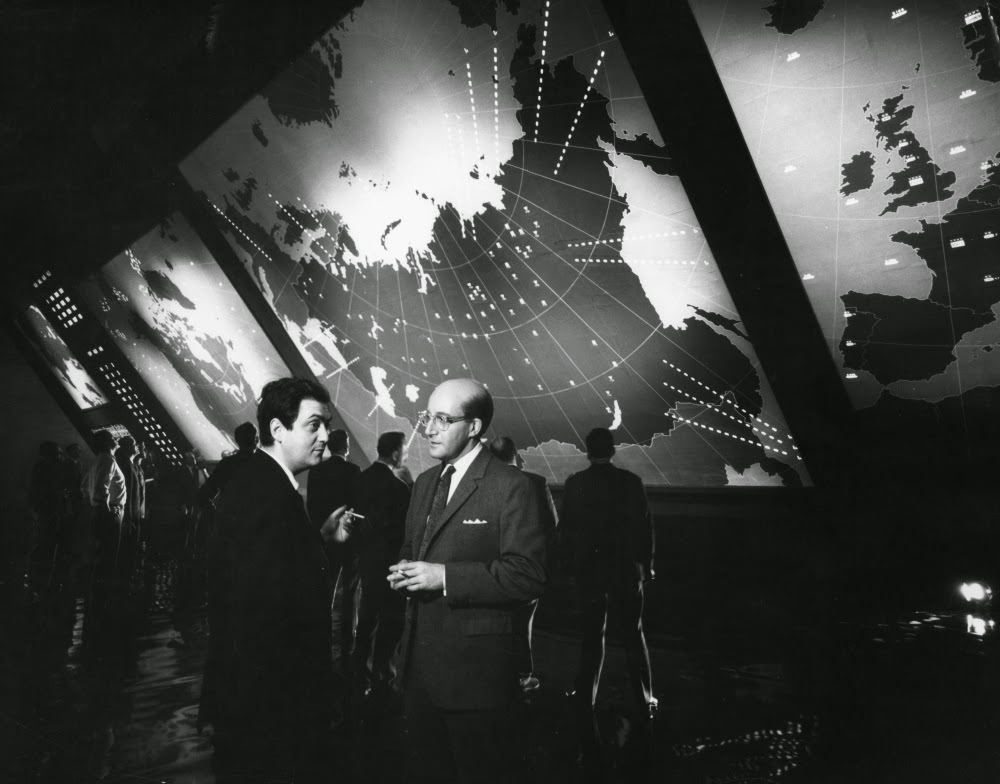
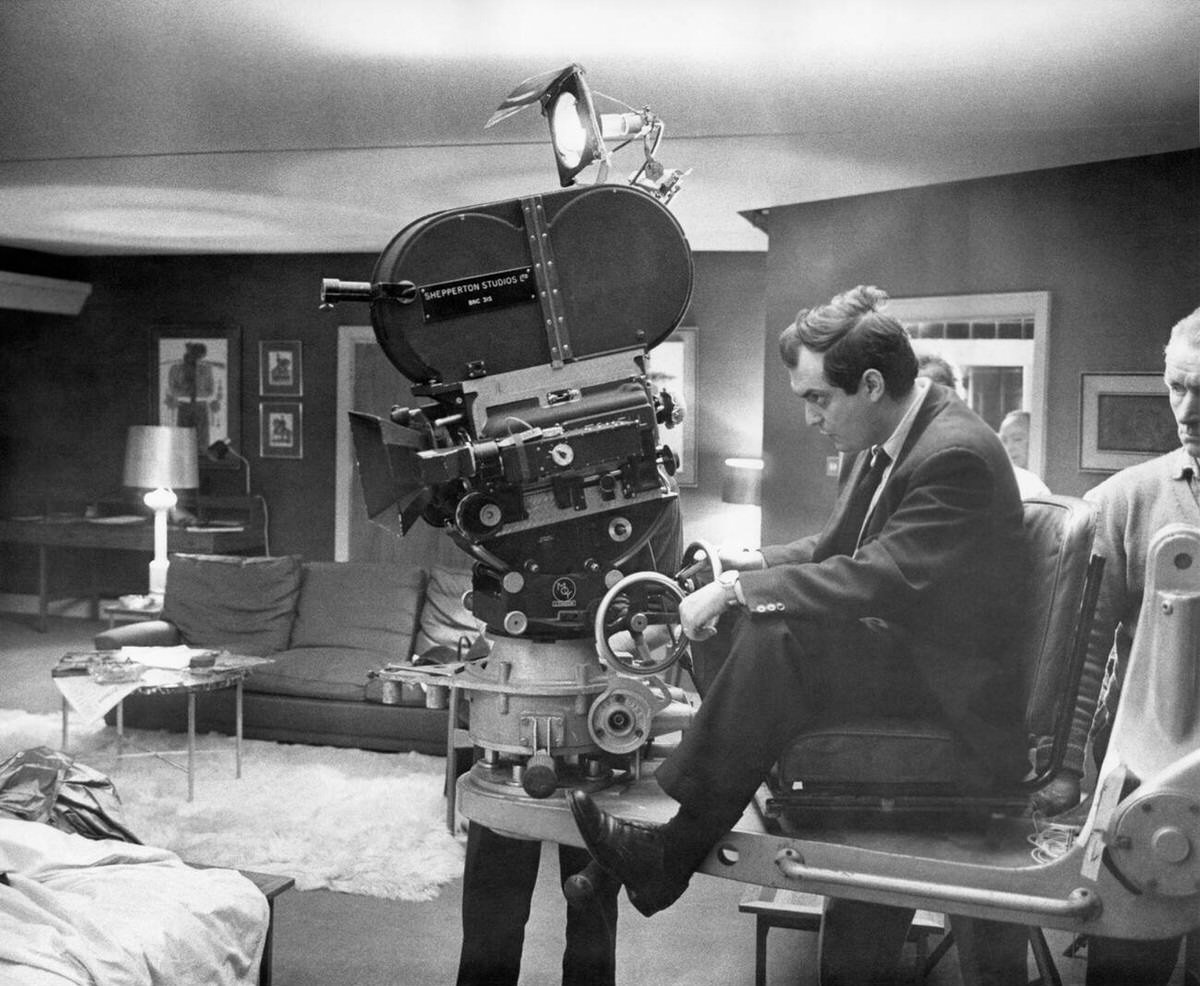
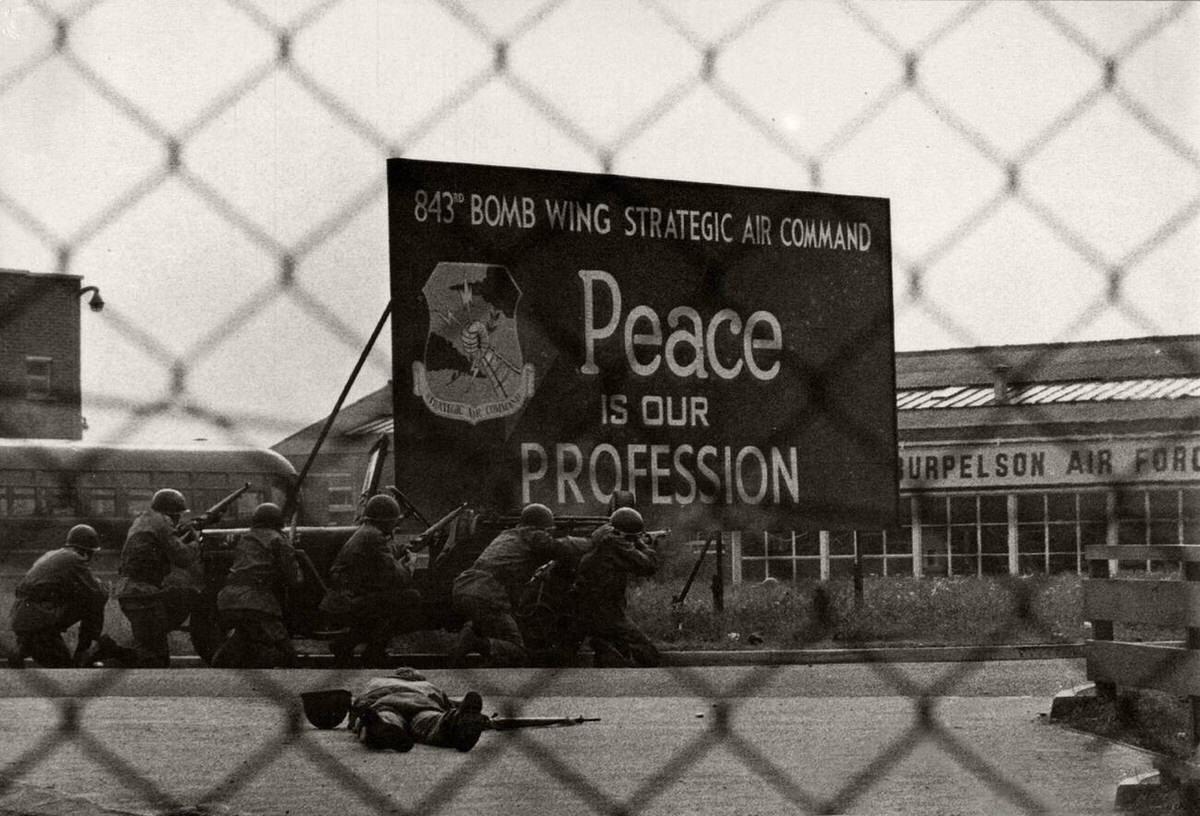
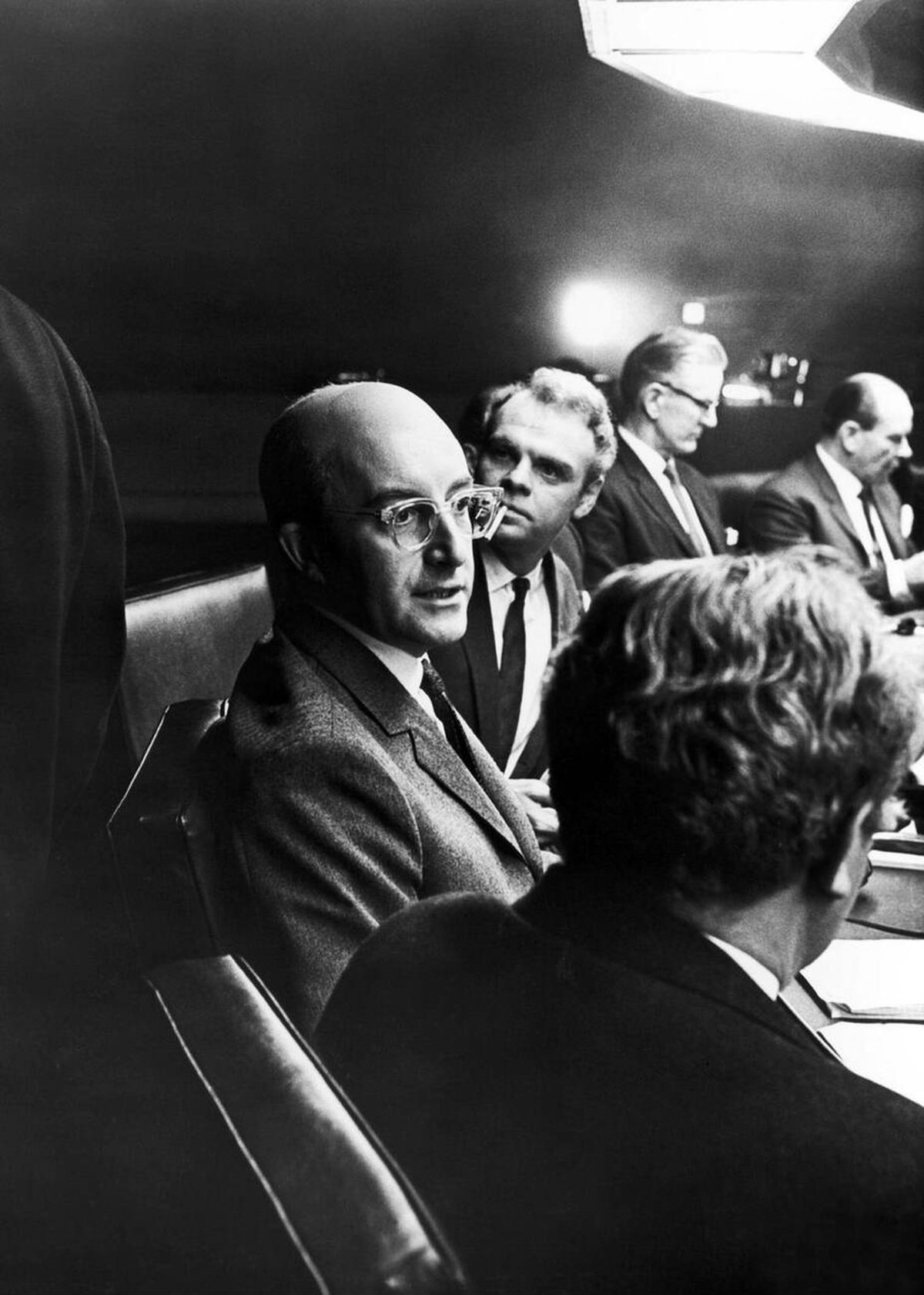
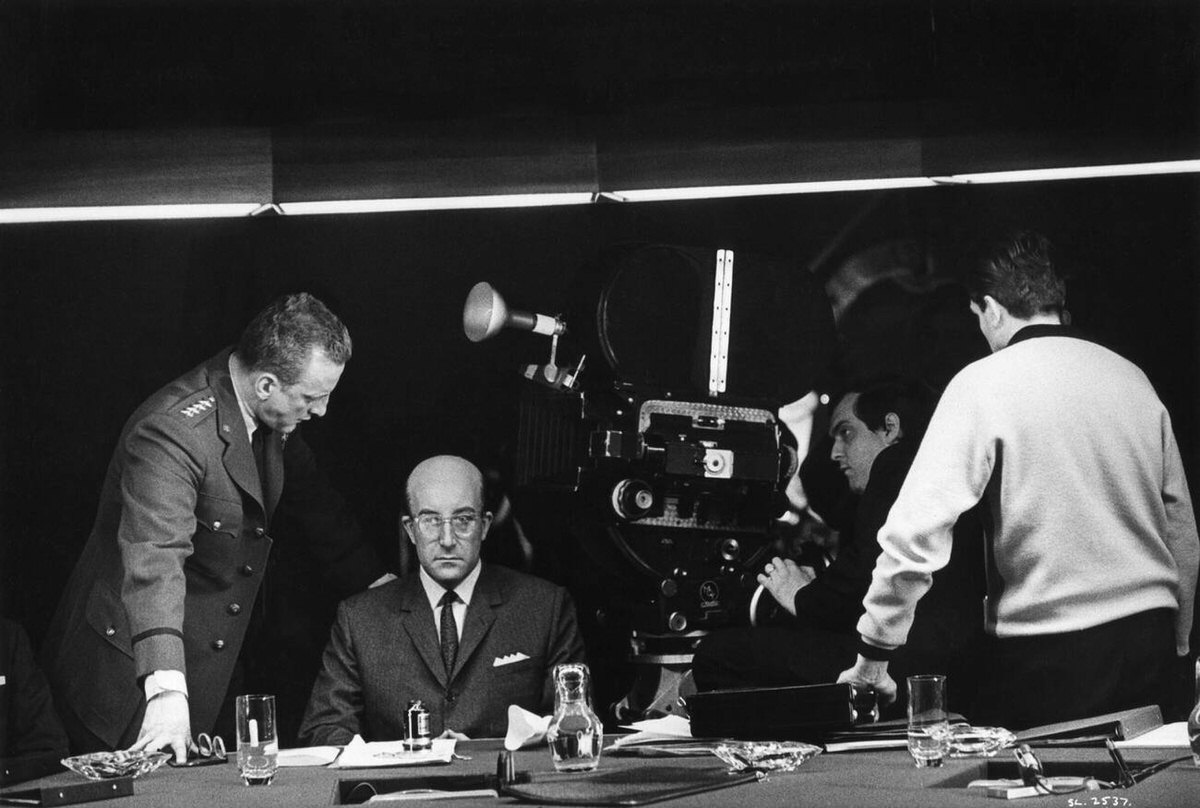
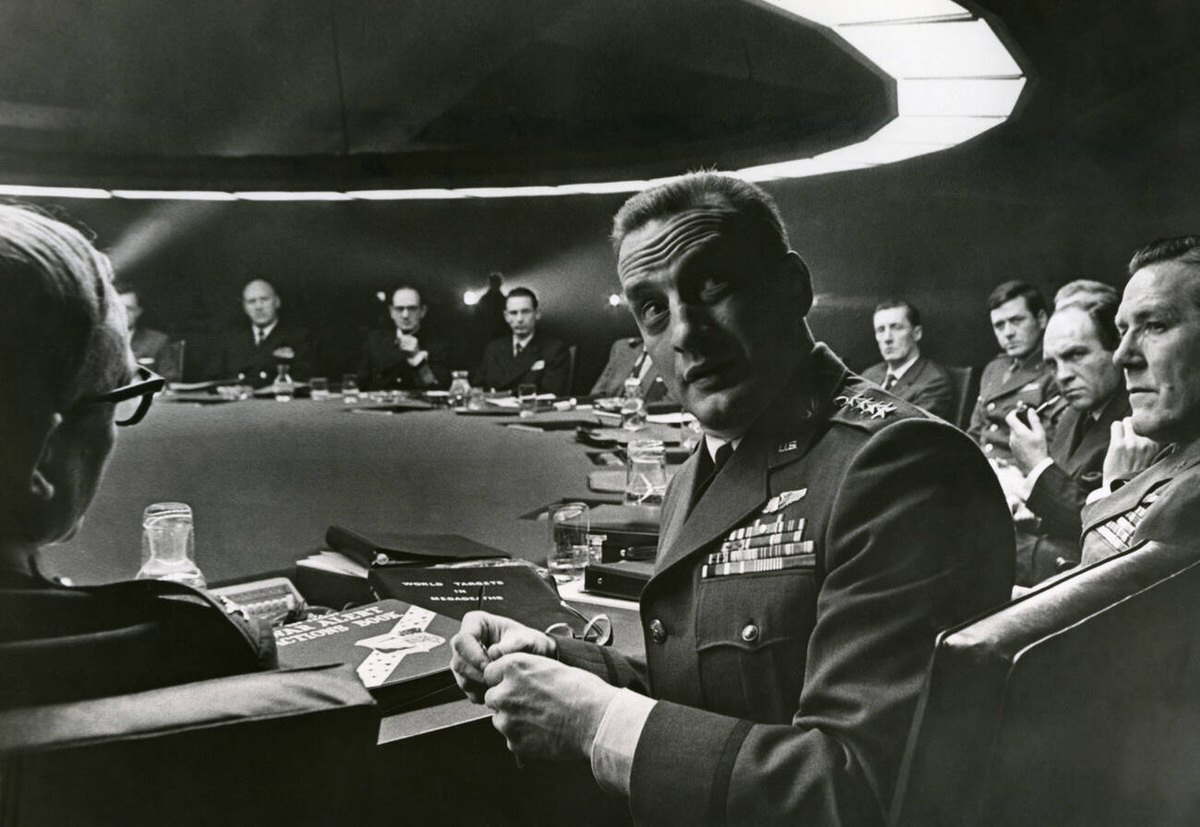
Filming took place entirely at Shepperton Studios in England in 1963. Kubrick built three large sets: the War Room, the cockpit of a B-52 bomber, and Burpelson Air Force Base. The War Room is the most famous. Production designer Ken Adam created it from scratch, constructing a circular table 130 feet in diameter under a cone-shaped ceiling with overhead lighting. The set cost $200,000 and was so convincing that President John F. Kennedy’s advisors reportedly asked if the real Pentagon War Room looked like it.
Read more..
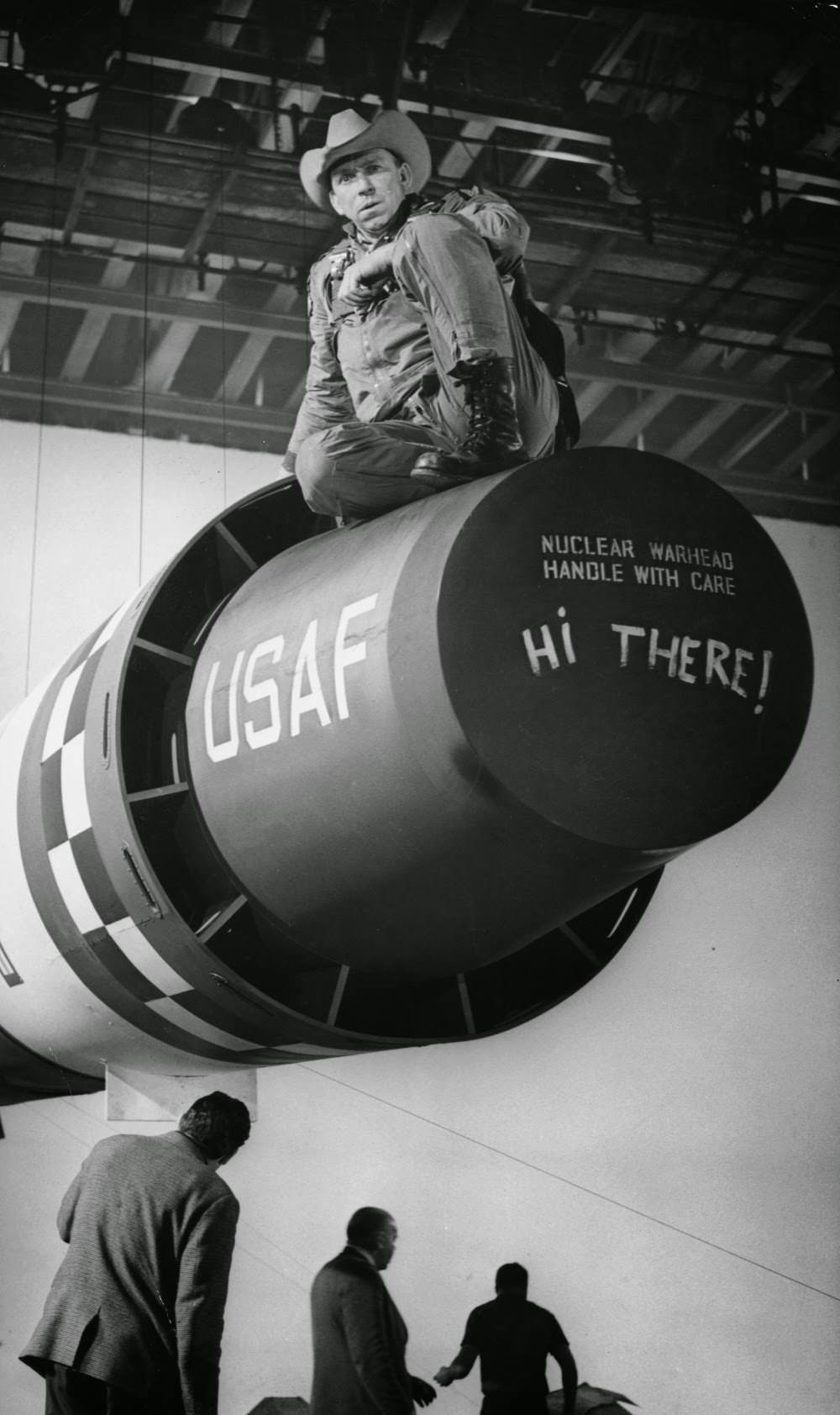
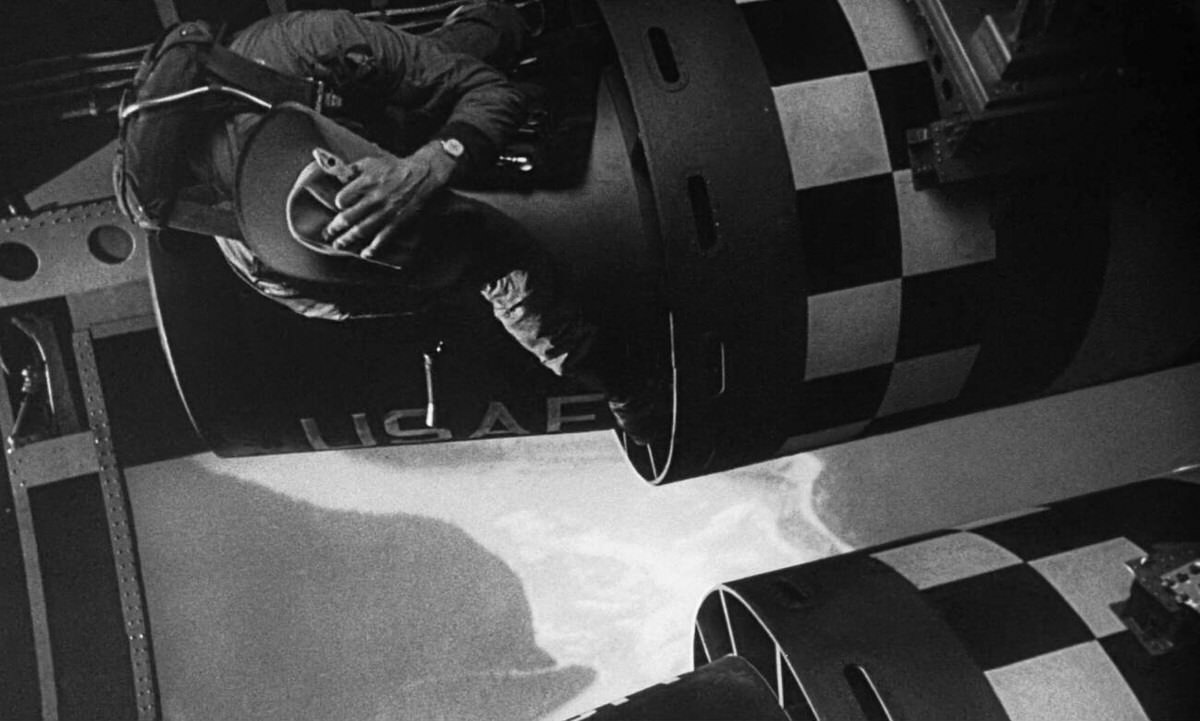
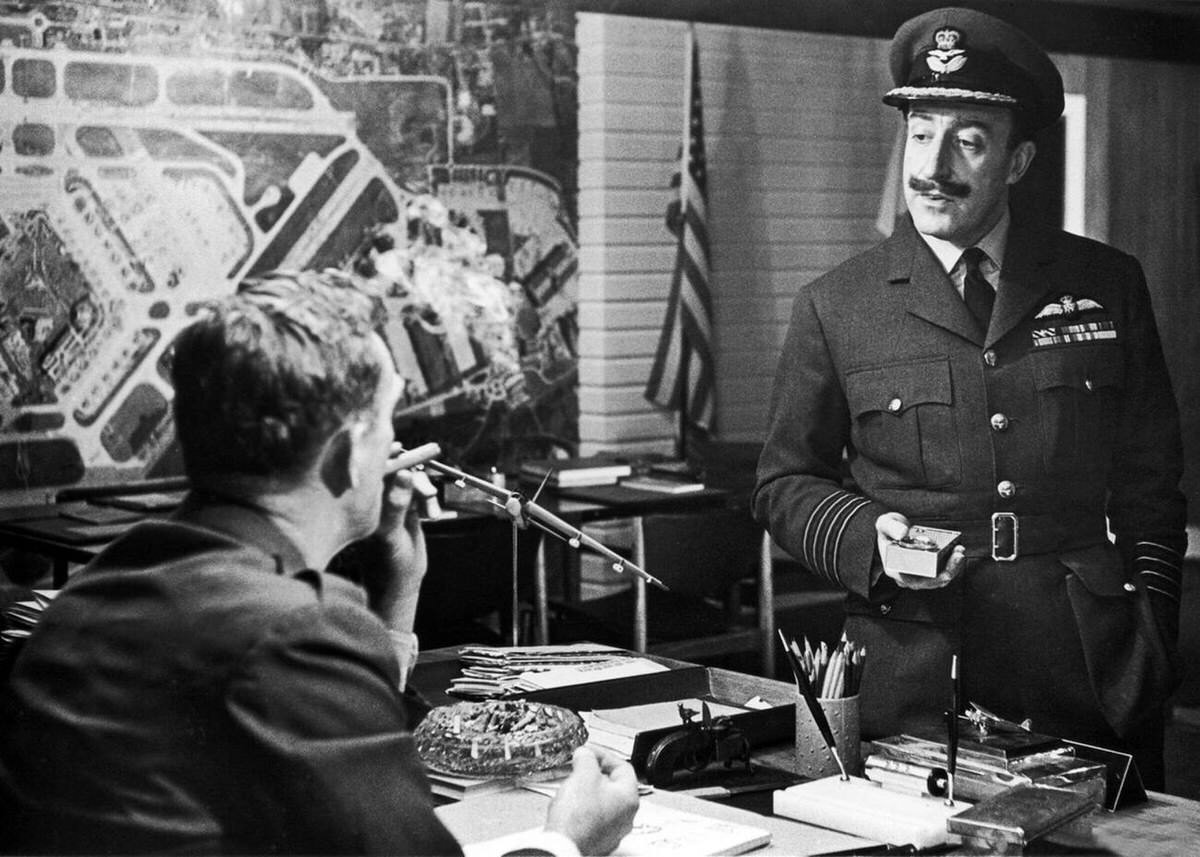
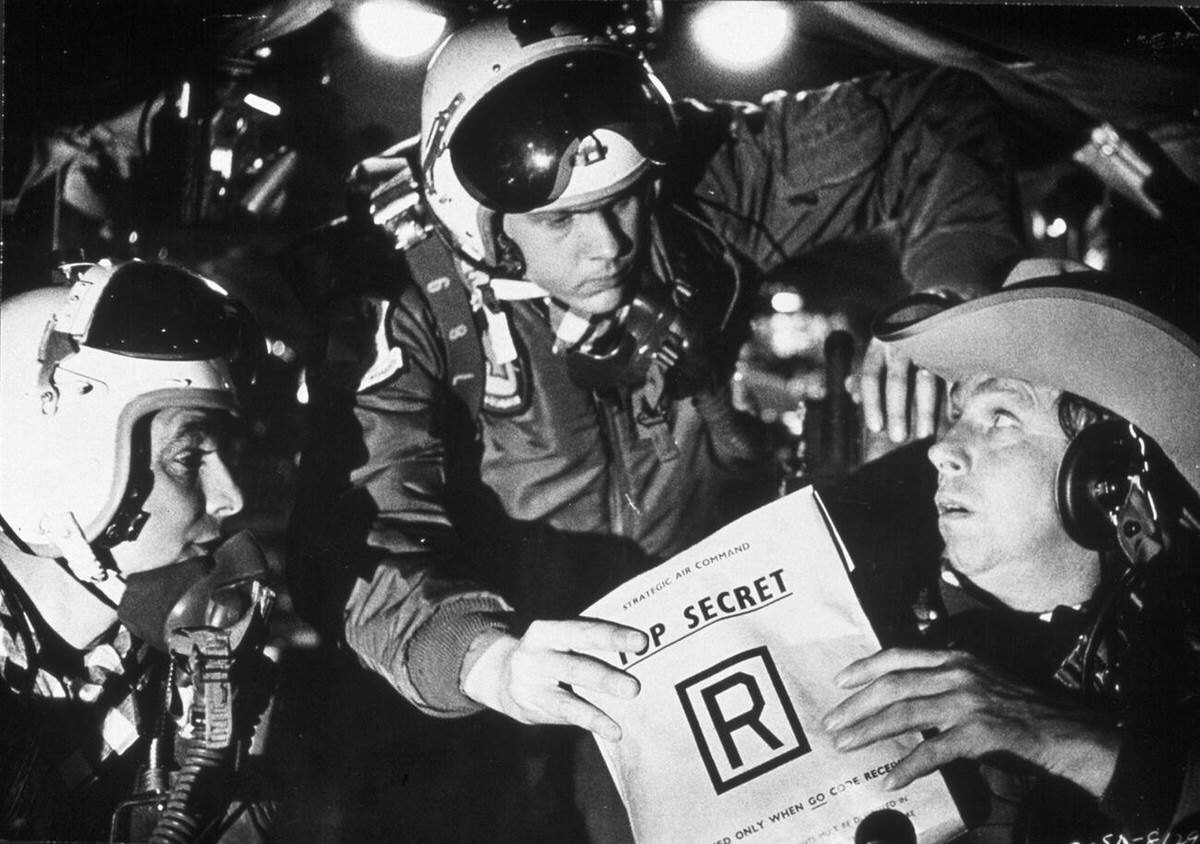
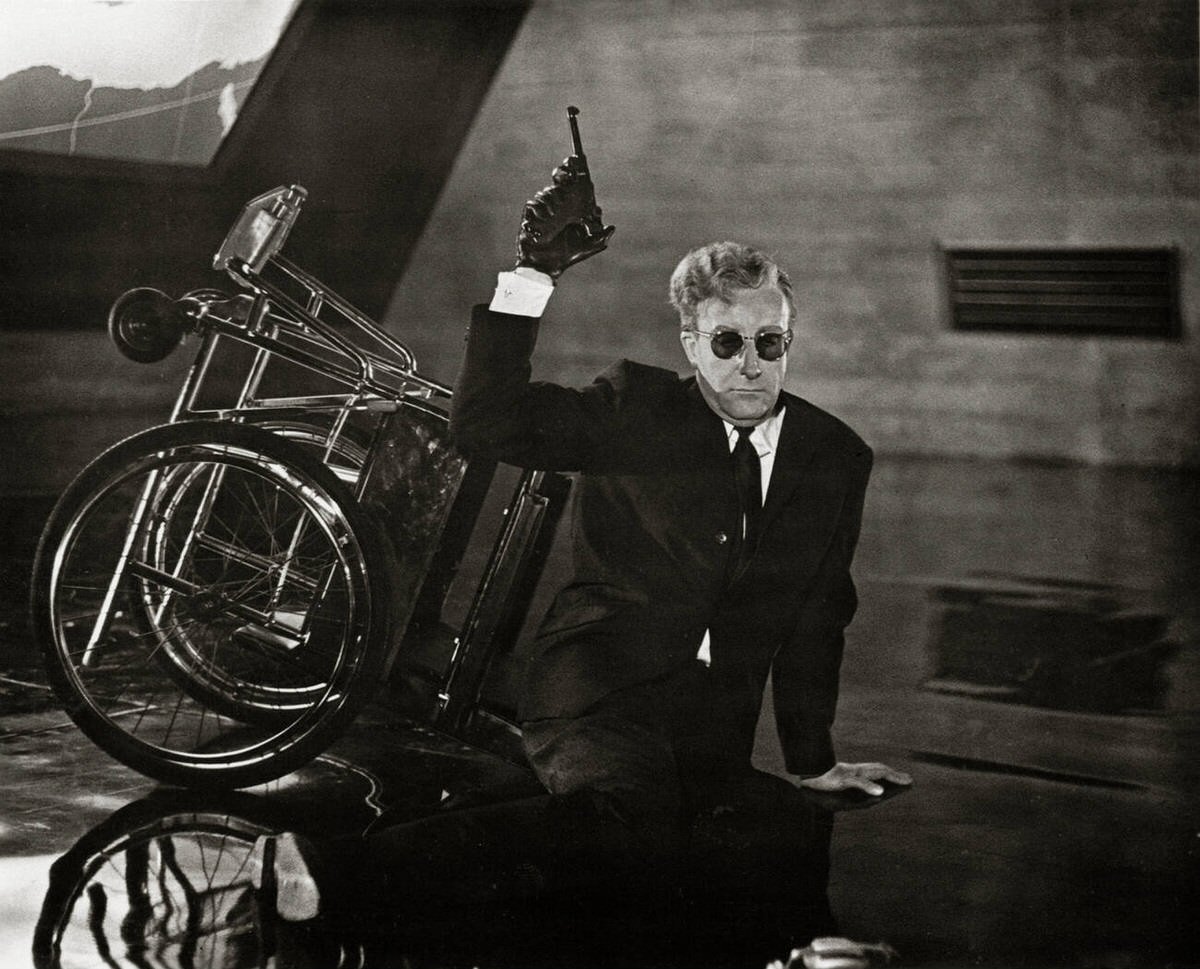
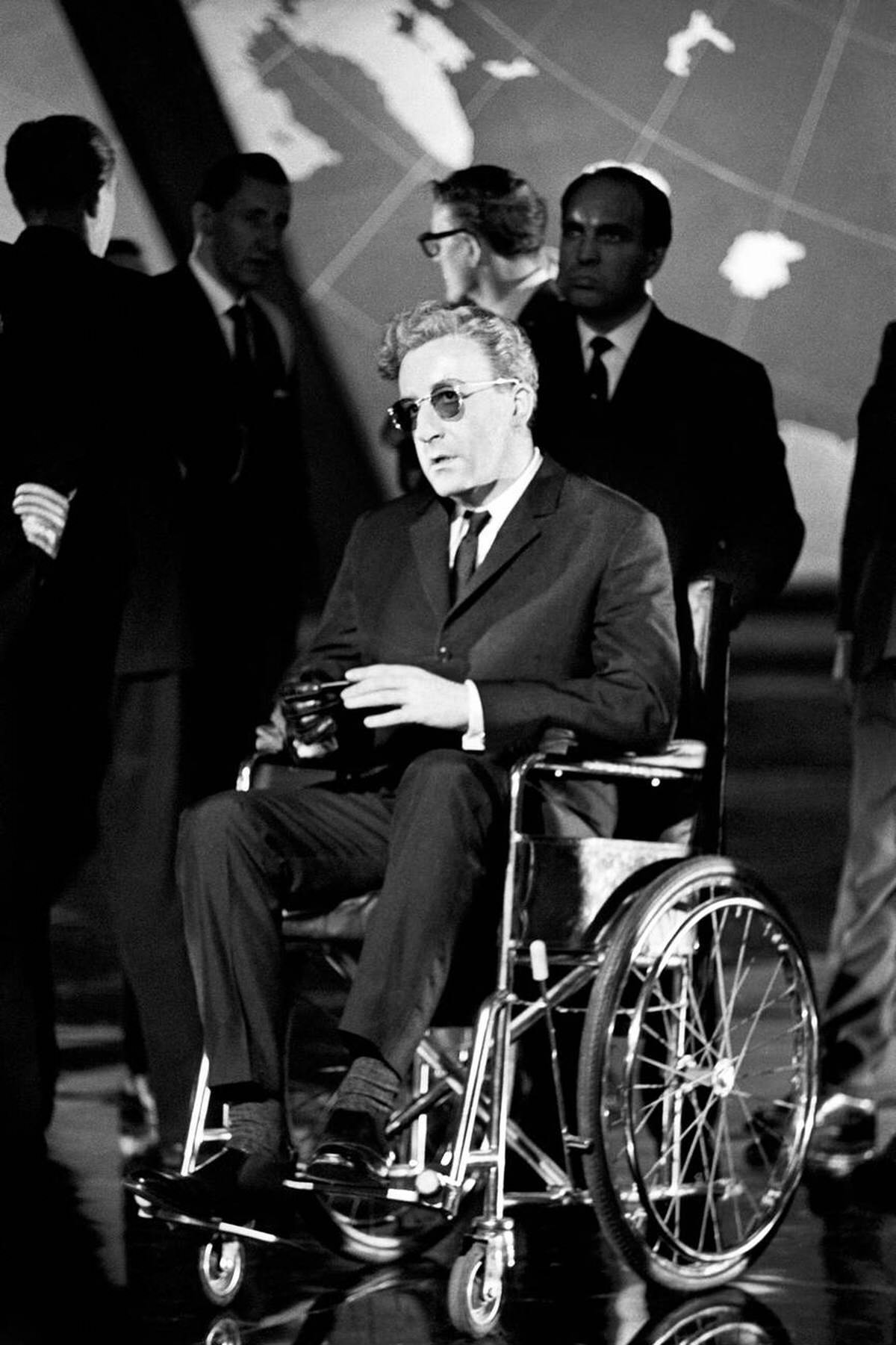
Peter Sellers was originally cast in four roles. He played Group Captain Lionel Mandrake, President Merkin Muffley, and the title character Dr. Strangelove. The fourth role was Major T.J. “King” Kong, the B-52 pilot. Sellers had a minor ankle injury that made it difficult to move around the cockpit set, and Kubrick ultimately recast the role with Slim Pickens, a rodeo cowboy turned actor who played the part completely straight — which made it even funnier.
The physical comedy Sellers brought to Dr. Strangelove required multiple takes. The character’s right hand kept trying to make a Nazi salute against its owner’s will, and Sellers developed the bit largely through improvisation on set. Kubrick kept the cameras rolling through long takes, letting Sellers explore the character in real time. Many of the funniest moments in the finished film came directly from those unscripted choices.
Kubrick shot a pie fight scene for the film’s ending, involving the entire cast hurling pies at each other in the War Room. He filmed it, edited it, and then cut it entirely. He felt it undermined the dark tone he had carefully built. The film ended instead with the bomb drop and the mushroom cloud montage set to Vera Lynn’s “We’ll Meet Again” — a choice that landed far harder.