
Brian De Palma’s Scarface is one of the most talked-about films in Hollywood history. The production behind it was as chaotic, controversial, and intense as the movie itself. From the casting battles to the cocaine-fueled set disputes, almost nothing about making Scarface went smoothly — and the finished film carries the marks of every fight that went into it.
The Script That Outraged Everyone
Oliver Stone wrote the screenplay while dealing with his own serious cocaine addiction. He later said the drug gave him access to a world he understood firsthand, and the excess in the script reflected what he was living through during the writing process. Stone delivered a draft that was longer, more violent, and more explicit than almost anything that had been produced in mainstream Hollywood at that point.
The script immediately triggered protests before a single frame was filmed. A coalition of Cuban-American groups in Miami objected loudly to the portrayal of Cuban immigrants as criminals and drug traffickers. They organized formal protests, lobbied politicians, and pressured the production to shut down. The backlash was serious enough that De Palma and producer Martin Bregman were forced to hold community meetings in Miami to address the concerns. Those meetings did not go well. The Cuban-American community did not back down, and the film’s producers did not significantly alter the script.
Read more..
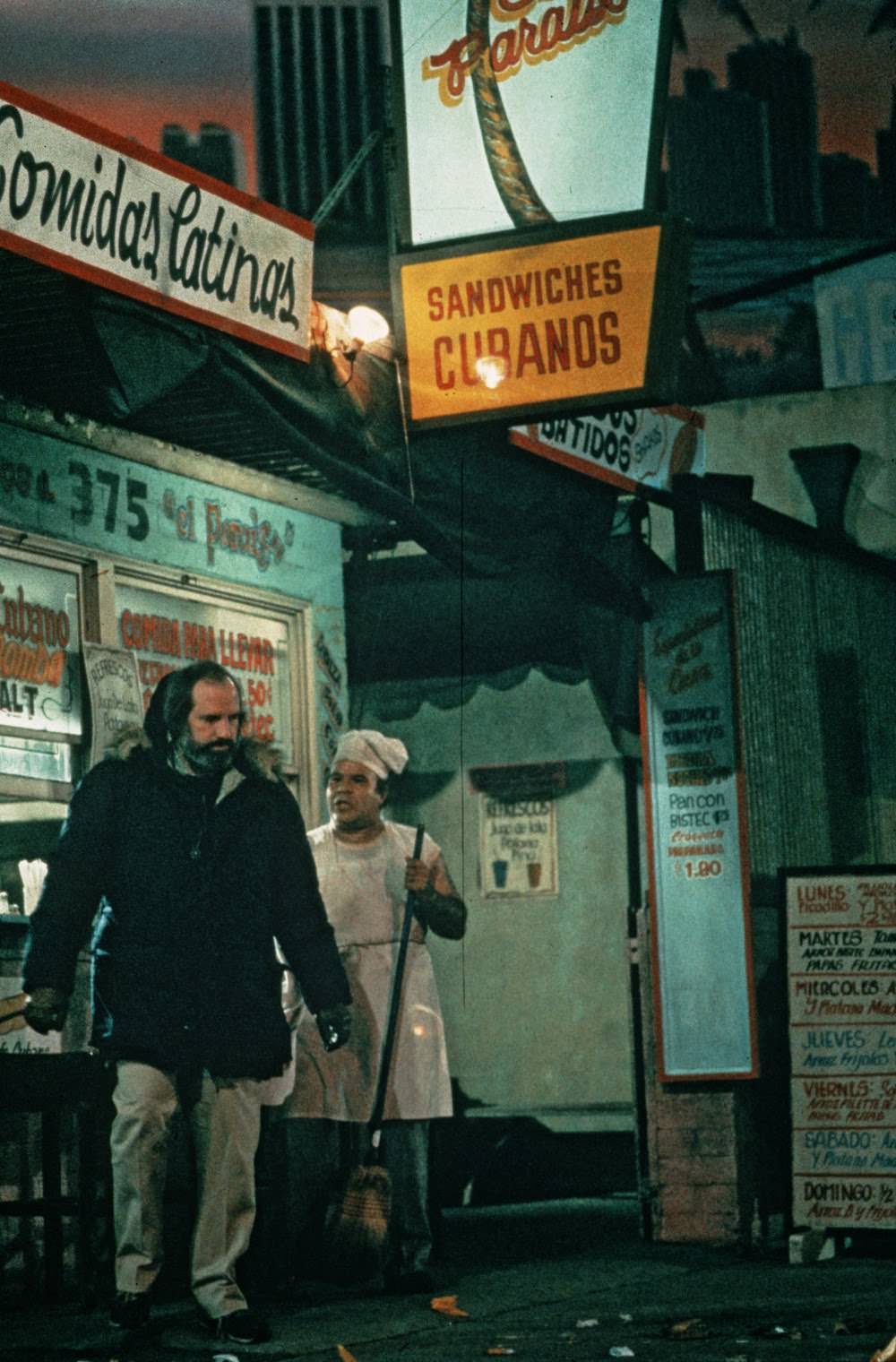
The protests had a direct effect on where the movie could be shot. Miami, which was the obvious location for a story about the Miami drug trade, became difficult to film in due to the organized opposition. Large portions of the film that were supposed to be shot in Miami ended up being filmed in Los Angeles instead. Exterior street scenes, building facades, and neighborhood sequences were reconstructed in LA to stand in for Miami locations the production could no longer access freely.
Casting Tony Montana
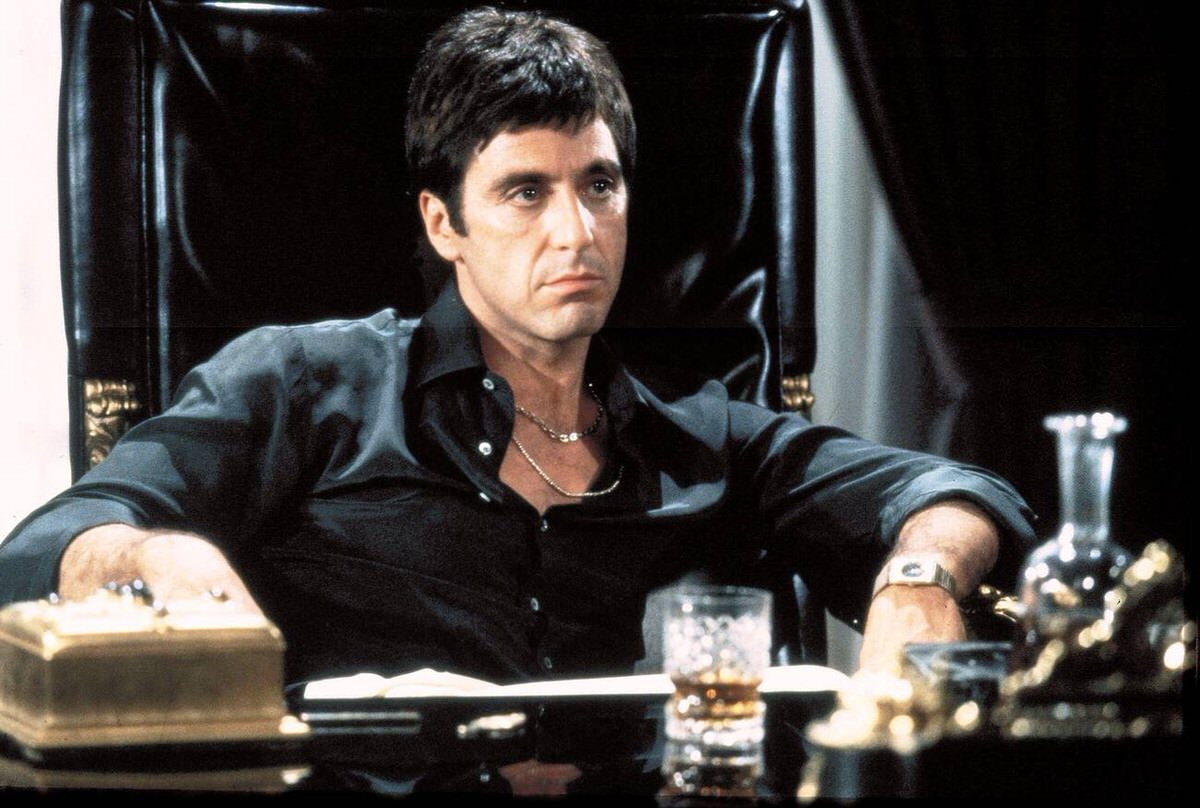
Al Pacino was not the studio’s first instinct for the role of Tony Montana. Universal Pictures had concerns about casting an Italian-American actor as a Cuban immigrant. Several studio executives pushed for an actual Latino actor in the role, and names including Raul Julia were discussed seriously. De Palma wanted Pacino, and Pacino wanted the role badly enough that he did significant preparation before anyone gave him a formal green light.
Pacino worked with a Cuban dialect coach for months before filming began. He spent time with Cuban exile communities in Miami to study speech patterns, body language, and the specific rhythms of how Cuban immigrants carried themselves. The accent he developed was not a generic approximation — it was built from direct observation and intensive coaching. Some Cuban-Americans still criticize the accent as exaggerated. Others who were part of that community in Miami during the early 1980s have said it was accurate to a specific type of Cuban street character from that era.
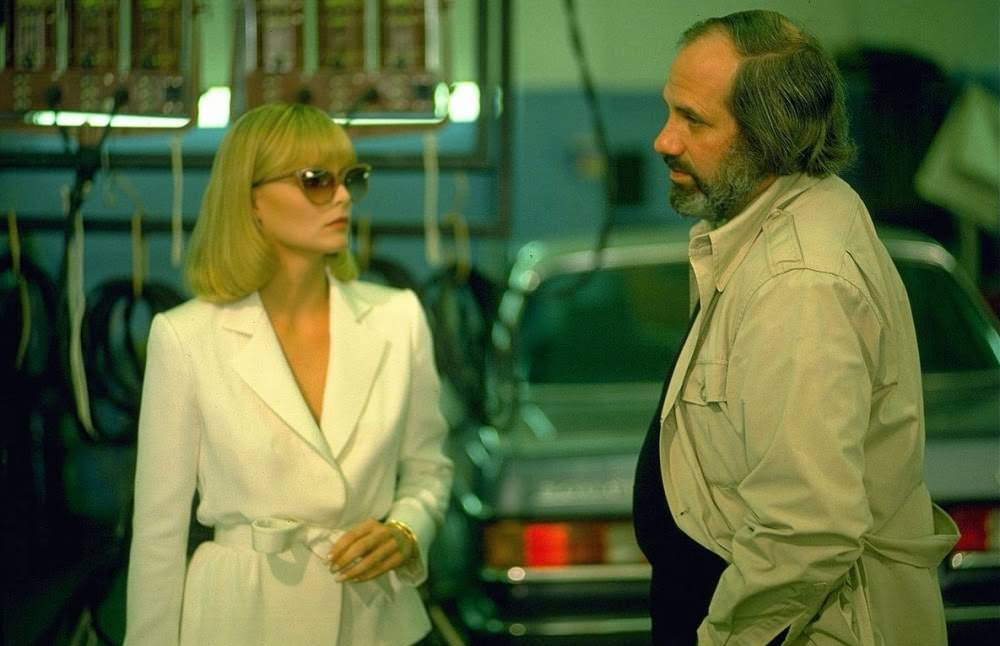
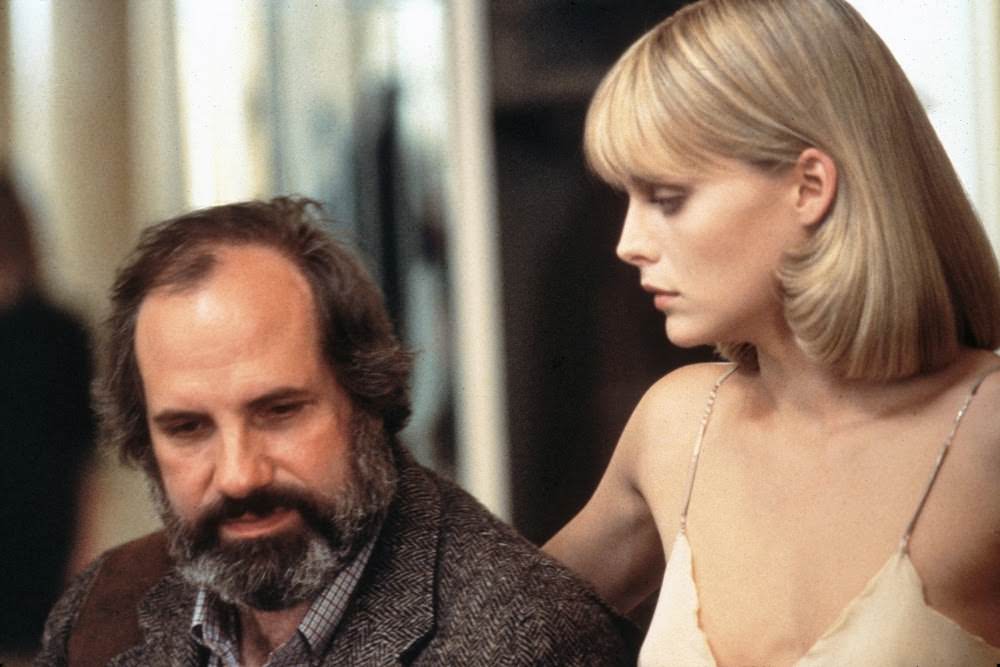
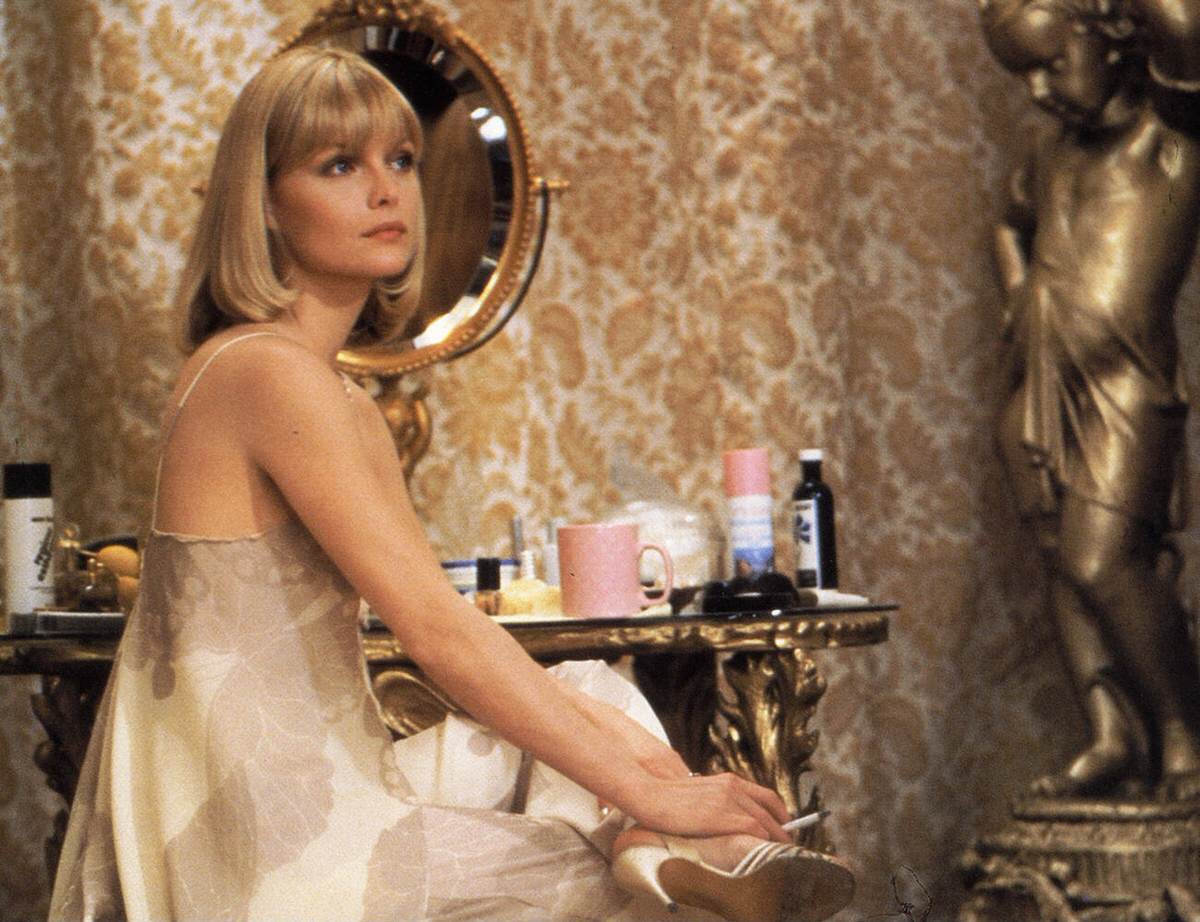
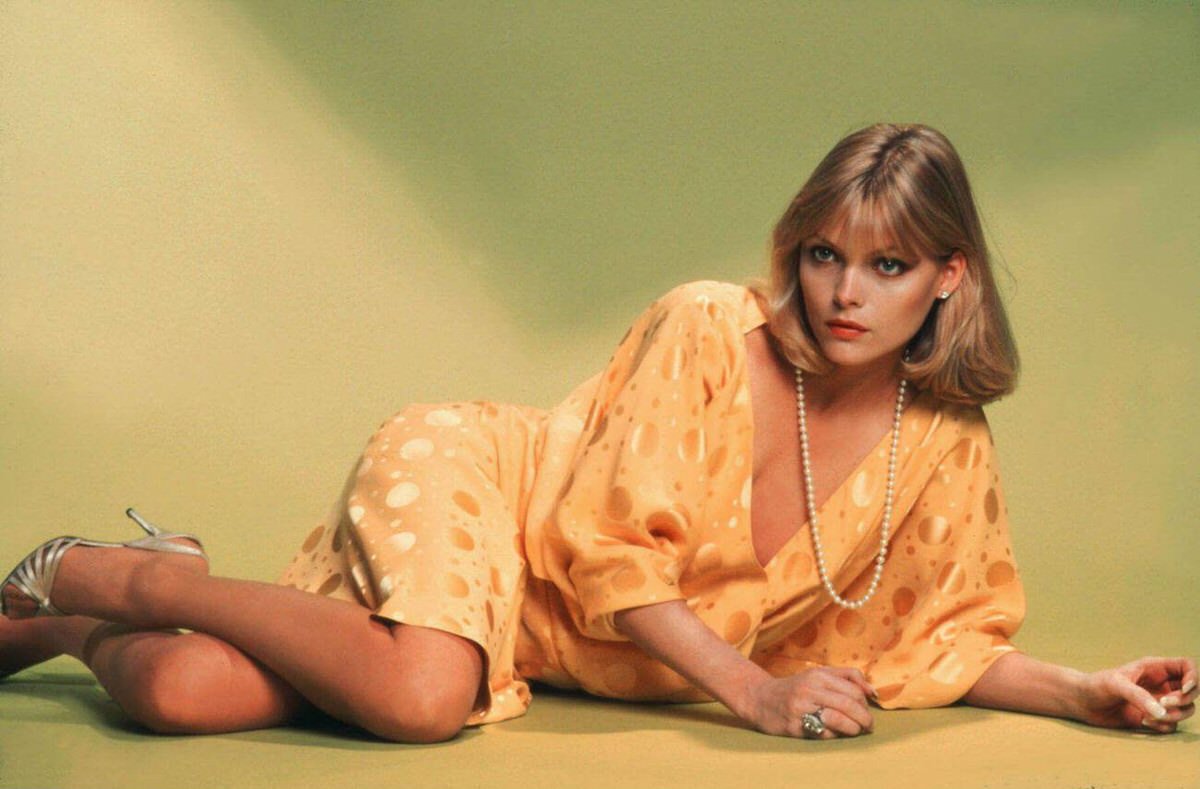
Michelle Pfeiffer was cast as Elvira despite having a limited film résumé at that point. De Palma saw something specific in her — a particular kind of detached, glacial quality that the role required. Pfeiffer later said she found the role difficult because Elvira spends most of the film in a drug-numbed haze and has relatively little to actually do dramatically. She was largely underused given what she was capable of, something she acknowledged in interviews years after the film came out.
The Chainsaw Scene
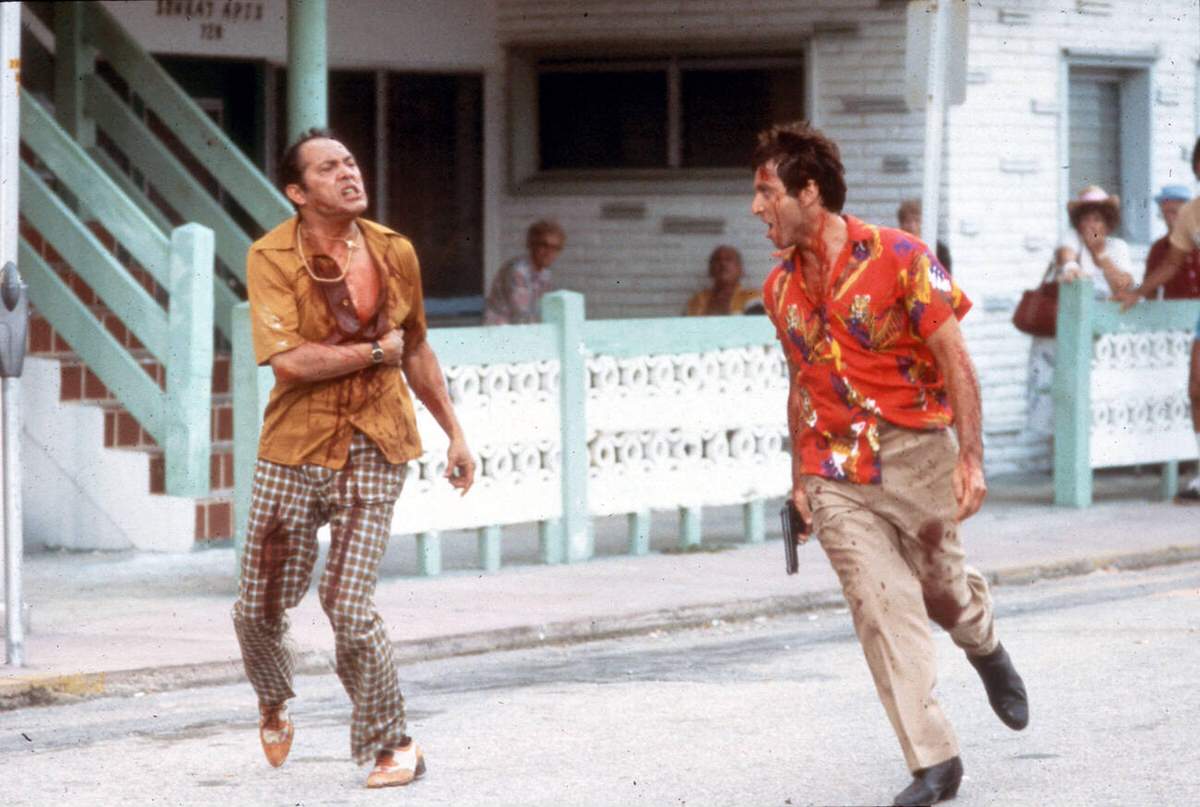
The bathroom dismemberment scene — where Tony Montana watches his friend Angel get killed with a chainsaw — was filmed in a real motel in Miami before the production moved most of its work to Los Angeles. The scene required multiple takes and a practical effects setup involving fake blood rigs and a prosthetic limb.
The actor playing Angel, John Leguizamo’s predecessor in that role, had to be suspended and positioned precisely for the sequence to work. The scene was filmed quickly because the location was a functioning motel and the production had limited time in the space. Despite being one of the most disturbing sequences in the film, it was shot in a compressed schedule with a small crew and minimum preparation time.
The MPAA War
De Palma submitted the finished cut of Scarface to the Motion Picture Association of America and received an X rating three times in a row. The MPAA’s ratings board considered the film too violent and too explicit for an R rating. Each time, De Palma made minimal cuts and resubmitted. The back-and-forth process went on long enough that it threatened the film’s release date.
De Palma’s strategy was deliberate. He refused to make the substantial edits the MPAA wanted and instead trimmed small amounts of footage with each submission — just enough to demonstrate cooperation without significantly changing the film’s character. On the fourth submission, the board granted an R rating. The cuts between the first submission and the final released version were minor. De Palma kept almost everything he had originally shot.
The Finale and the Cocaine Mountain
The final mansion sequence, where Tony Montana makes his last stand against an army of assassins, was filmed on a set built at a Santa Monica ice-skating rink that had been converted into a soundstage. The production design team constructed the entire interior of Tony’s mansion on that site. The curved staircase, the sunken living room, and the famous desk with the enormous pile of cocaine were all built from scratch for the sequence.
The pile of cocaine on Tony’s desk was made from lactose powder — the same substance used in many film productions as a cocaine substitute. The amount used in the close-up shots was specifically increased beyond what the script called for because De Palma wanted the visual excess to be almost absurd. The quantity became a visual symbol of how far gone Tony was by the film’s final act.
Pacino spent several days filming the desk sequence. The snorting was simulated, but the lactose powder still irritated his nasal passages significantly across the extended shoot. By the end of filming those scenes, Pacino was genuinely physically uncomfortable from repeated exposure to the powder even though none of it was the real substance.
The Editing Process
The film ran nearly three hours in its original cut. De Palma and editor Jerry Greenberg worked through an extended post-production period trimming the film to its final runtime of 170 minutes. Entire subplots were shortened and several scenes were cut completely. The version of the film that exists is already long by commercial standards — the original assembly cut was considerably longer and included more detailed sequences showing Tony’s early days building his drug operation.
Giorgio Moroder composed the film’s electronic score separately from the main production. His synthesizer-driven soundtrack was recorded after principal photography wrapped and laid over the finished edit. The score’s sound was deliberately contemporary for 1983 — Moroder used the same electronic production techniques he had applied to his work with Donna Summer and other pop artists. The music gave the film a specific sound that anchored it to the early 1980s Miami world it was depicting.
On Set With De Palma
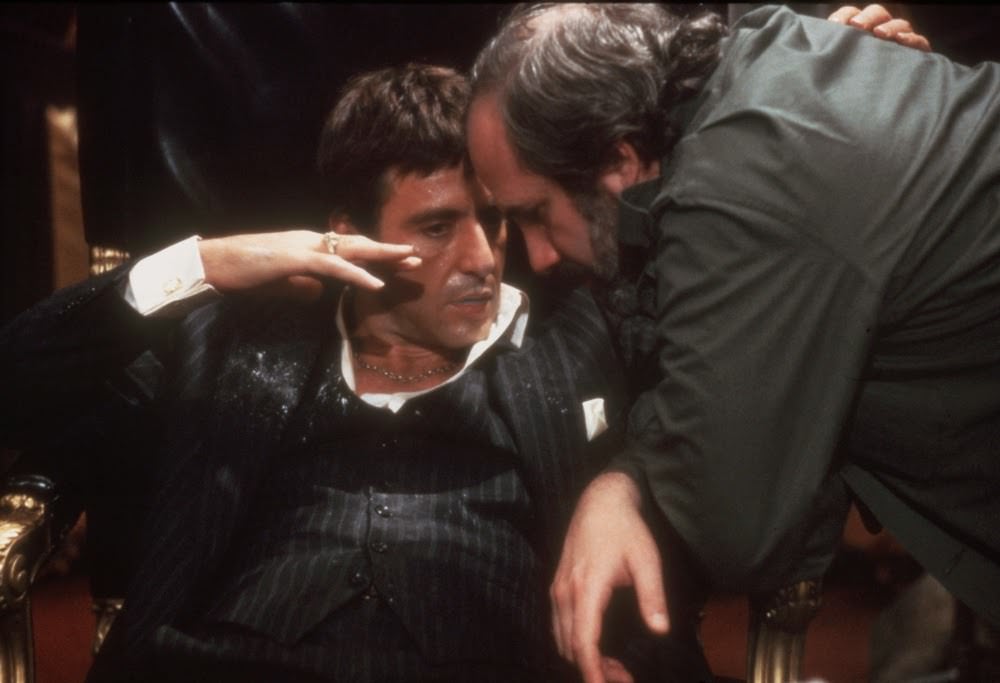
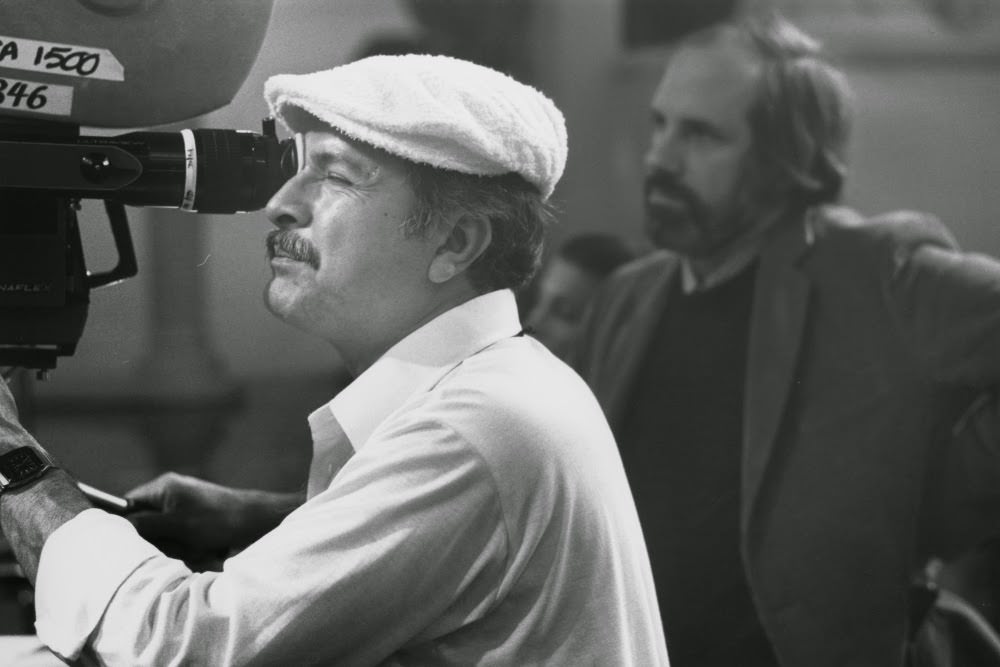
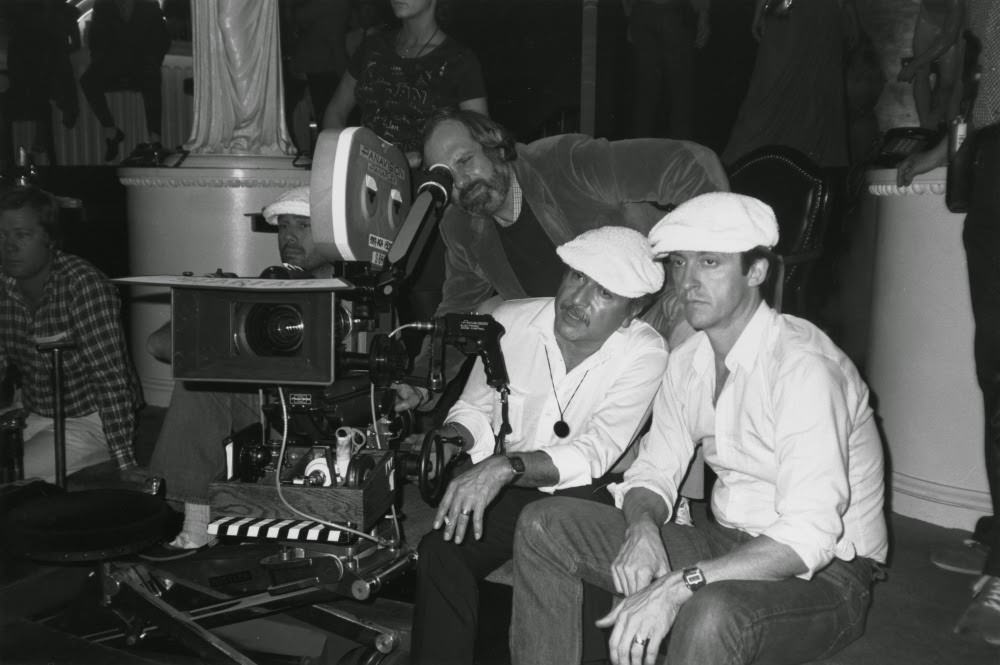
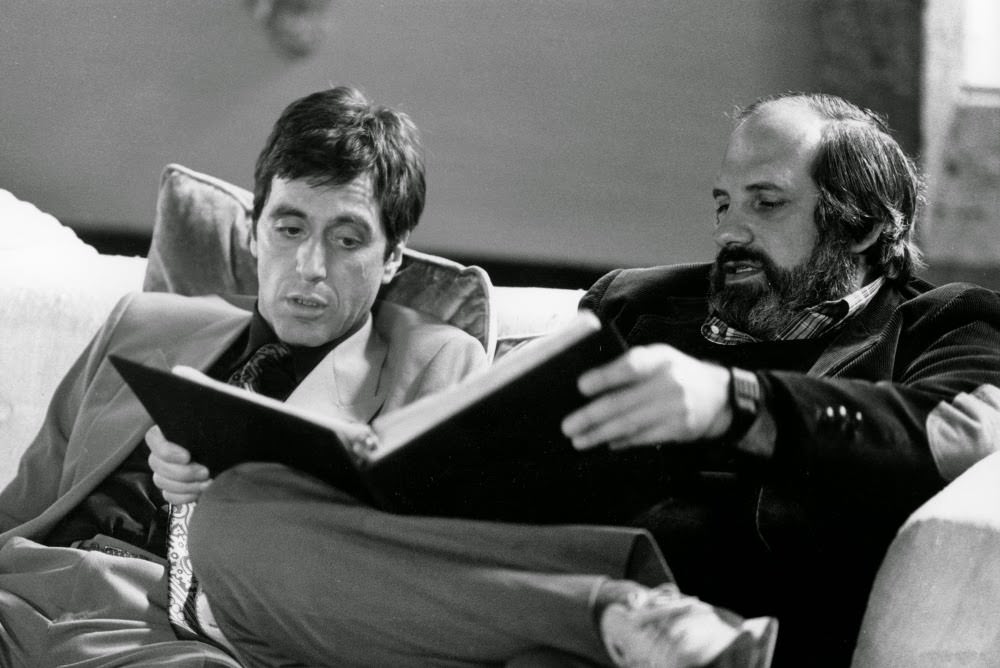
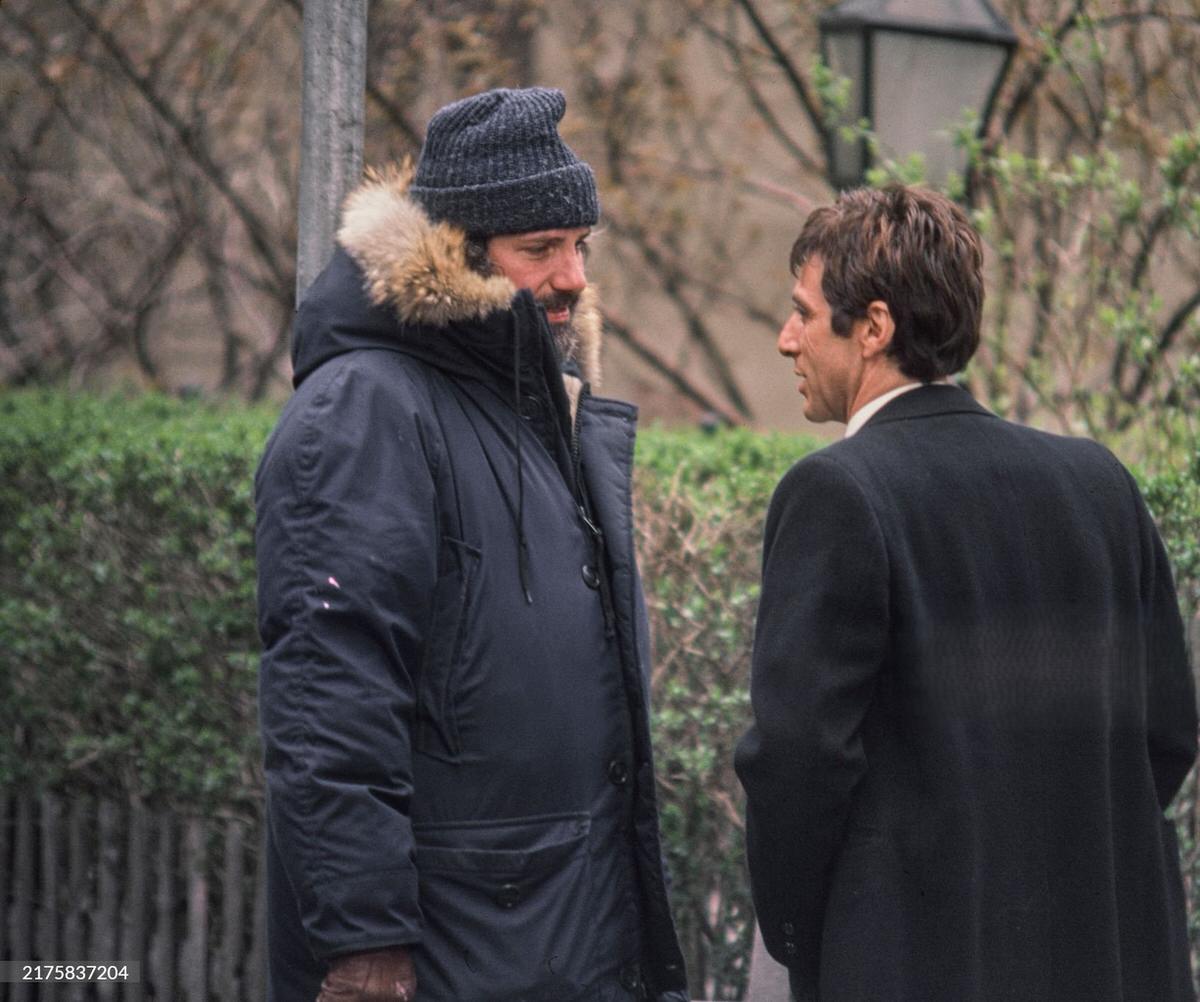
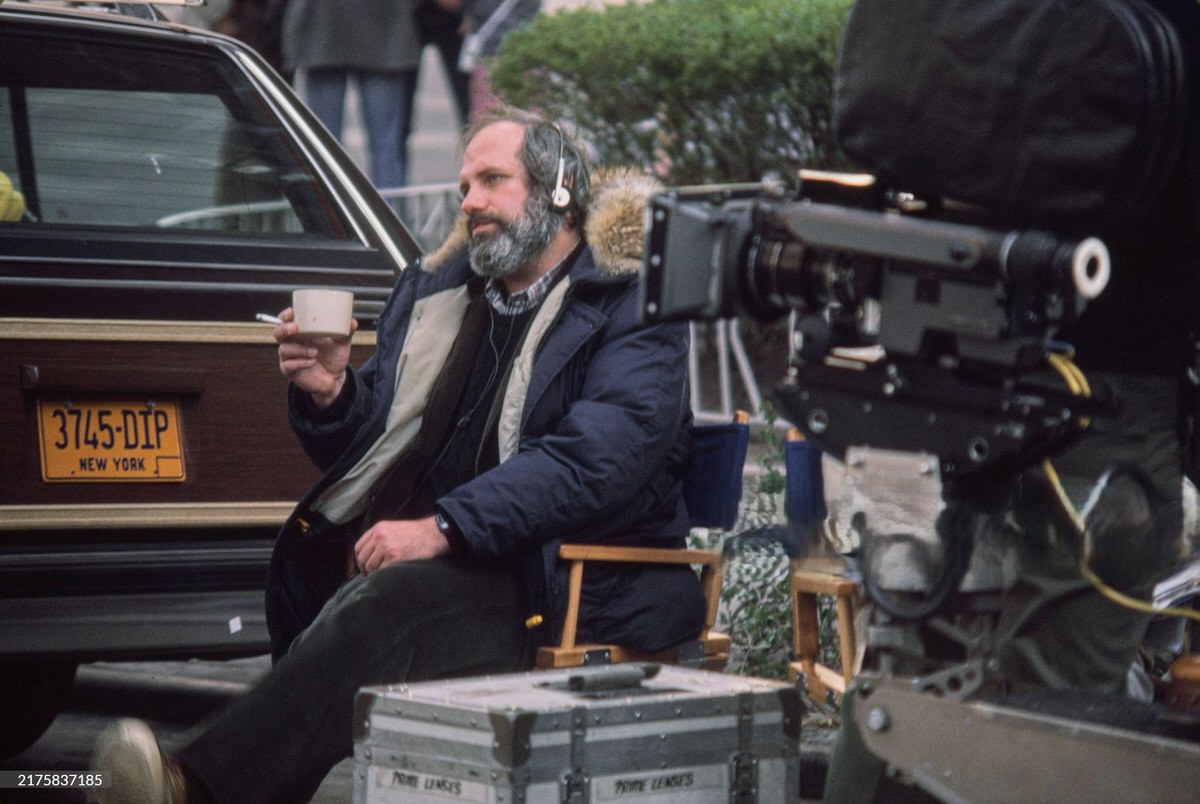
De Palma ran a controlled, technically demanding set. He used elaborate camera movements and required precise blocking from his actors, which created tension with Pacino’s more instinct-driven working style. The two had worked together before on Scarface’s predecessor in their professional relationship, and they had an established shorthand — but the scale of this production made the working process more complicated than either had navigated before.
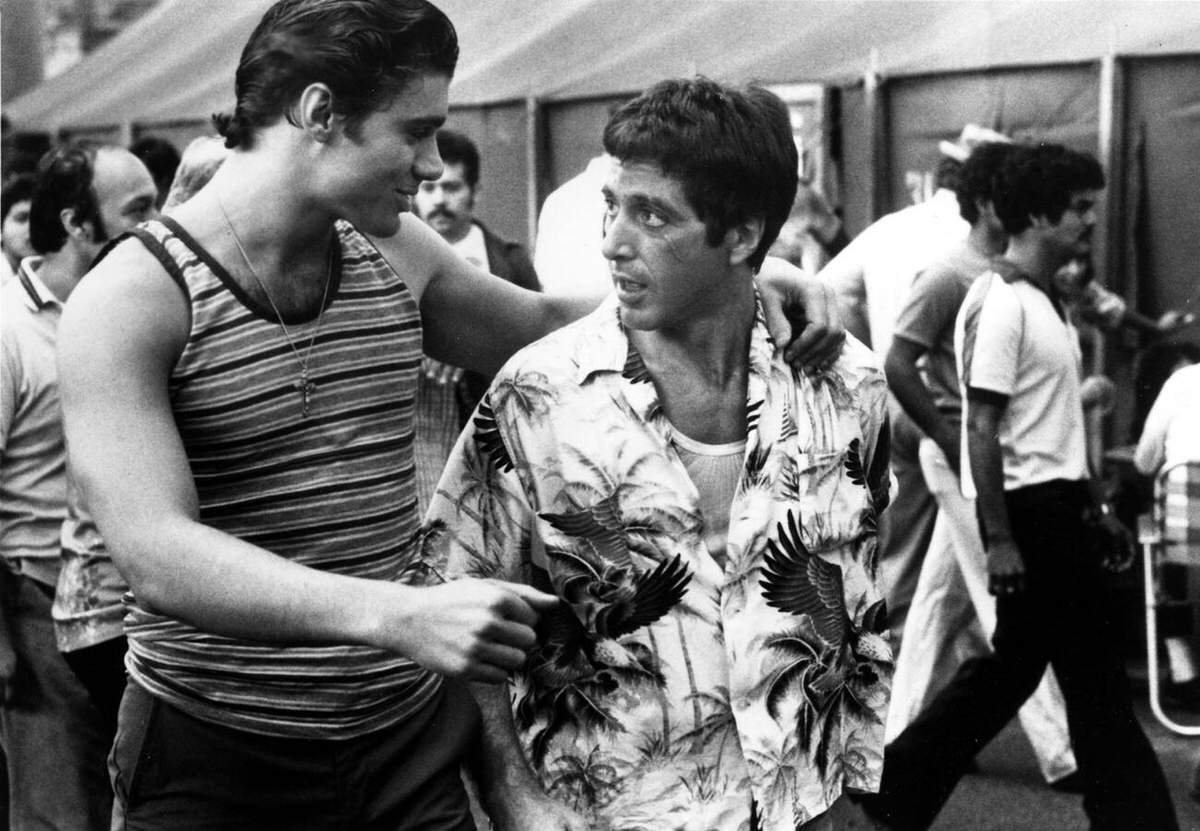
Steven Bauer, who played Manny, was a Cuban-American actor and the one principal cast member from that background. He served informally as a cultural consultant on set in addition to his acting role, flagging moments where dialogue or behavior seemed off to him based on his own background. Not every suggestion was taken, but his presence on set added a layer of direct knowledge that the production would not have otherwise had.