
Before a single frame of an MGM film played on screen, there was a lion. Sitting inside a circular frame, surrounded by a ribbon of film, the animal opened its mouth and roared. That image became one of the most recognized logos in entertainment history. But the story of how it was filmed, and how many lions it actually took to get there, is far less polished than the finished product.
Where the Logo Came From
The MGM lion logo was created by Lionel S. Reiss, an art director at Paramount Studios, and first appeared in 1924 when Metro-Goldwyn-Mayer was formed. The concept was straightforward — put a lion inside a ring of film, add the studio’s Latin motto ‘Ars Gratia Artis’ (Art for Art’s Sake), and use it to open every film the studio released. What made it complicated was the live animal component. Every version of the logo required an actual lion to sit in front of a camera, stay still enough to be filmed, and produce a roar on cue. That process was never as simple as it sounds.
Seven Lions, One Logo
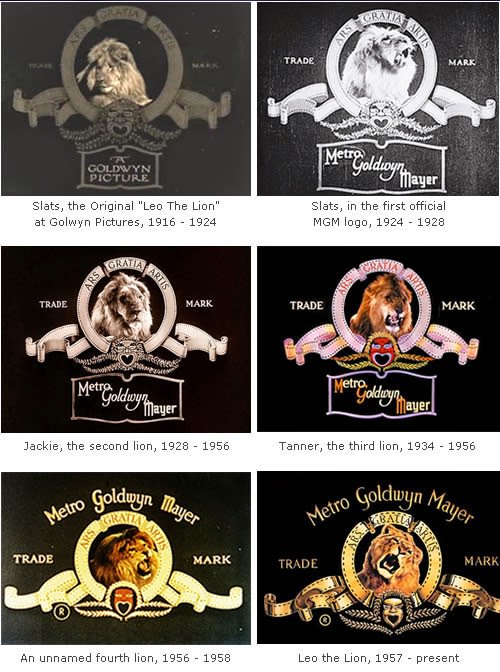
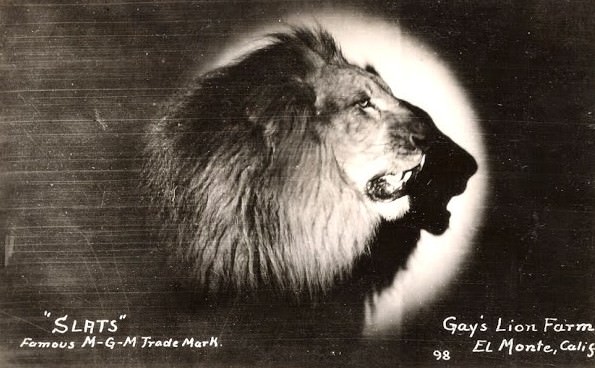
Since 1924, MGM has used approximately seven different lions for the logo. Each one was a real animal filmed specifically for that version of the opening sequence. The lions were not interchangeable — different lions were used for different formats and periods of the studio’s history.
Tanner was one of the most heavily used. He appeared on all of MGM’s Technicolor films and was the lion featured in the studio’s animated productions, including the entire Tom and Jerry cartoon series. Tanner held his position for 22 years, which is a significant run for any animal performer. His image is the one most closely associated with the classic golden age of MGM, the era of lavish musicals and big-budget productions that defined the studio’s peak years.
Leo is the current lion, the seventh in the line, and has been in use since 1957. That means Leo has appeared on MGM productions for over 57 years, making him the longest-serving lion in the logo’s history. Every film the studio has released in that time opened with Leo’s face.
What the Behind-the-Scenes Photos Show
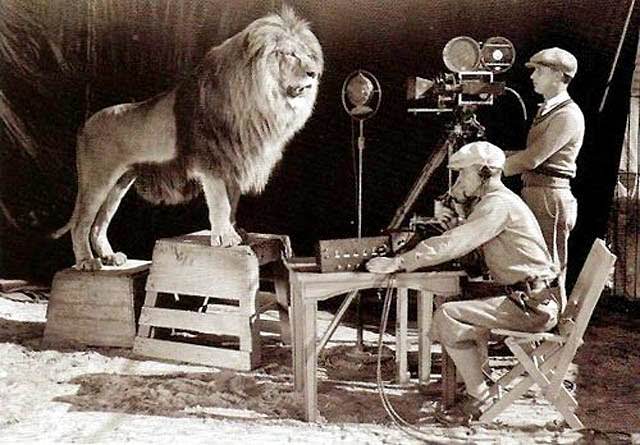
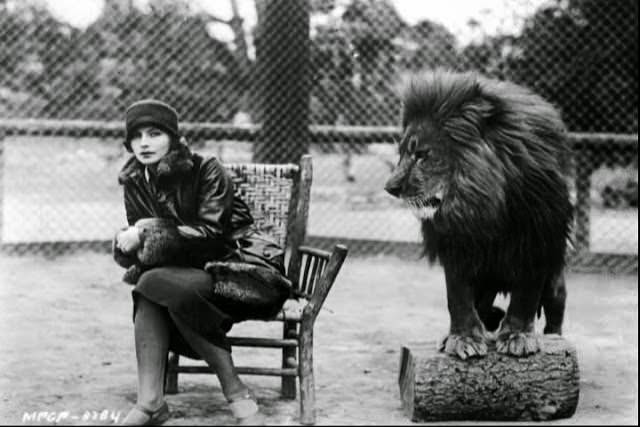
The photographs taken during the filming of the MGM logo sessions reveal something the polished final product never shows — the mechanical reality of getting a lion to perform in front of a camera in the pre-digital era.
The lion was positioned inside a constructed set that replicated the circular frame of the logo. Camera operators worked at a distance, with the animal handlers standing nearby. The ring of film that appears in the finished logo was added as part of the graphic design process, but the lion itself was always real and always filmed live. There were no stand-ins, no puppets, and no early form of animation involved in capturing the animal’s performance.
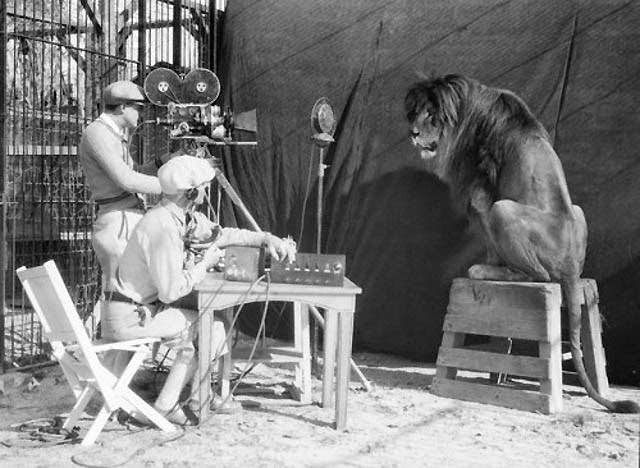
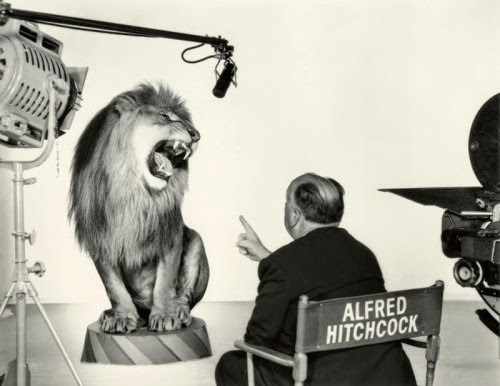
Getting the roar required patience. Lions do not roar on command, and trainers worked with each animal extensively before any filming took place. The sessions could take hours to capture a few seconds of usable footage. Handlers used a combination of familiarity and timing to anticipate when the animal was likely to vocalize, and camera operators had to be ready at all times.
The set photographs show the lion elevated on a platform, positioned so that the camera could shoot straight at the animal’s face. The framing had to be precise because the circular logo design left very little room for error. A lion that sat too far left or right would break the symmetry of the finished image. This meant resetting the shot repeatedly until the positioning was correct.
The Difference Between Tanner and Leo on Camera
Tanner and Leo were physically different animals, and the behind-the-scenes photographs make that clear. Tanner had a fuller, darker mane that photographed well in the rich colors of Technicolor film. He had a broad, heavy face that filled the circular frame of the logo and gave the image a sense of weight. His roar in the Technicolor logo became the standard that audiences associated with MGM’s biggest productions.
Leo has a slightly different look — a lighter mane and a face that photographs cleanly in the higher-contrast formats that came with later film technology. When MGM transitioned to Leo in 1957, the studio was also moving through a broader shift in how films were shot and distributed, and Leo’s image suited that era.
The Logistics Nobody Talks About
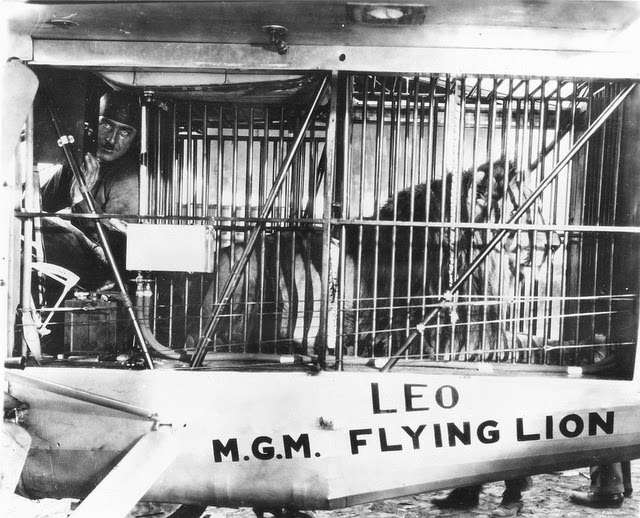
Filming a lion on a studio set in Hollywood required layers of preparation that went far beyond standard production work. The animal had to be transported to the filming location, kept calm in an unfamiliar environment surrounded by lights and camera equipment, and then directed to face forward and produce an expression suitable for the logo.
The trainers who worked with each of the seven lions built long-term relationships with the animals before any camera was introduced. A lion that trusted its trainer behaved differently on set than one that was simply brought in for a single session. MGM’s logo lions were working animals in the fullest sense — trained, cared for, and handled by professionals who spent years with them.
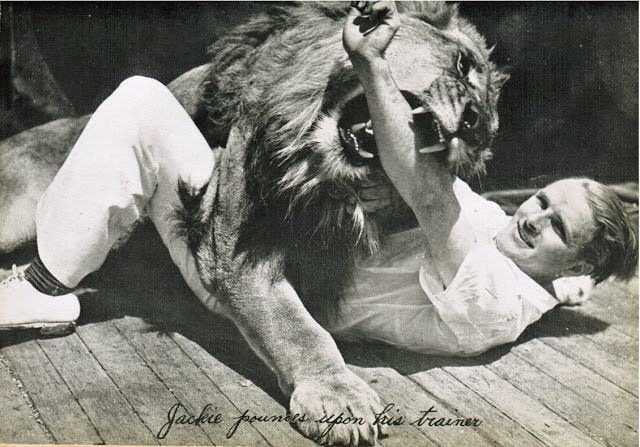
The photographs from these sessions are a direct record of that work. They show the trainers standing just outside the frame, the camera equipment arranged around the set, and the lion itself in the center of it all — not performing in the way an actor performs, but simply being an animal in a controlled environment while the cameras rolled and the studio hoped for the right moment.