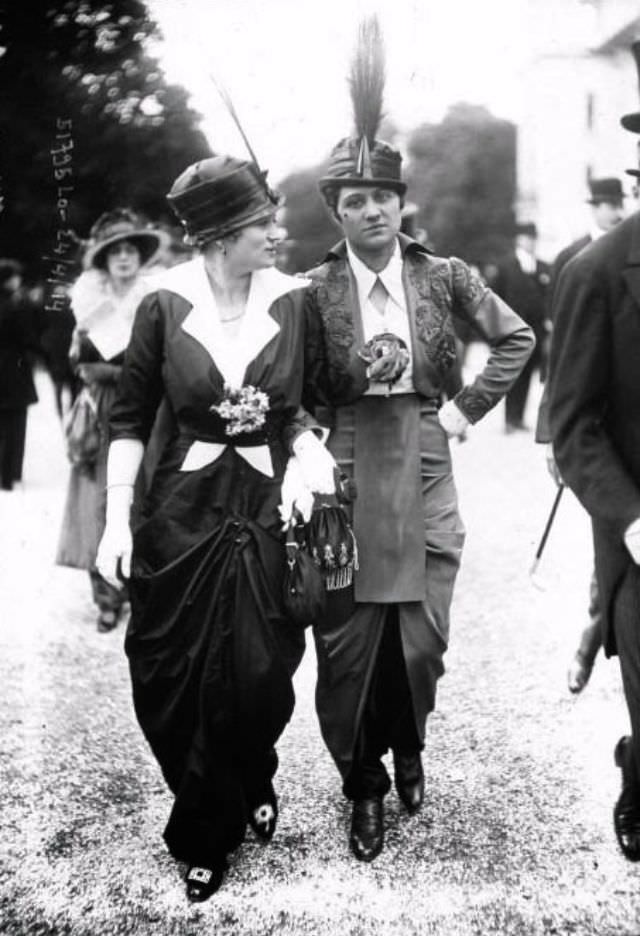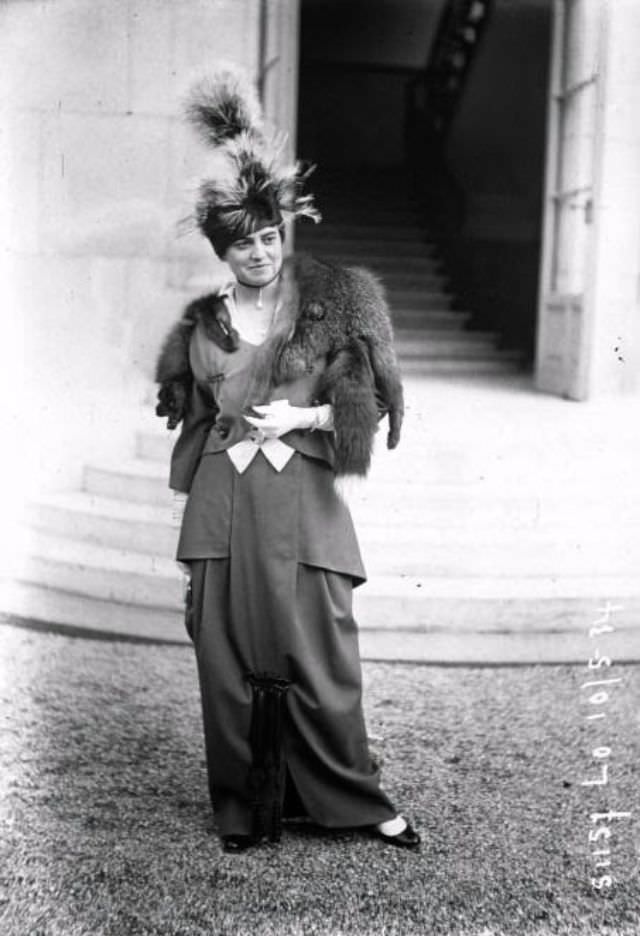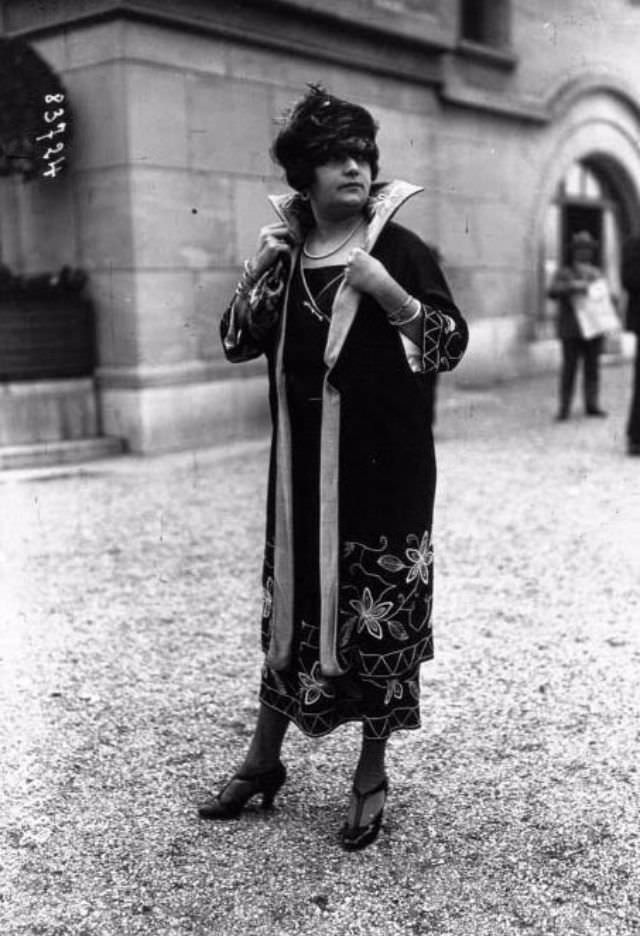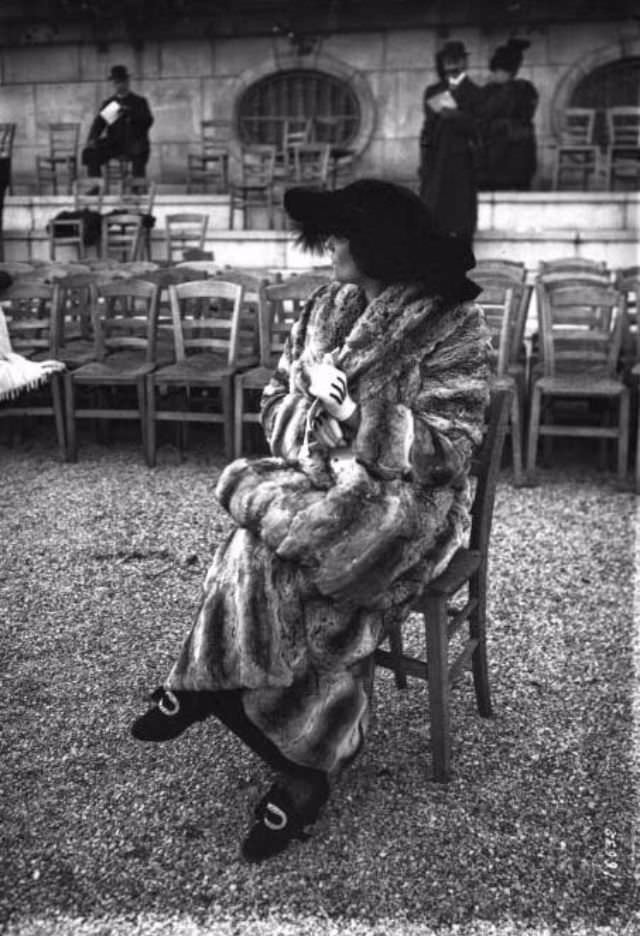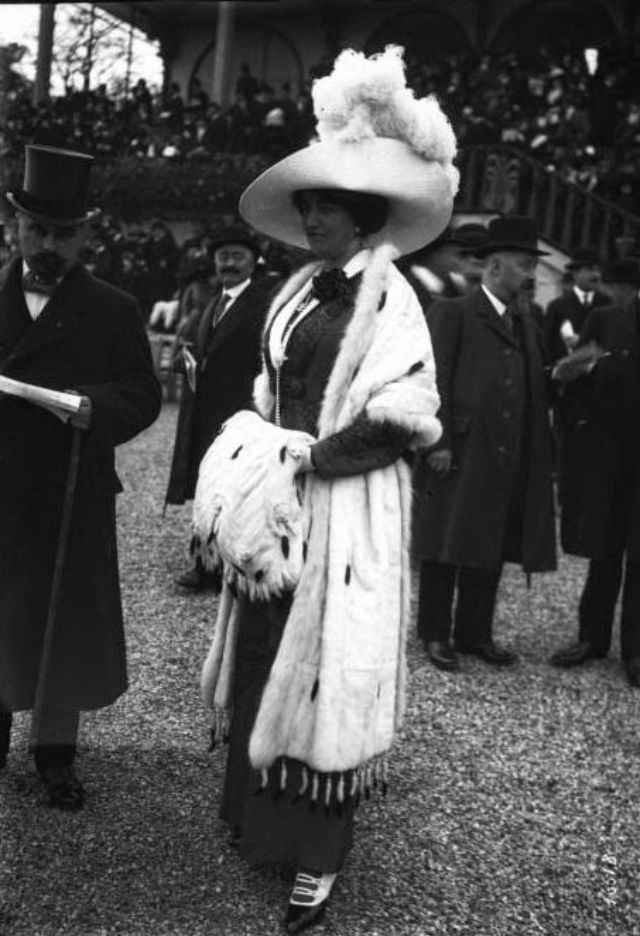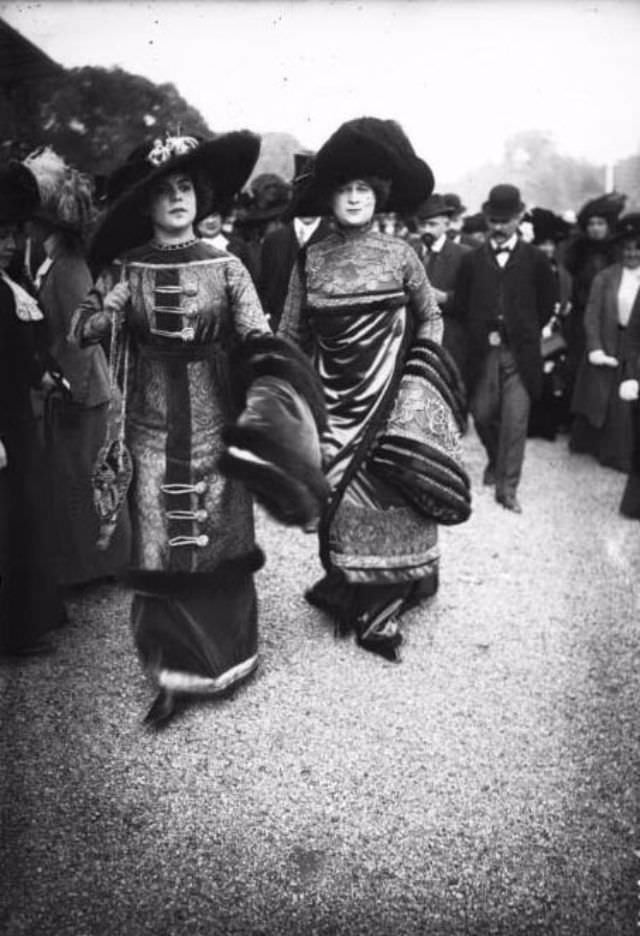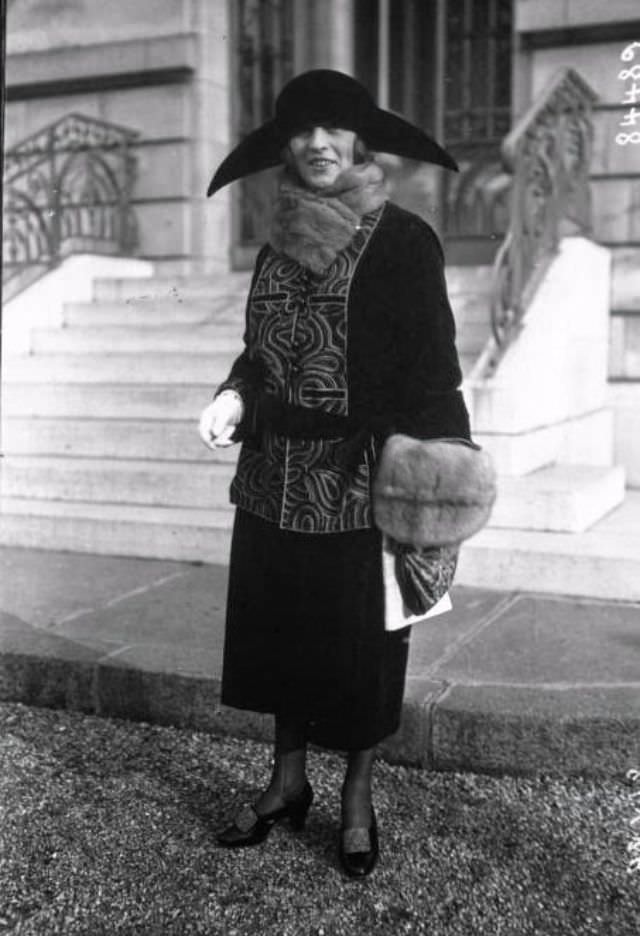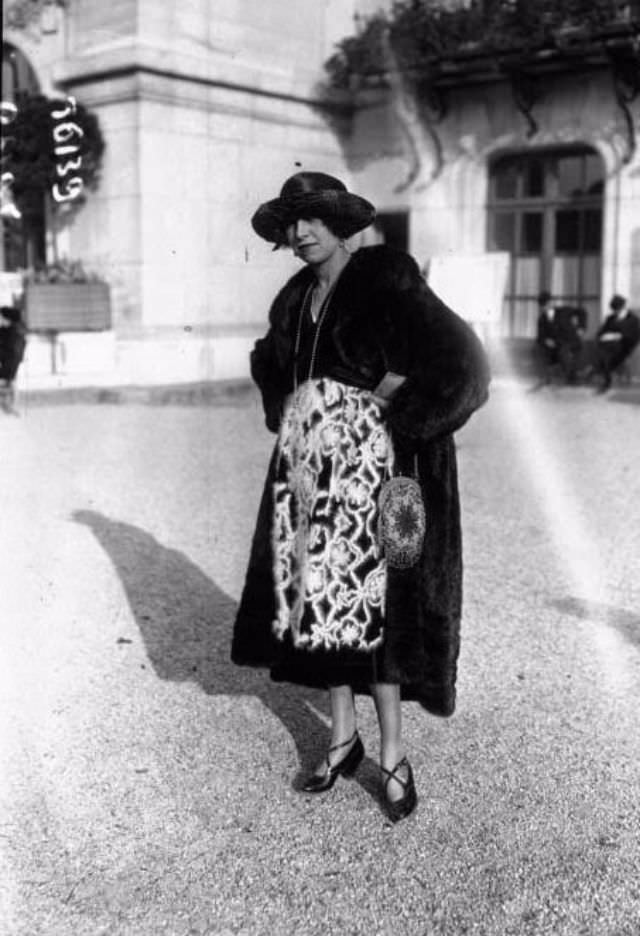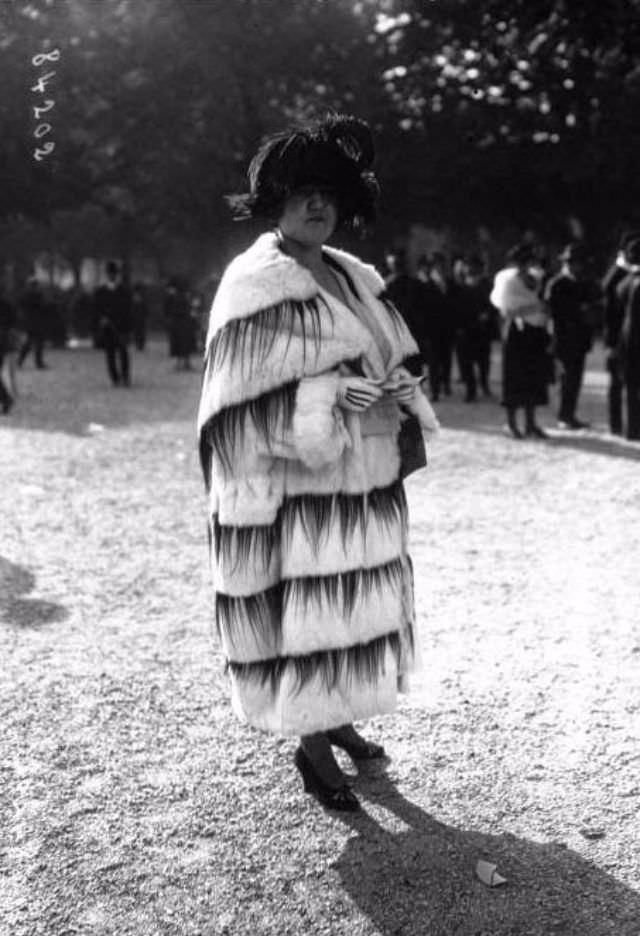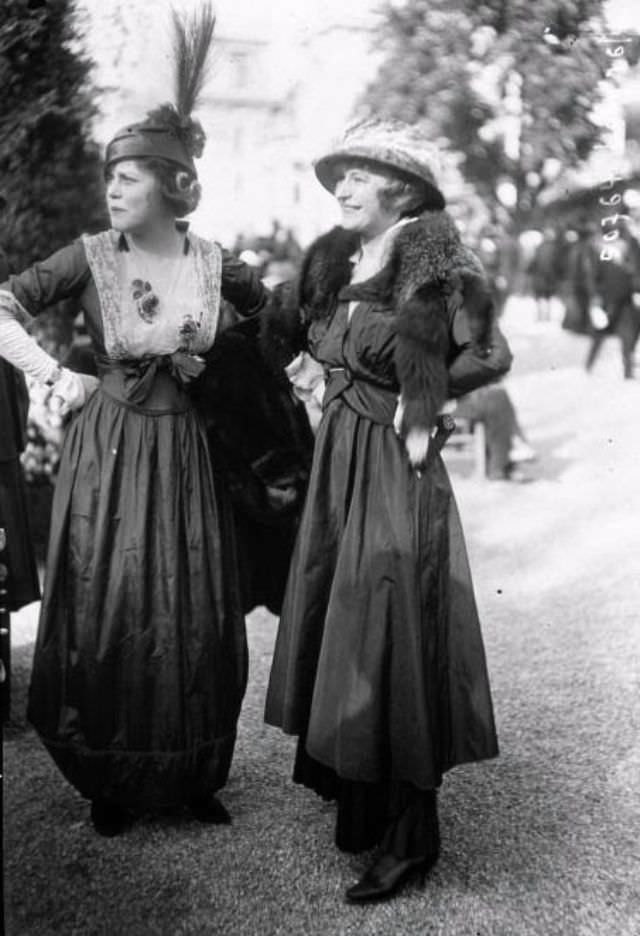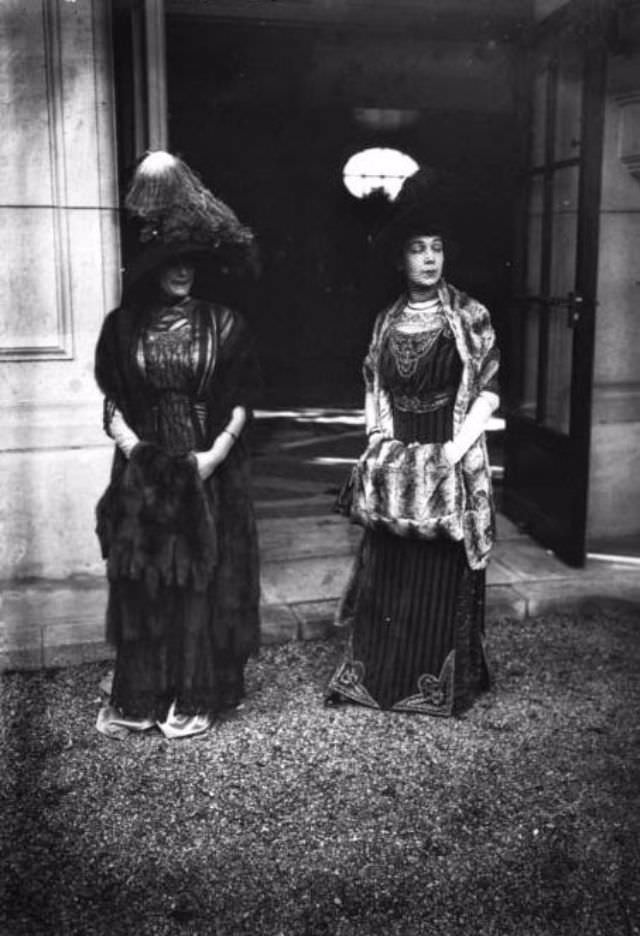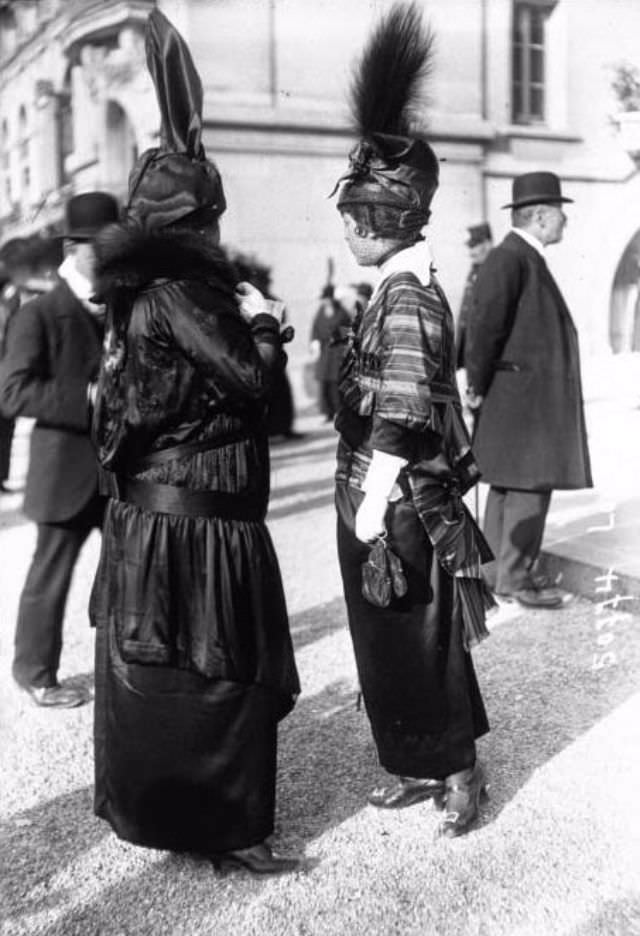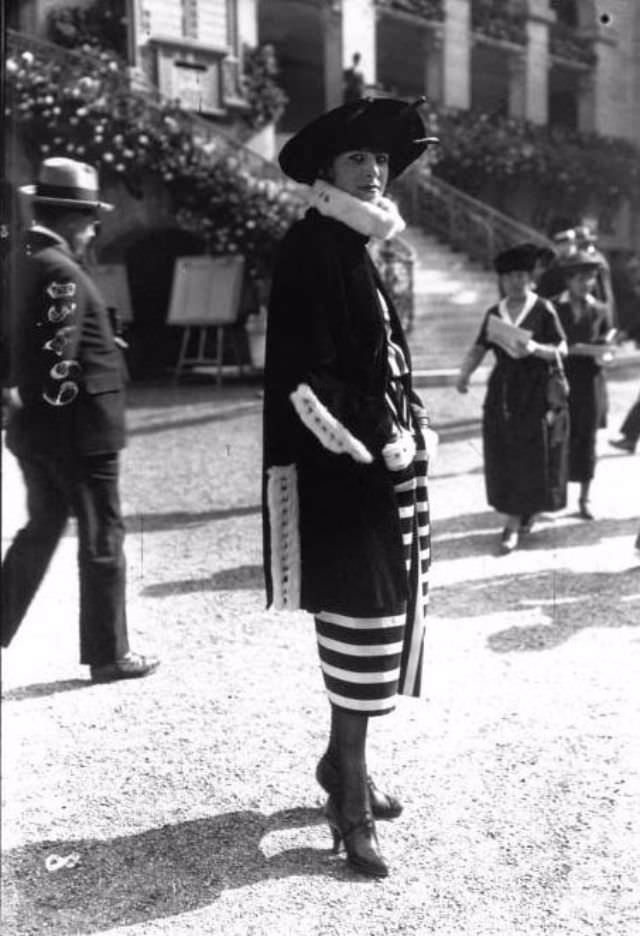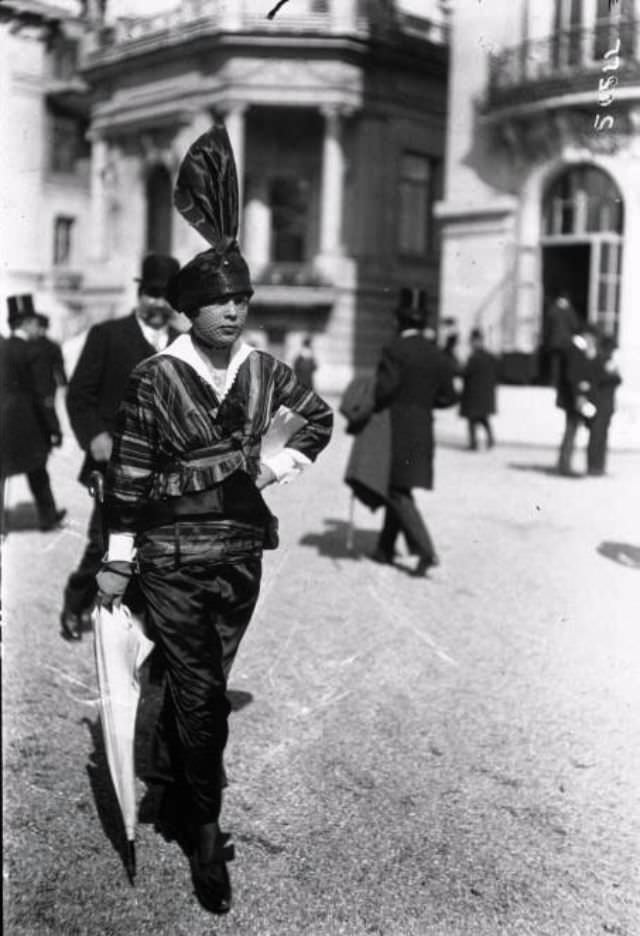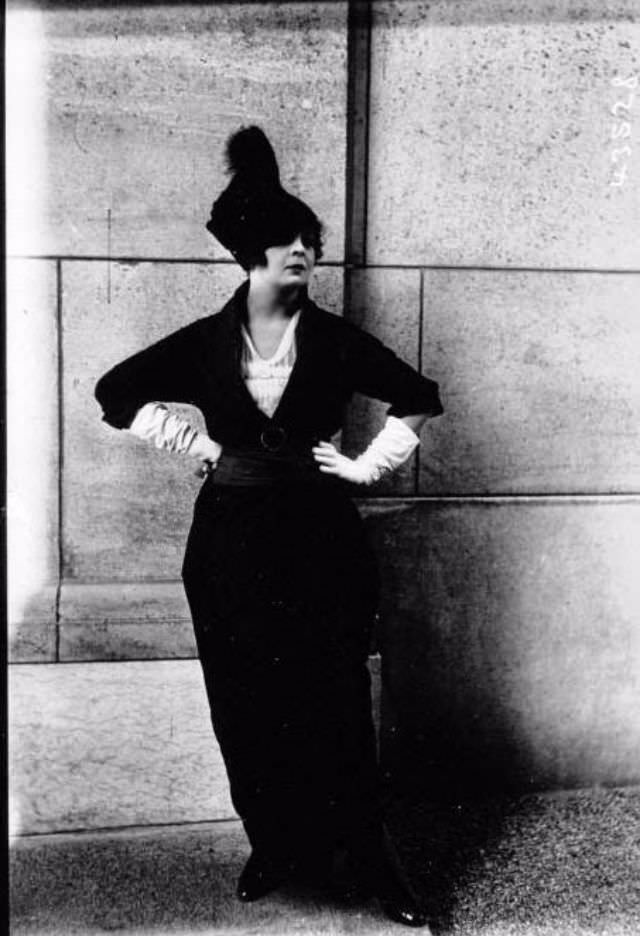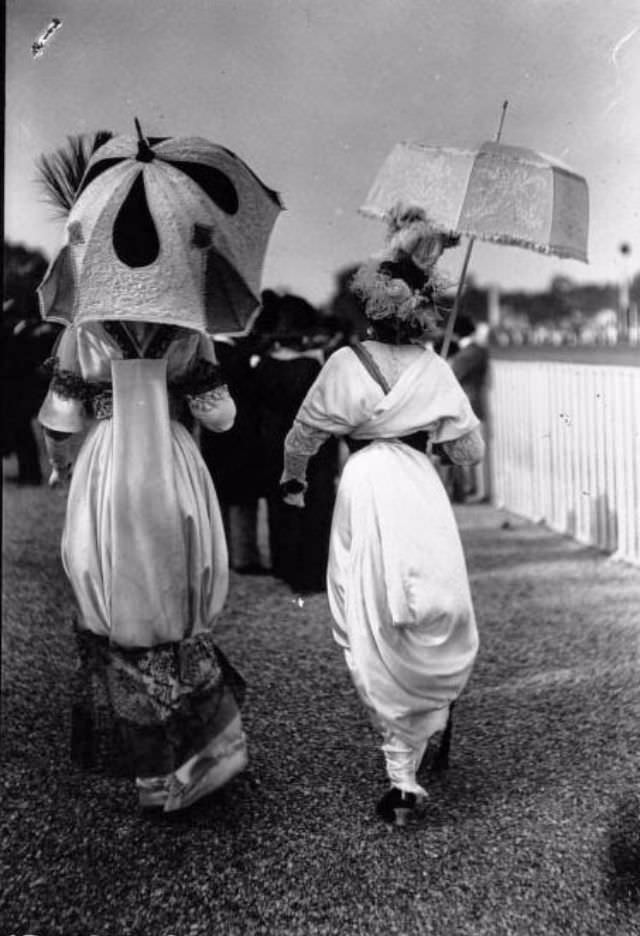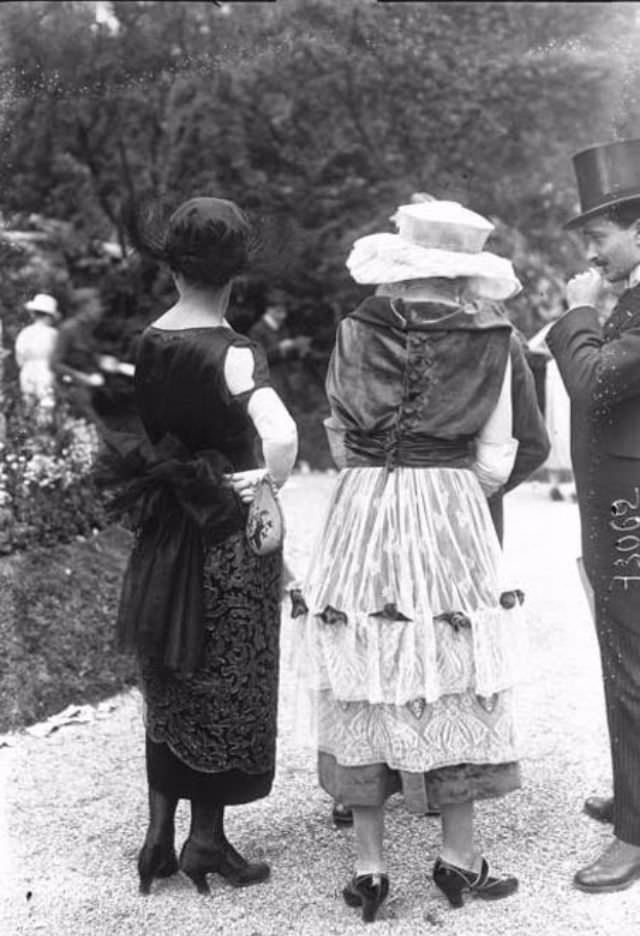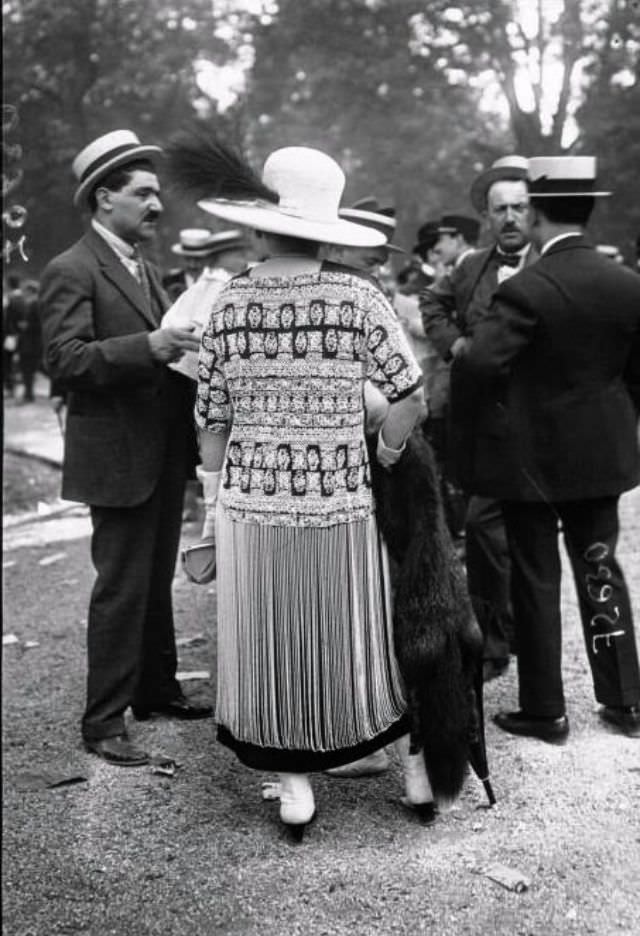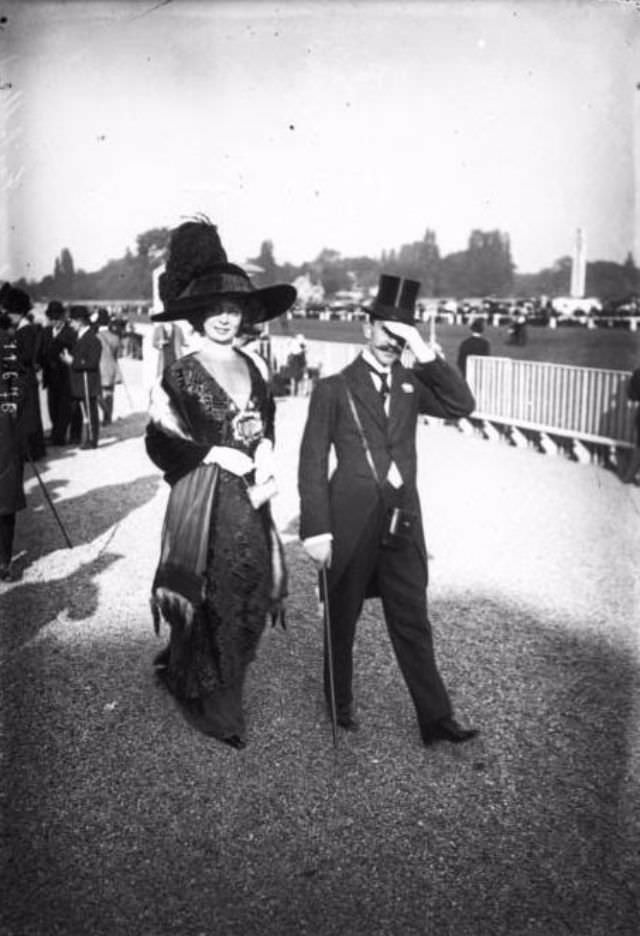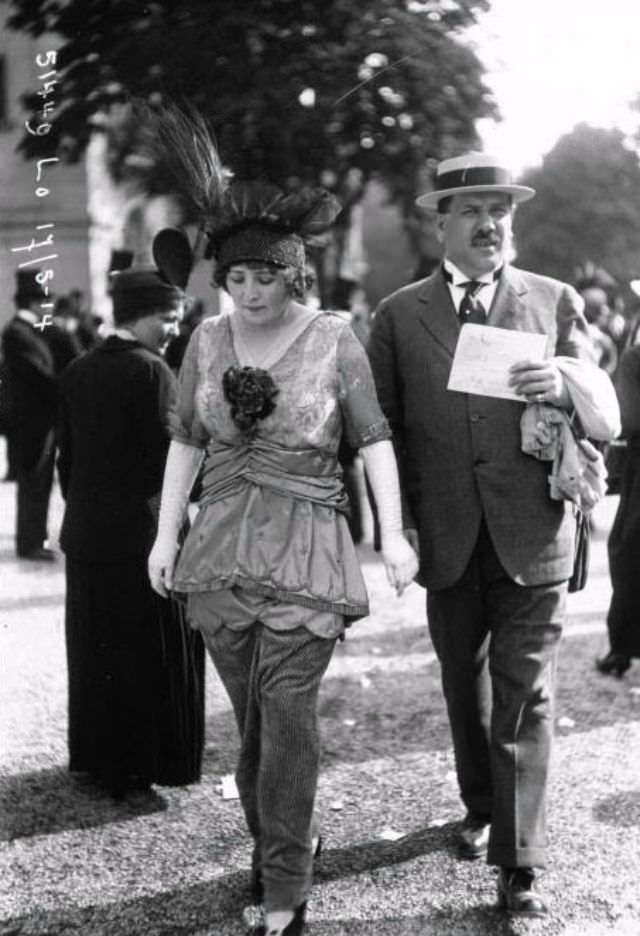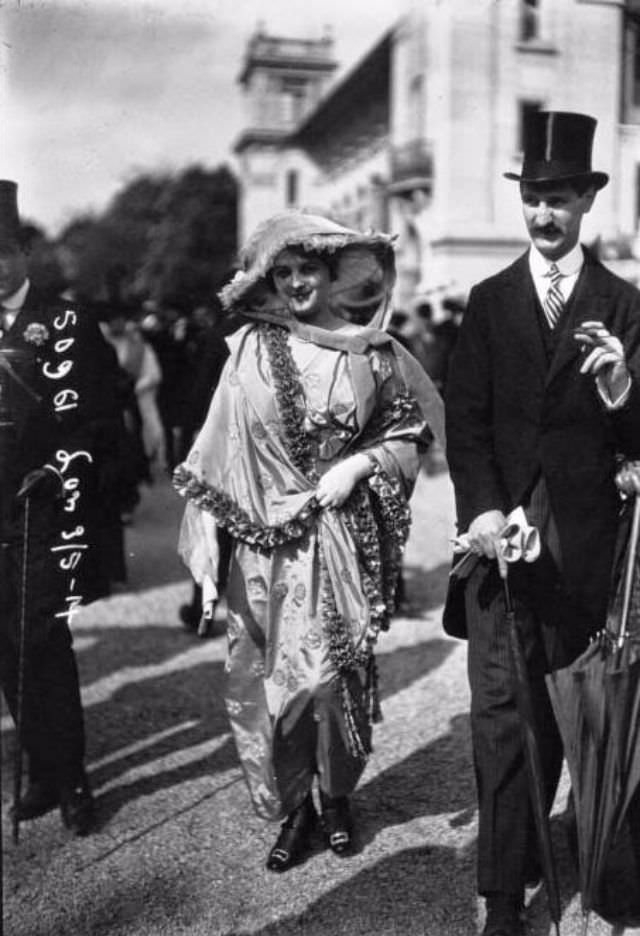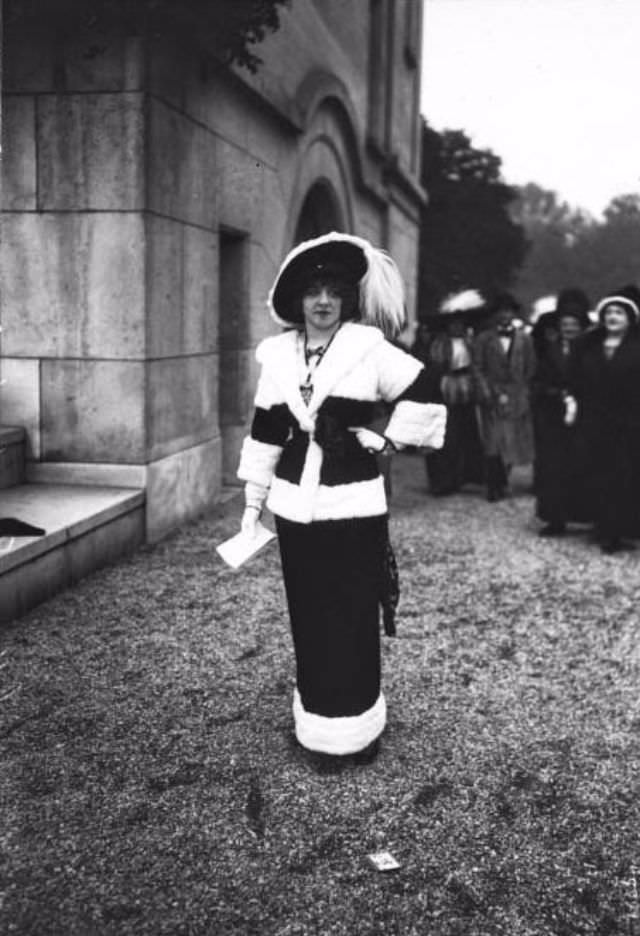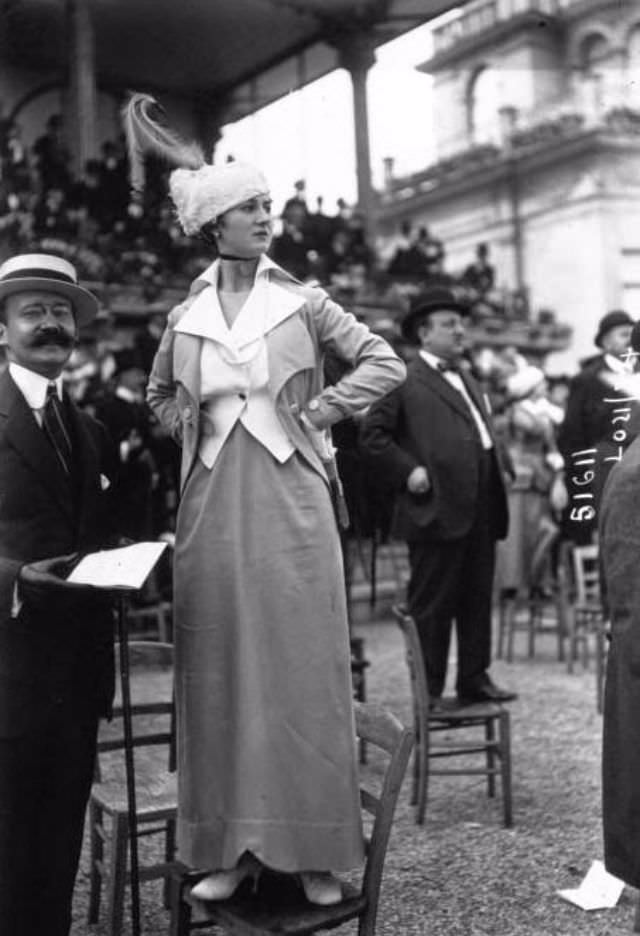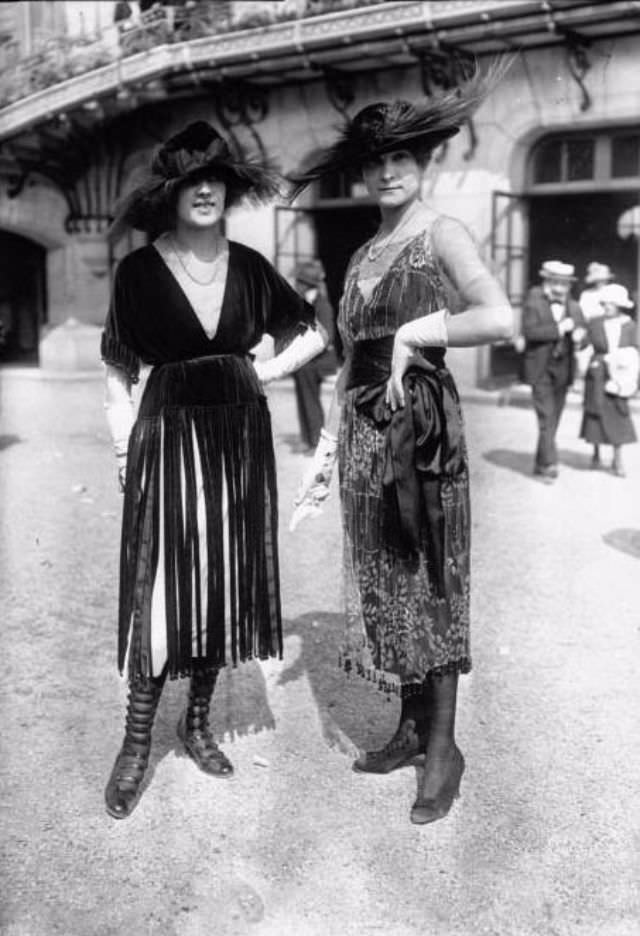

Longchamp Racecourse in Paris was never just about horses. By the early 1900s, it had become one of the most important stages in the fashion world, a place where Parisian designers sent their latest work out into public view and waited to see how it landed.
Racing had been held at Longchamp since 1857, and the event quickly grew into a fixture of upper-class Parisian social life. The crowd that filled the stands and promenades on race days was wealthy, well-connected, and dressed accordingly. That combination made Longchamp the ideal location for fashion houses to showcase their newest designs. The audience was exactly the kind of clientele designers wanted to reach, and the outdoor setting meant the clothes were visible in natural light, in motion, surrounded by a crowd.
How Designers Used the Races
Parisian fashion houses sent models — referred to at the time as mannequins — to Longchamp wearing the season’s latest designs. These women moved through the crowds, stood at the rails, and were photographed throughout the day. The goal was visibility. A striking gown seen at Longchamp on a Saturday afternoon could generate orders and conversation by the following week.
Read more..
Photographers attended specifically to document the fashion on display. Their job was to capture each outfit clearly enough that the designer could be identified from the image. These photographs were then published in fashion magazines and society papers, spreading the designs far beyond the crowd that attended the races in person. A woman in London or New York could see what Paris was wearing at Longchamp within days.
What the Clothes Actually Looked Like
The early 1900s marked a specific moment in the history of Parisian fashion. The silhouette of the late Victorian era — tightly corseted waists, large sleeves, heavy skirts — was giving way to something longer and more fluid. The S-curve silhouette was dominant in the first years of the decade, pushing the chest forward and the hips back in a shape that required serious construction underneath the fabric.
Hats were enormous. Wide-brimmed and heavily decorated with feathers, flowers, and ribbon, they were as much a statement as the gowns themselves. At an outdoor venue like Longchamp, where women stood and moved around for hours, the hat was often the first thing that caught the eye across a crowded lawn.
Fabrics were rich — silk, chiffon, fine wool — and colors ranged from pale pastels to deep jewel tones. The level of handwork involved in a single garment from a house like Worth or Doucet was extraordinary. Seams were hand-stitched, trimmings were applied by skilled workers who spent days on a single piece, and the fit was achieved through multiple fittings with the client or, in the case of Longchamp, tailored to the model wearing it for the day.
The Role of Photography
Before fashion photography became a formal profession, the photographs taken at Longchamp served a practical purpose. Editors and journalists used them to report on what the major houses were producing each season. Designers used them as documentation of their work. And readers of fashion publications used them as a guide to what they should be wearing.
The outdoor conditions at Longchamp actually worked in the photographers’ favor. Natural daylight showed fabric texture and color more accurately than the studio lighting of the period. A photograph taken at the races gave a clearer sense of how a dress actually looked when worn in real life compared to a posed studio portrait.
The women photographed at Longchamp in the early 1900s were not celebrities in the modern sense, but their images circulated widely. A well-dressed woman standing at the rail at Longchamp, wearing a coat from a recognized house, represented the standard that other women across Europe and beyond were measuring themselves against.
Fashion and the Races as a Single Event
By the early 1900s, the races at Longchamp and the fashion display that came with them were understood as a single event. Attending without dressing carefully was not really an option for anyone who cared about their social standing. The result was a concentrated display of the best that Parisian couture could produce, repeated across each racing season, photographed and published, and watched closely by the entire fashion world.
Designers understood the value of that exposure. Sending a model to Longchamp cost far less than the coverage it generated, and the setting — prestigious, social, highly visible — attached exactly the right associations to the work.