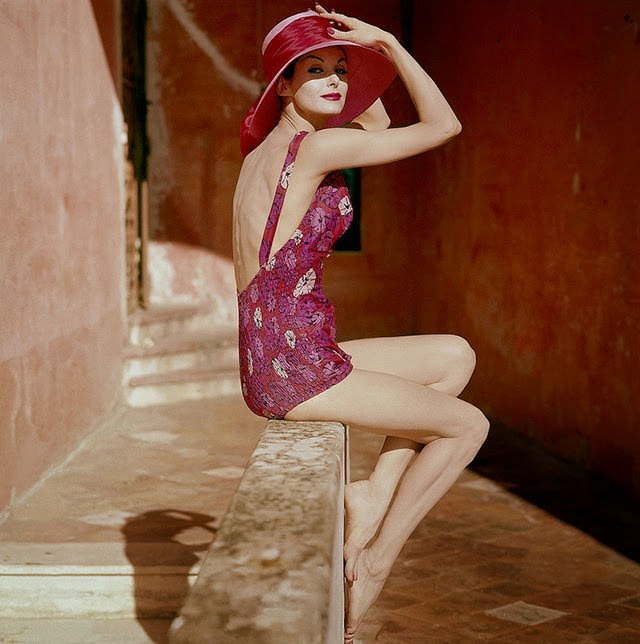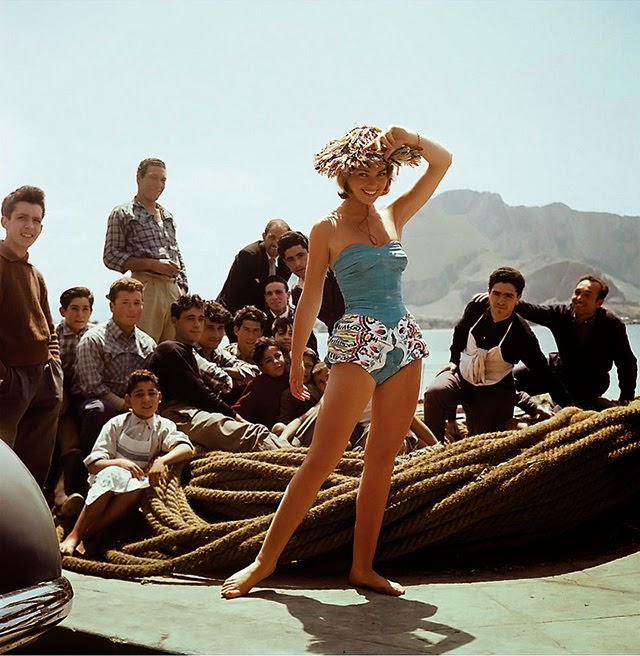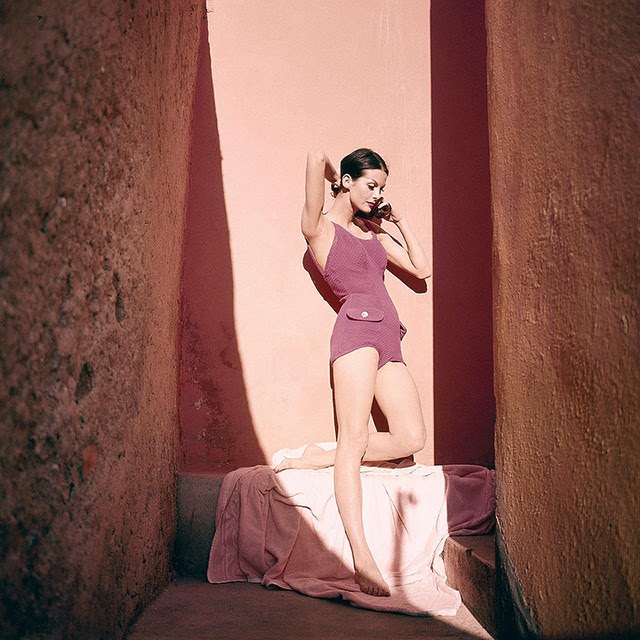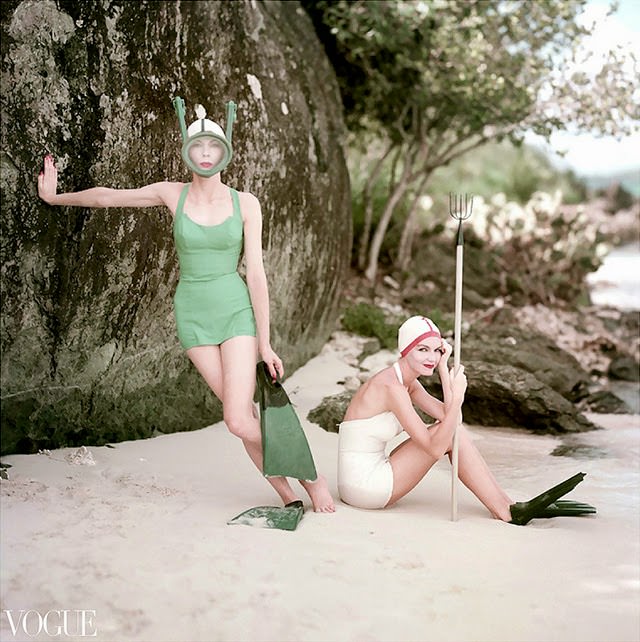

The 1950s were a golden age for swimsuit photography. Magazines like Vogue and Glamour sent their best photographers and models to sun-soaked locations — from the shores of Florida to the French Riviera — to capture what women wore at the water’s edge. These weren’t casual snapshots. Every image was carefully lit, styled, and composed to show off the season’s newest designs.
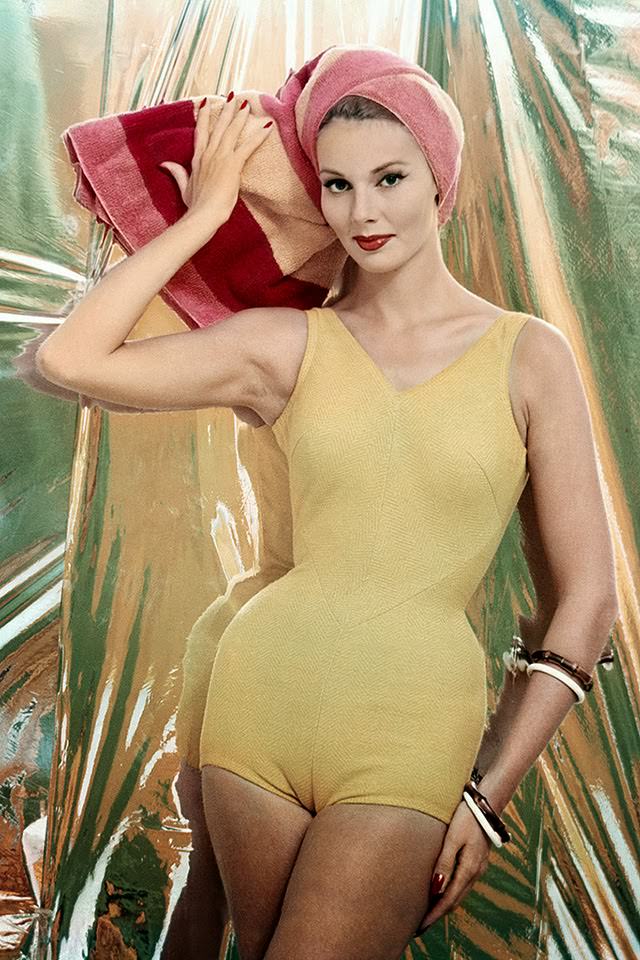
Swimwear in this era came in two main styles: the one-piece maillot and the emerging two-piece, which slowly made its way into mainstream fashion magazines throughout the decade. Fabric choices ranged from structured wool and silk shantung to stretch cotton and early synthetic blends from companies like DuPont. Designers understood that a bathing suit had to look just as polished as a daytime dress.
The Brands Behind the Looks
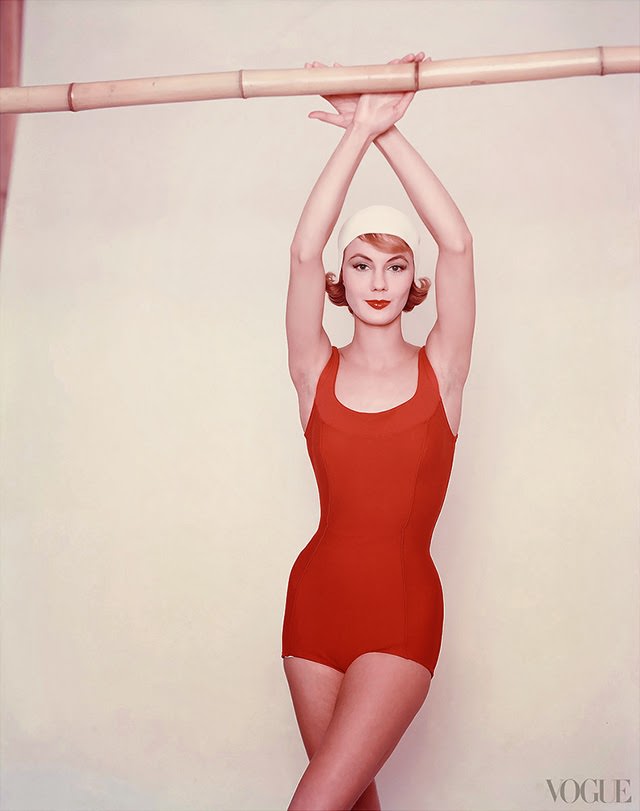
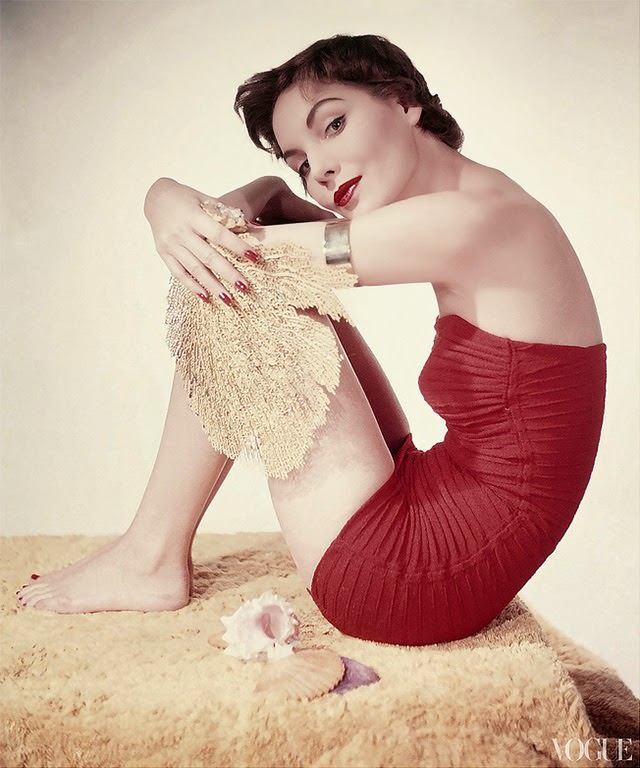
A handful of American brands defined what swimwear looked like in this decade. Catalina, Jantzen, and Rose Marie Reid dominated the pages of fashion magazines. Their designs prioritized shape — boning, ruching, and built-in structure gave suits a polished silhouette even when wet. Jantzen in particular appeared in Vogue spreads year after year, dressing models in everything from knitted cotton tanks to bold red one-pieces.
Read more..
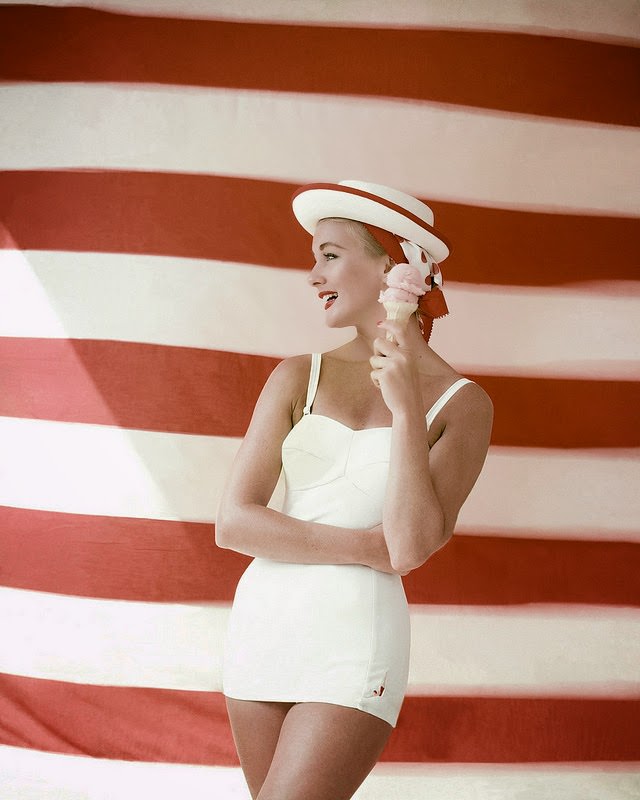
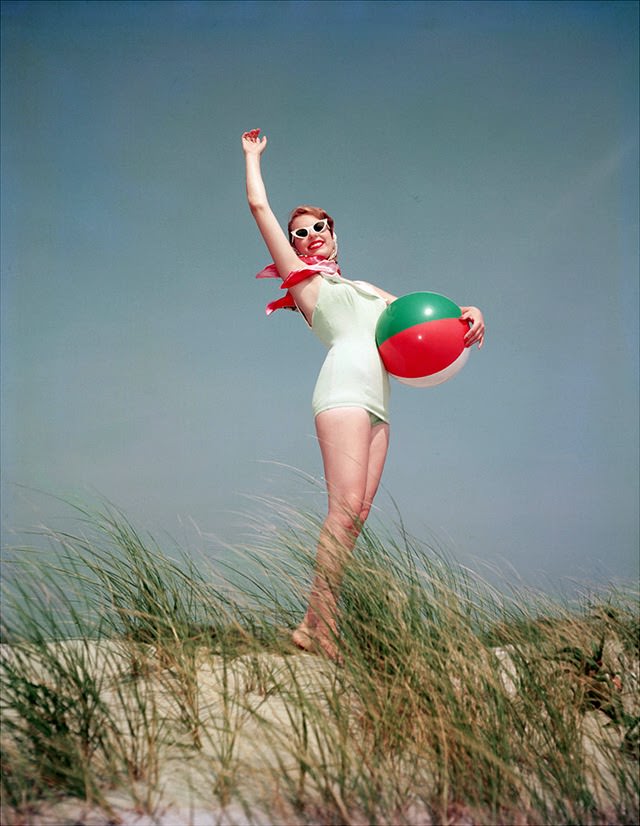
In one standout 1955 photograph by Leombruno Bodi, a model in a white Jantzen sharkskin swimsuit stands in front of an American flag, holding an ice cream cone and wearing a polka-dotted scarf beneath a white straw sailor hat by Betmar. The image is cheerful and patriotic, and every detail — from the accessories down to the prop — was selected to tell a story about American summer life.
Accessories Were Non-Negotiable
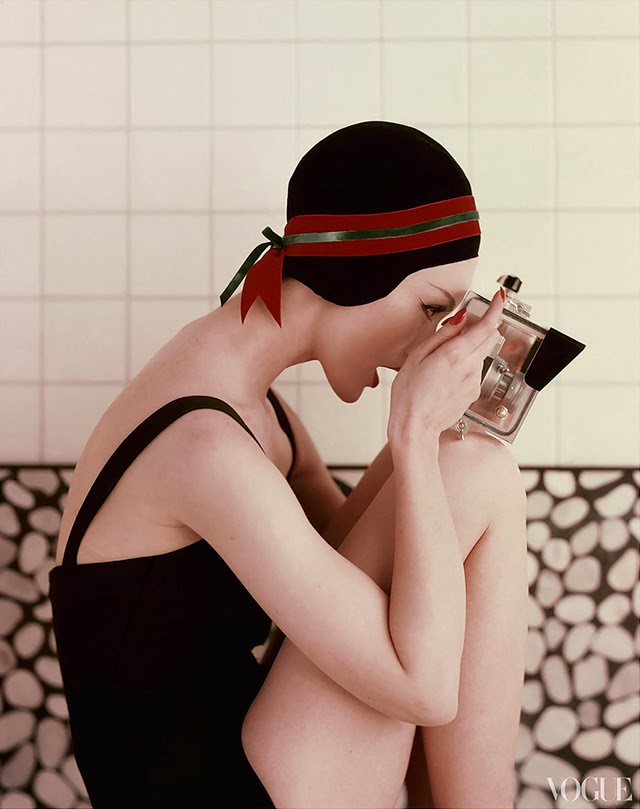
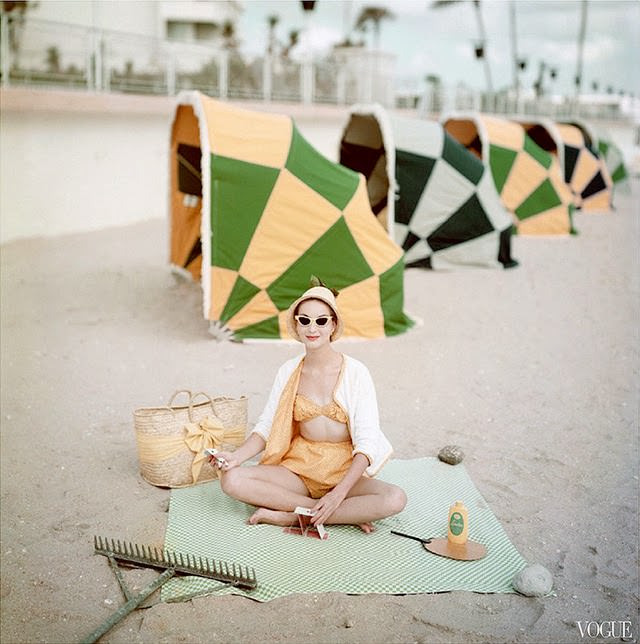
No swimsuit photograph from this era was complete without accessories. Straw hats in every shape — sailors, wide brims, naturals with ribbon trim — appeared in nearly every beach shoot. Models carried woven baskets, wore velvet bathing caps banded in contrasting colors, and pulled on terrycloth cardigans over their suits for a resort-ready finish.
In a 1959 Richard Rutledge shoot at the Diplomat Hotel in Florida, a model pairs a calico print swimsuit with a terrycloth cardigan — a combination that speaks directly to the 1950s obsession with coordinated resort dressing. Even the setting was deliberate: the hotel’s exterior gave the image a glamorous, aspirational backdrop.
Richard Rutledge and the Vogue Beach Aesthetic
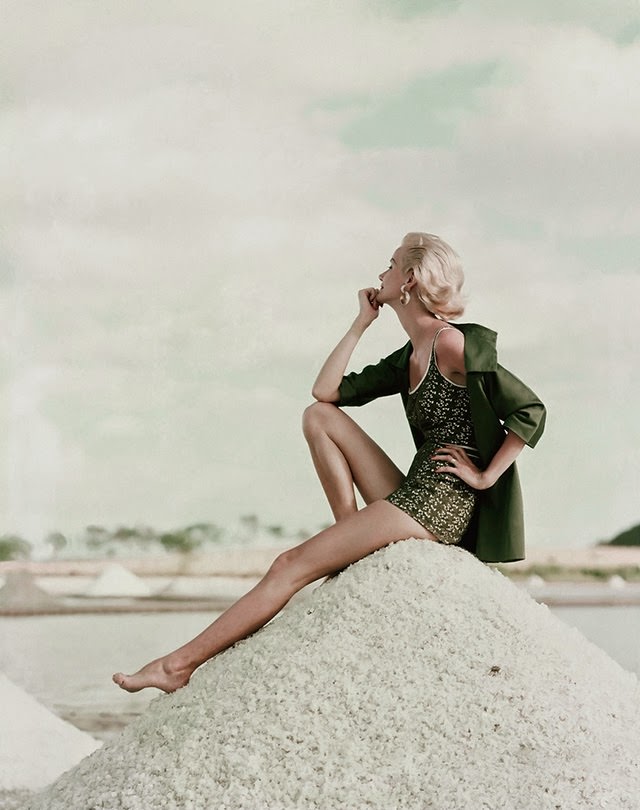
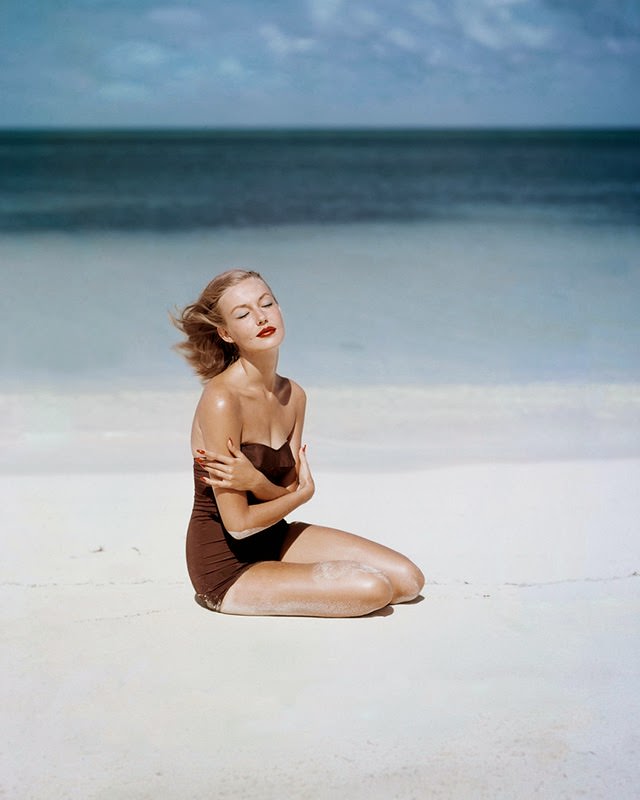
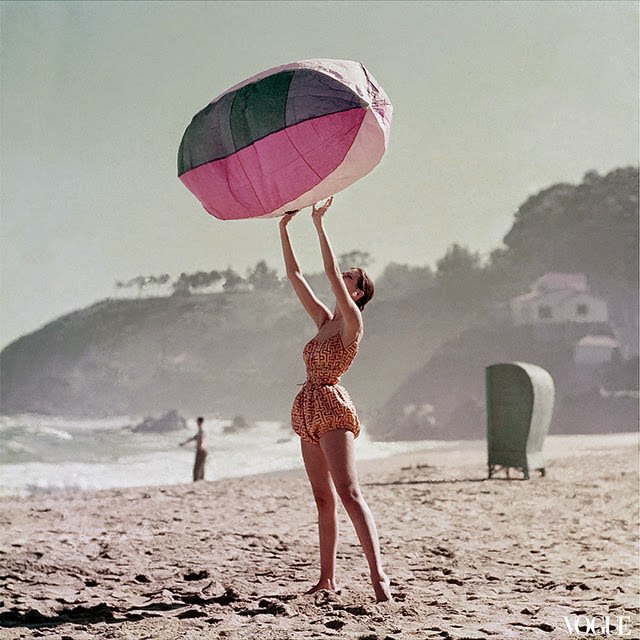
No photographer shaped the look of 1950s swimwear photography more consistently than Richard Rutledge. His work for Vogue ran from the early part of the decade through the late 1950s, and his images have a clean, sun-drenched quality that feels instantly recognizable. He shot models at actual beach locations — Florida, hotel pools, ocean shorelines — and used natural light and wide-open settings to give his subjects room to breathe.
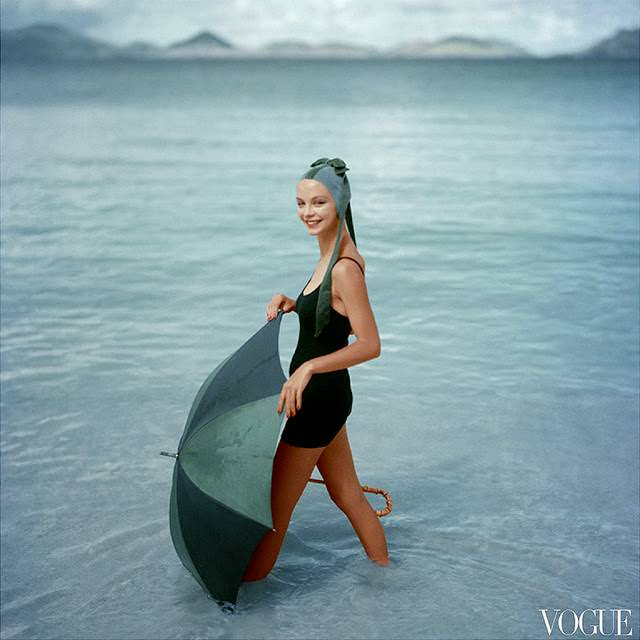
In a 1957 Vogue photograph, model Gretchen Harris stands in the ocean holding an open green and blue umbrella, wearing a knitted black maillot made from DuPont fabric and a water-velvet cap by Adolfo of Emme. The ocean is right there, real and present. These weren’t studio simulations of beach life — they were actual beach life, dressed and lit for the page.
European Glamour: Slim Aarons and the Riviera
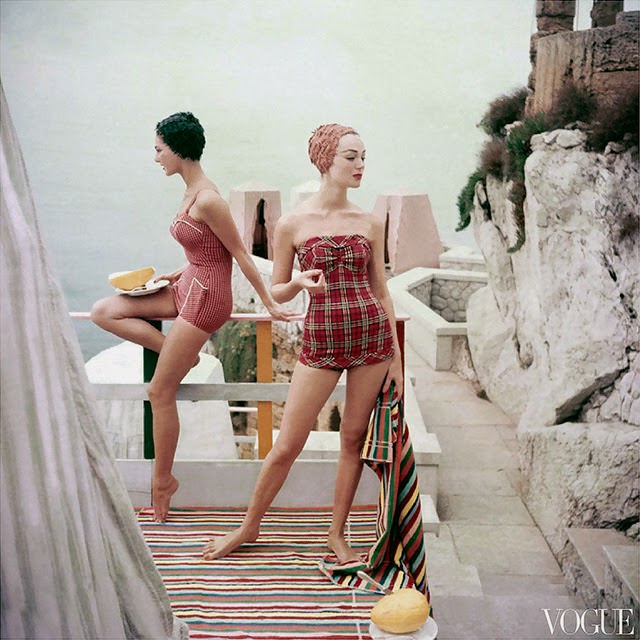
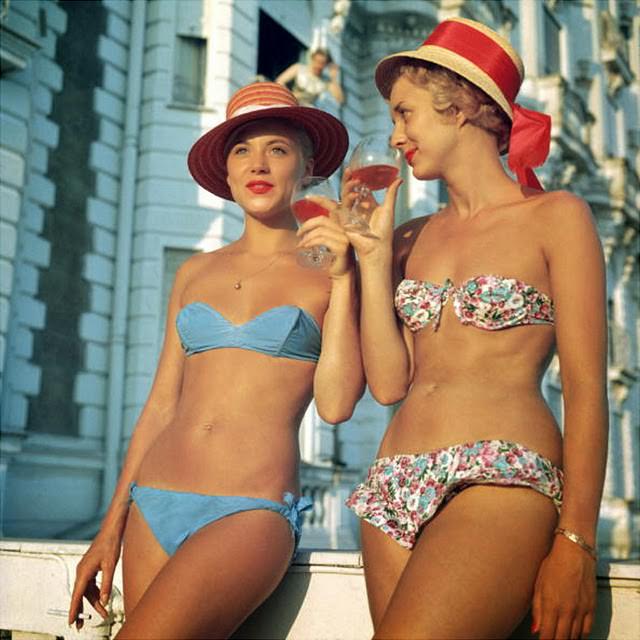
While Rutledge worked the American coastline, photographer Slim Aarons captured a different kind of swimwear story — one set against the sun-bleached luxury of European resort life. His 1958 photograph at the Carlton Hotel in Cannes, titled Sundowners, shows women poolside in the south of France, dressed in a way that blurred the line between beachwear and evening elegance.
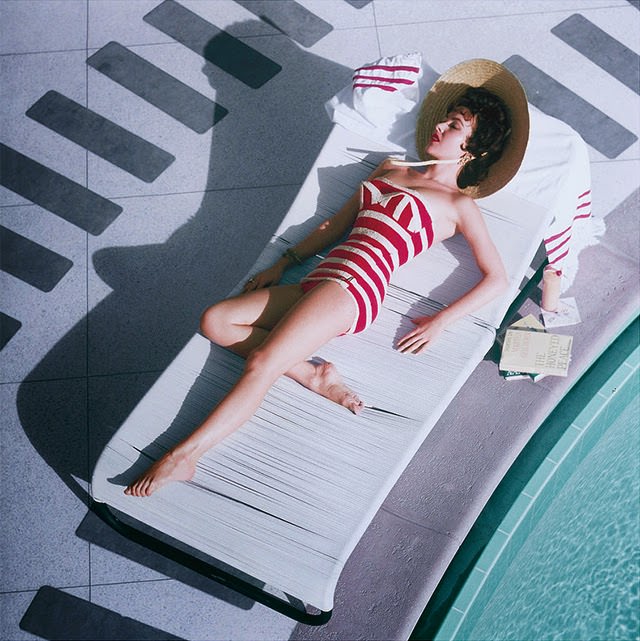
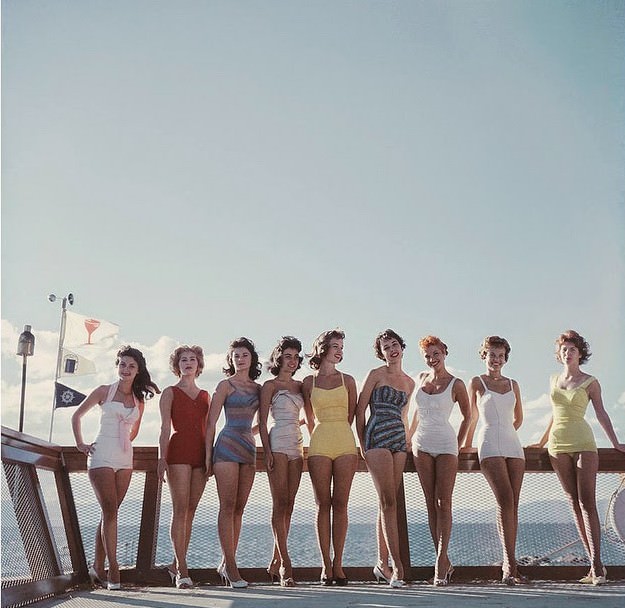
Aarons also shot women by the pool at the Sands Hotel in Las Vegas in 1954, including Austrian actress Mara Lane in a red and white striped bathing costume. And at Lake Tahoe in 1959, he photographed young women on the Nevada shoreline in a composition that captures the ease and confidence of late-decade swimwear fashion. His subjects didn’t pose in the traditional editorial sense — they occupied their surroundings as if the camera wasn’t there.
Horst, Clarke, and the High-Fashion Frame
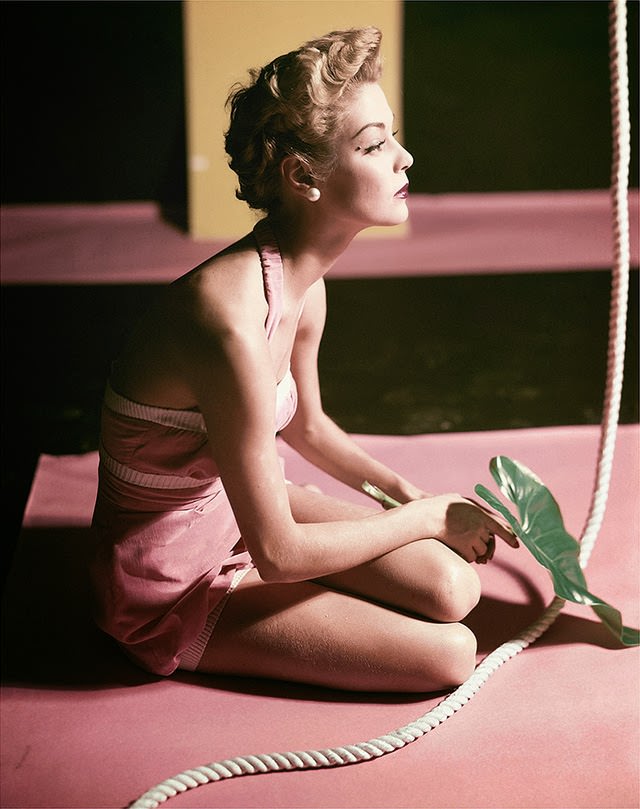
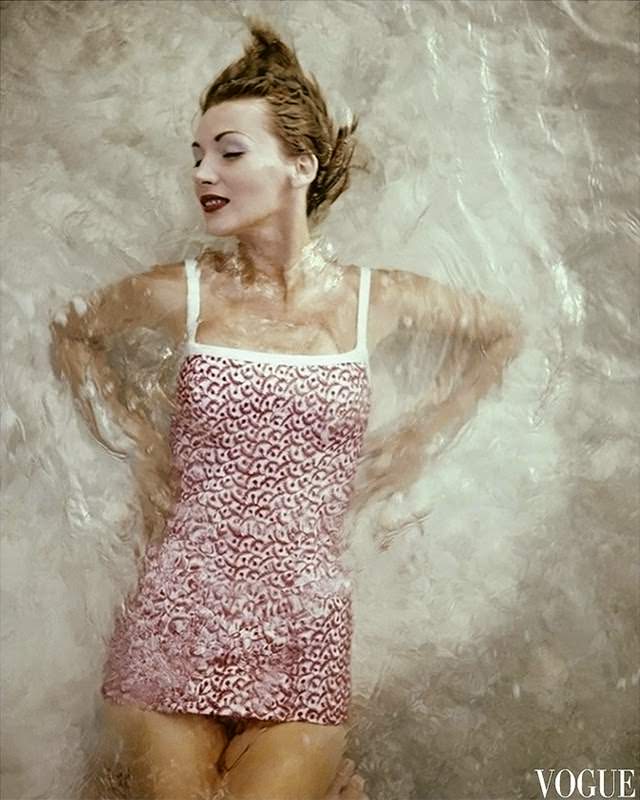
Other photographers brought a more overtly artistic sensibility to swimwear shoots. Horst P. Horst, already a Vogue legend by the 1950s, photographed Jean Patchett in a pink velvet bathing suit in 1951 — a studio image with dramatic lighting that treated the swimsuit as haute couture. His 1954 shoot with Sherry Nelms for Vogue carried the same sculptural quality.
Henry Clarke took a more location-driven approach. In 1955, he photographed Fiona Campbell-Walter and Ivy Nicholson in a swimwear shoot in Palermo, Sicily — two models against the textures of an Italian city, their suits in sharp contrast to the ancient surroundings. Clarke also shot a model in a Calypso-print bikini on a rooftop in Olhão, Portugal, in 1952, seated with a basket beside her. The composition is simple and striking.
Georges Dambier and the French Eye
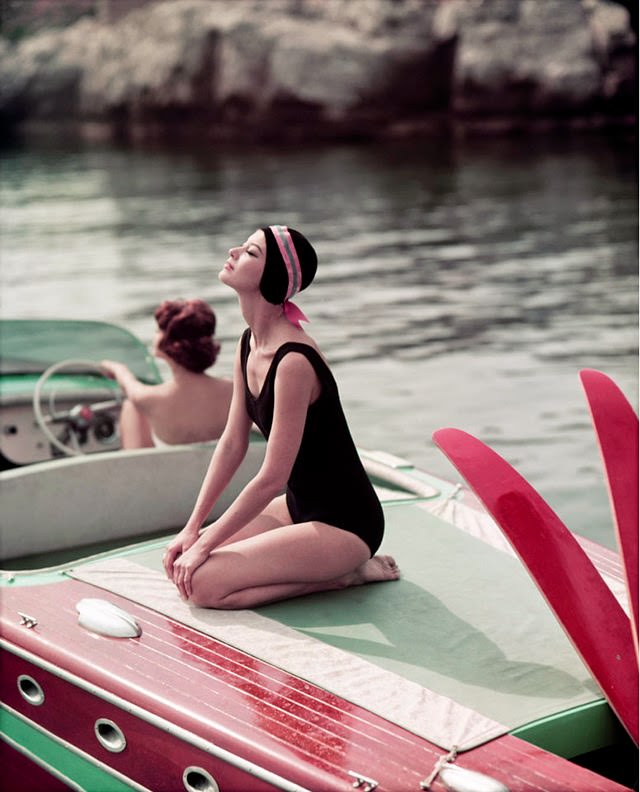
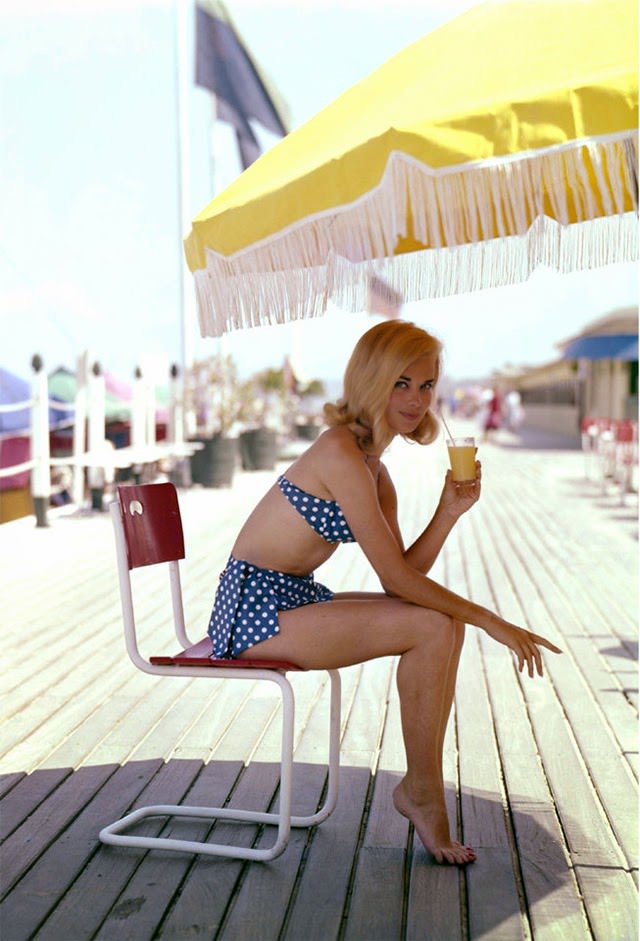
French photographer Georges Dambier brought a lighter, more candid energy to swimwear photography. For ELLE magazine in 1957, he shot Barbara Mullen and Marie-Hélène on the Riva at Cap d’Antibes, Eden Roc — the kind of image that made European resort life look effortlessly stylish. Two years later, he photographed a woman in a bikini on the boardwalk at Deauville for Jour de France, an image that captures the spirit of a decade on the cusp of change.
The decade ended with swimwear photography that was both more relaxed and more confident than it had been at the start. By 1959, models on the beach in calico prints, knitted Orlon, or silk shantung moved with an ease that the stiff, structured images of the early 1950s rarely showed. The swimsuit had become genuinely fashionable — not just functional — and the photographs proved it.